
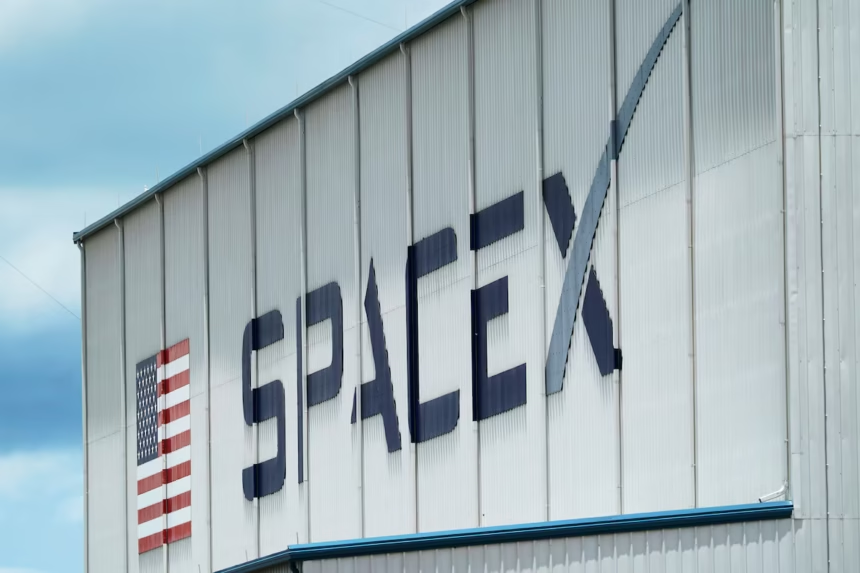
SpaceX is expanding beyond satellite broadband with a major spectrum acquisition designed to strengthen Starlink Mobile in the United States. The deal could reshape competition with traditional telecom operators, improve mobile coverage and increase pressure on established wireless companies.
SpaceX Announces $8 Billion Spectrum Acquisition
SpaceX announced on October 8, 2026, that it had agreed to acquire a nationwide portfolio of low-band wireless spectrum licences from private equity firm Grain Management for approximately $8 billion. The portfolio includes up to 14 MHz of paired spectrum in the 800 MHz band, a frequency range widely used for mobile communications. The transaction remains subject to final approval from the Federal Communications Commission (FCC), the US telecommunications regulator.
The acquisition marks an important step in SpaceX’s plans to turn Starlink Mobile into a more direct competitor to established wireless carriers. Until now, Starlink’s mobile connectivity strategy has relied significantly on partnerships with terrestrial telecom operators, which provide access to licensed spectrum and existing mobile customers.
With additional spectrum under its control, SpaceX could gain greater flexibility over how it delivers mobile connectivity. However, the acquisition does not mean the company can immediately replace conventional mobile networks. Regulatory approval, network infrastructure, device compatibility and service performance will all influence its ability to compete.
Why 800 MHz Spectrum Matters for Starlink Mobile
Wireless spectrum is a limited public resource used to transmit communications signals. Telecom companies require access to authorised frequency bands to provide mobile voice, messaging and data services.
The 800 MHz band is particularly valuable because lower-frequency signals generally travel farther and penetrate buildings more effectively than higher-frequency signals. These characteristics can help operators extend coverage across rural areas and improve connectivity in locations where signals struggle to reach users.
SpaceX said the newly acquired spectrum would complement its existing mid-band spectrum resources. The company intends to combine satellite connectivity with terrestrial network infrastructure, creating a hybrid system designed to provide mobile service across a wider range of environments.
This approach addresses one of the main limitations of satellite-to-phone connectivity. Satellites can reach remote areas without requiring a conventional cell tower at every location, but maintaining strong and reliable service in dense urban environments and inside buildings presents additional challenges.
The 800 MHz portfolio could help SpaceX address some of these limitations. Actual performance will depend on network deployment, spectrum availability, interference management and the number of users accessing the service.
AT&T, Verizon and T-Mobile Face Fresh Competition
The announcement immediately attracted attention across the US telecommunications industry. Shares of major wireless carriers declined following news of the transaction, reflecting investor concerns about SpaceX’s expanding ambitions in mobile services.
Companies such as AT&T, Verizon and T-Mobile have invested heavily in spectrum licences, cell towers, fibre connections and nationwide wireless networks. Their businesses depend on subscriber revenue, mobile data plans and a combination of consumer and enterprise services.
SpaceX’s strategy introduces a different competitive model. Instead of relying exclusively on terrestrial infrastructure, the company can combine its satellite constellation with ground-based network assets. This could prove attractive to customers who face connectivity gaps or want alternatives to conventional mobile services.
However, established carriers retain significant advantages, including existing subscriber relationships, extensive network infrastructure, retail distribution and established service operations. Competing at a national scale will require SpaceX to address these factors rather than relying on satellite technology alone.
The competitive impact will also depend on pricing. If Starlink Mobile offers attractive plans alongside reliable coverage, it could encourage established operators to reassess their offerings. If service costs remain high or performance is inconsistent, traditional carriers may be better positioned to retain many customers.
SpaceX Expands Its Direct-to-Cell Strategy
Starlink Mobile is part of SpaceX’s broader effort to connect ordinary mobile devices through satellites. Direct-to-cell technology allows compatible mobile phones to communicate through satellites, potentially extending connectivity beyond the reach of conventional cellular networks.
SpaceX has previously worked with terrestrial telecom partners to provide satellite-based connectivity. Its published technical material describes how Starlink Direct to Cell integrates with partner networks and uses licensed spectrum to connect supported devices
The latest spectrum acquisition signals a push towards greater control over the underlying network. By combining satellite capacity with additional low-band spectrum, SpaceX aims to develop a more flexible mobile service rather than remaining primarily a satellite connectivity provider.
The FCC also recently approved SpaceX’s application to deploy 15,000 additional next-generation Starlink satellites for mobile connectivity, according to reports published alongside the spectrum announcement. This approval and the new spectrum agreement are separate developments, but together they strengthen the company’s planned network expansion.
Even so, satellite connectivity has technical and commercial limits. Network capacity, spectrum coordination, handset compatibility and the need for terrestrial infrastructure in high-demand areas will influence how far the service can expand.
Regulatory Approval Remains a Key Hurdle
The proposed transaction still requires final FCC approval. The regulator oversees spectrum licensing and evaluates how wireless resources can be used within the US communications market.
Approval is important because acquiring spectrum licences involves more than completing a financial transaction. SpaceX must comply with applicable licensing conditions and technical requirements governing how the frequencies are used.
The FCC will also remain central to the broader development of satellite-to-mobile services, where satellite operators and terrestrial carriers must coordinate spectrum use and avoid harmful interference.
The deal’s final structure, timing and implementation will therefore depend on the regulatory process. Until approval is secured and the network is deployed, the acquisition should be viewed as a major strategic step rather than evidence that a fully operational nationwide mobile service is already available.
For SpaceX, the opportunity is significant. Control over additional spectrum could reduce its reliance on existing telecom partners and strengthen its position in negotiations with carriers. For the wider industry, the transaction raises questions about how traditional operators will respond to a competitor with a large satellite network and ambitions to serve mainstream mobile customers.
What the Deal Means for the US Telecom Market
The acquisition highlights how competition in telecommunications is increasingly extending beyond traditional mobile operators. Satellite companies, broadband providers and technology businesses are exploring ways to deliver connectivity through a combination of space-based and terrestrial infrastructure.
For consumers, stronger competition could eventually lead to more connectivity options, particularly in rural and underserved areas. However, improved service and lower prices are not guaranteed. Those outcomes will depend on investment, network performance, regulatory decisions and commercial strategy.
Telecom infrastructure providers may also benefit if SpaceX requires additional ground facilities, tower access or fibre connections to support its service. The scale of that demand will become clearer as the company develops its network plans.
Investors will be watching for regulatory updates, deployment timelines, pricing announcements and evidence of customer demand. These factors will help determine whether SpaceX can convert its spectrum acquisition into a commercially successful mobile business.
The larger question is whether Starlink Mobile can compete effectively in a market where established carriers already have extensive networks and millions of subscribers. SpaceX has strengthened its position, but the success of its strategy will depend on execution as much as technology.
Key Takeaways
- SpaceX agreed to acquire a nationwide portfolio of 800 MHz spectrum from Grain Management for approximately $8 billion, subject to regulatory approval.
- The spectrum is intended to improve Starlink Mobile’s coverage capabilities and complement its satellite network.
- AT&T, Verizon and T-Mobile face a potential new competitor as SpaceX moves towards a more direct role in mobile services.
- Network deployment, regulatory approval, service pricing and customer adoption will determine the deal’s long-term impact.
Frequently Asked Questions
1. What spectrum is SpaceX acquiring?
SpaceX has agreed to acquire up to 14 MHz of paired spectrum in the 800 MHz band from Grain Management. The transaction is intended to strengthen Starlink Mobile’s wireless capabilities.
2. Why does SpaceX need wireless spectrum?
Spectrum allows wireless services to transmit signals to compatible devices. Additional low-band spectrum can improve coverage reach and help signals penetrate buildings, complementing Starlink’s satellite connectivity.
3. Will SpaceX replace AT&T, Verizon and T-Mobile?
Not immediately. The acquisition strengthens SpaceX’s ability to compete, but established carriers retain extensive infrastructure and subscriber bases. The extent of future competition will depend on network performance, pricing and customer adoption.
4. Has the spectrum acquisition been completed?
The agreement was announced on October 8, 2026, but the transaction remains subject to final FCC approval. Its completion and implementation depend on the applicable regulatory process.