
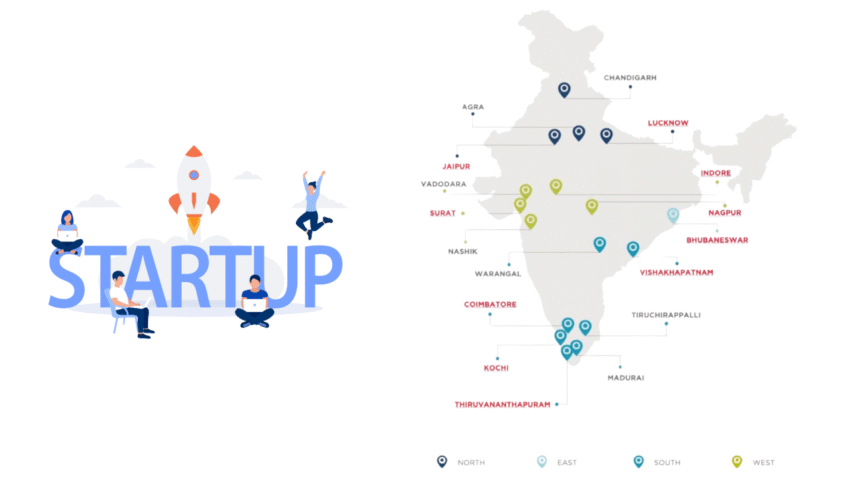
India’s startup ecosystem is expanding beyond traditional metropolitan hubs, with Tier-2 and Tier-3 cities gaining importance in the country’s entrepreneurial landscape. Better digital connectivity, lower operating costs, local market opportunities and government initiatives are encouraging founders to build businesses closer to home.
India’s Startup Ecosystem Is Expanding Beyond Metros
For years, cities such as Bengaluru, Mumbai, Delhi-NCR and Hyderabad dominated conversations around Indian startups. These locations offered access to investors, skilled professionals, technology companies and established business networks. However, India’s changing startup map is creating opportunities for entrepreneurs in smaller cities as well.
According to the Department for Promotion of Industry and Internal Trade (DPIIT), India had more than 2.23 lakh recognised startups as of March 31, 2026. These startups had generated over 23.36 lakh direct jobs, according to the Ministry of Commerce and Industry. The government also reported that around 50% of recognised startups originated from Tier-2 and Tier-3 cities in its January 2026 overview of the Startup India initiative.
These figures indicate that entrepreneurship is no longer concentrated exclusively in major metropolitan areas. Smaller cities are increasingly becoming places where founders identify local problems, test business ideas and build companies serving customers across India. However, startup recognition figures do not automatically indicate how many businesses are profitable, have raised investment or have achieved long-term success.
Lower Operating Costs Make Smaller Cities Attractive
One of the main reasons entrepreneurs consider smaller cities is the possibility of managing operating expenses more effectively. Office rentals, commercial spaces and certain everyday business costs can be lower than those in major metropolitan centres, although actual savings depend on the location, industry and business model.
For an early-stage company, controlling expenses can be particularly important. A startup that does not need a large office or a physical presence in a major city may be able to operate with a smaller team and allocate more resources to product development, marketing and customer service.
Consider a digital marketing agency, software development firm or online education business. Such companies can often serve clients in different states without maintaining an expensive office in a major technology hub. A founder working from Nagpur, Indore, Jaipur or Coimbatore may be able to reach customers nationwide through digital platforms.
However, lower costs alone do not guarantee success. Businesses must also evaluate the availability of trained employees, reliable internet connectivity, logistics, professional services and access to customers before deciding where to establish operations.
Digital Connectivity Is Changing Business Opportunities
The growth of digital payments, online marketplaces, cloud-based software and communication platforms has reduced several barriers to starting a business.
Entrepreneurs can now build websites, accept digital payments, manage inventory, advertise products and communicate with customers without investing in extensive physical infrastructure. These tools are especially useful for founders in smaller cities who want to reach customers outside their immediate region.
The expansion of online commerce has also created opportunities for local manufacturers, artisans, retailers and service providers. Businesses that once depended mainly on neighbourhood customers can explore wider markets through e-commerce platforms and social media.
For example, a small food-processing company can use digital channels to build brand awareness, while a regional clothing business can showcase its products to customers in multiple states. A software startup can work with clients in other cities without relocating its entire team.
Nevertheless, digital access does not remove every challenge. Businesses still need reliable delivery networks, secure payment systems, customer support and effective digital marketing. Competition is also intense, particularly in online retail and consumer services.
Local Problems Are Creating New Startup Ideas
Smaller cities offer entrepreneurs a different advantage: direct access to local problems that may be overlooked by companies primarily focused on metropolitan customers.
Agriculture, healthcare, education, transport, waste management and small-business services are among the areas where locally informed solutions can be valuable. Founders who understand the needs of farmers, shopkeepers, students and local enterprises may be better positioned to develop relevant products.
A startup working with farmers could explore digital crop advisory services, market information or supply-chain coordination. A healthcare venture might focus on appointment management, diagnostic access or telemedicine, subject to applicable regulations and clinical requirements.
Education technology businesses can address the needs of students preparing for competitive examinations or learning practical skills. Meanwhile, software providers can help small retailers manage billing, inventory and customer records.
A report on startup trends published by the Securities and Exchange Board of India in August 2024 highlighted the growing role of Tier-2 and Tier-3 cities, pointing to infrastructure development, government policies and a growing talent pool as contributing factors. It also documented participation from these cities across sectors including information technology, healthcare, education and waste management.
The broader opportunity lies in building solutions around actual customer needs rather than simply copying business models developed in larger cities.
Government Support Is Helping Regional Entrepreneurs
Government initiatives have played an important role in expanding India’s formal startup ecosystem. The Startup India initiative, launched in January 2016, was designed to support entrepreneurship through recognition, policy measures and programmes intended to encourage innovation.
Eligible businesses can seek DPIIT recognition and explore applicable benefits, including certain intellectual property support measures, easier compliance provisions and access to relevant government programmes. Recognition does not mean that every applicant automatically qualifies for every benefit. Eligibility conditions and the rules governing individual schemes must be checked before applying.
The government has also introduced initiatives focused on innovation, incubation, entrepreneurship and access to finance. Their practical impact depends on implementation, the availability of support institutions and the ability of founders to navigate application requirements.
State governments also influence the startup environment through their policies, incubators, industry partnerships and entrepreneurship programmes. The Startup India States’ Startup Ecosystem Ranking evaluates state and union territory efforts to develop supportive startup environments.
For founders in smaller cities, local incubators, universities, industry associations and district-level institutions can provide useful connections. However, the availability and quality of support vary considerably between locations. Entrepreneurs should verify current schemes, application deadlines and eligibility requirements through official channels rather than relying on outdated online information.
Funding Remains a Major Challenge for Smaller Cities
Despite the growing number of startups outside major metros, access to capital remains an important concern.
Venture capital firms and institutional investors have traditionally maintained strong networks in established startup hubs. Founders in smaller cities may have fewer opportunities for informal investor meetings, introductions through experienced entrepreneurs and access to specialised funding networks.
This can make fundraising more difficult, particularly for businesses developing technology-intensive products or requiring significant upfront investment.
However, founders can explore alternatives such as angel investors, startup incubators, accelerators, bank finance, eligible government-supported programmes and revenue generated from early customers. The appropriate option depends on the company’s stage, financial requirements, ownership preferences and eligibility.
Building a strong business case is essential. Investors and lenders generally look for evidence of customer demand, a viable revenue model, sound financial planning and a credible path to growth. A startup based in a smaller city must demonstrate these qualities just as a company in Bengaluru or Mumbai would.
Entrepreneurs should also distinguish between receiving recognition, securing funding and building a sustainable business. These are separate milestones, and progress in one area does not guarantee success in another.
Talent and Business Networks Will Shape Future Growth
Access to skilled employees will remain an important factor in determining how quickly smaller-city startup ecosystems develop.
Many regional cities have universities, engineering colleges, management institutions and vocational training centres that can contribute to the talent pool. Startups may also find employees who prefer to work closer to their families rather than relocate to expensive metropolitan areas.
At the same time, certain specialised roles in artificial intelligence, advanced research, cybersecurity and product leadership may be harder to fill locally. Some companies address this challenge through remote hiring, partnerships with educational institutions and structured employee training.
Business networks are equally important. Experienced founders, mentors, professional service providers and investors can help new entrepreneurs avoid common mistakes. As more businesses emerge in regional centres, opportunities for collaboration may improve.
For this growth to continue, cities will need more than affordable offices and internet access. They will also need dependable infrastructure, skilled workers, access to capital, stronger industry connections and institutions capable of supporting businesses through different stages of development.
What India’s Changing Startup Map Means for the Future
The expansion of entrepreneurship into smaller cities could contribute to more geographically distributed employment, innovation and economic activity. It may also encourage young professionals to build businesses without moving permanently to major metropolitan areas.
For cities such as Nagpur, Jaipur, Lucknow, Kochi, Indore and Coimbatore, the opportunity is to develop specialised strengths based on local industries, educational institutions, consumer demand and regional supply chains.
However, the long-term outcome will depend on whether startups can attract customers, generate revenue, retain talent and remain financially sustainable. A rising number of recognised businesses is an important indicator of participation, but it is not a complete measure of ecosystem maturity.
India’s next phase of startup development is likely to involve a wider range of cities and industries. The strongest regional ecosystems will be those that combine local knowledge with access to technology, funding, skilled professionals and larger markets.
Key Takeaways
- India’s startup ecosystem is expanding beyond established metropolitan hubs, with around half of recognised startups reported to originate from Tier-2 and Tier-3 cities.
- Lower operating costs, digital connectivity and access to local markets can make smaller cities attractive for certain business models.
- Government initiatives, incubators and state-level programmes can support entrepreneurs, subject to eligibility and availability.
- Funding, skilled talent, infrastructure and sustainable revenue remain critical challenges for regional startups.
Frequently Asked Questions
1. Why are entrepreneurs choosing Tier-2 and Tier-3 cities in India?
Entrepreneurs are considering smaller cities because of potentially lower operating costs, access to regional customers, growing digital connectivity and opportunities to solve local problems. The benefits vary by city and industry.
2. Which businesses can succeed in smaller Indian cities?
Potential opportunities include agricultural technology, healthcare services, education, software development, digital marketing, logistics, food processing and e-commerce. Success depends on customer demand, competition, execution and the business model.
3. Can startups in smaller cities receive government support?
Yes. Eligible businesses can explore DPIIT recognition under Startup India and relevant central or state programmes. Each scheme has its own conditions, and recognition does not guarantee funding or every available benefit.
4. What are the biggest challenges for startups outside major cities?
Common challenges include limited access to investors, difficulty recruiting specialised talent, gaps in infrastructure, smaller professional networks and the need to build customer trust. These challenges differ across locations and sectors.