
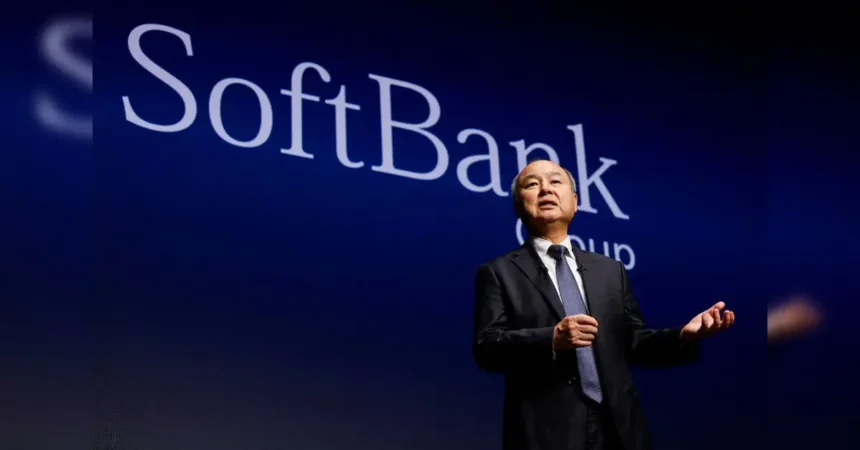
SoftBank Group’s record $11 billion junk bond sale is intensifying scrutiny of founder Masayoshi Son’s ambitious artificial intelligence investment strategy. With borrowing costs reaching 9.75% and substantial capital committed to OpenAI, the Japanese conglomerate faces growing pressure to turn its AI investments into sustainable long-term returns. <Cite refs={[“turn560378news22″,”turn560378search7”]}/>
SoftBank Junk Bond Sale Puts AI Investment Strategy Under Pressure
SoftBank Group has raised approximately $11.1 billion through a record high-yield bond offering, highlighting the financial scale of its push into artificial intelligence. The debt sale, completed in September 2026, is among the largest corporate junk bond offerings on record. <Cite refs={[“turn560378search7″,”turn560378search10”]}/>
The offering included dollar-denominated and euro-denominated securities, with some dollar bonds carrying yields of up to 9.75%. These rates underline the price SoftBank is willing to pay to secure financing for its investment plans.
The latest borrowing has drawn attention because SoftBank is committing substantial resources to AI companies and infrastructure while investors question how quickly those investments will generate returns.
The company’s strategy centres on building exposure across several parts of the AI industry, including advanced computing, AI models and the infrastructure required to run them. Its portfolio includes chip designer Arm and a major financial commitment to OpenAI, the company behind ChatGPT. <Cite refs={[“turn560378news22″,”turn560378search4”]}/>
For investors, the bond sale raises a central question: can the future value created by artificial intelligence justify the cost and concentration of SoftBank’s investments?
Why Masayoshi Son Is Betting Heavily on OpenAI
Masayoshi Son has positioned artificial intelligence at the centre of SoftBank’s future growth strategy. His approach reflects the belief that AI will reshape industries, business operations and the demand for computing infrastructure.
OpenAI is a particularly important part of that strategy. SoftBank’s backing for the company totals approximately $64.6 billion, according to Reuters reporting published on October 14, 2026. The scale of this commitment makes the relationship a major factor in assessing SoftBank’s investment risk. <Cite refs={[“turn560378news22″,”turn560378search5”]}/>
OpenAI operates in a market where companies are investing heavily in models, computing capacity and products designed for businesses and consumers. Demand for AI tools could create substantial commercial opportunities, but developing and operating these systems requires significant spending on computing power, data centres and specialised chips.
SoftBank is seeking exposure to this potential growth rather than relying on a single part of the technology supply chain. Arm provides semiconductor intellectual property, while AI model investments and infrastructure projects offer other ways to participate in the industry’s expansion. <Cite refs={[“turn560378search4″,”turn560378news24”]}/>
However, the scale of the OpenAI commitment also creates concentration risk. If AI companies take longer than expected to generate profits, or valuations decline, SoftBank could face pressure across a significant portion of its portfolio.
What SoftBank’s 9.75% Bond Yield Means for Investors
The cost of borrowing is one of the most important aspects of SoftBank’s AI investment strategy. The company has agreed to pay yields as high as 9.75% on some of its bonds, including a bond maturing in 2034. By comparison, Alphabet offered a yield of 5.2% on a bond issued in August 2026 that matures in 2033, according to Reuters. <Cite refs={[“turn453588view0”]}/>
A high-yield bond, often called a junk bond, is a debt security issued by a borrower with a below-investment-grade credit rating. Such bonds typically offer higher returns to compensate investors for taking on greater credit risk.
This does not mean SoftBank will necessarily default on its debt. It means investors demand greater compensation for the risks associated with lending to the company.
The distinction matters because borrowing creates fixed financial obligations. SoftBank must meet interest payments and repay principal according to the terms of its bonds, regardless of whether its AI investments generate the expected returns.
If OpenAI and other portfolio companies increase in value, SoftBank could benefit significantly. However, if valuations fall or expected returns take longer to materialise, the cost of financing those investments could become more difficult to justify.
The challenge is particularly significant because AI investments often require substantial upfront spending, while the commercial benefits may take years to emerge.
AI Market Risks Increase as SoftBank Concentrates Its Portfolio
SoftBank’s investment strategy has attracted attention because of the size of its positions and the possibility that AI valuations could be running ahead of near-term earnings. Analysts have questioned whether the financial returns from AI businesses will arrive quickly enough to support the capital being committed to them. <Cite refs={[“turn453588view0″,”turn560378news24”]}/>
The wider industry is also facing questions about profitability. AI companies must pay for computing infrastructure, energy, specialist chips and research. Even when demand for AI services grows, those expenses can affect how much revenue ultimately becomes profit.
Competition adds another layer of uncertainty. OpenAI faces rivals such as Anthropic, major cloud providers and lower-cost Chinese AI developers. Competitive pressure could affect pricing, customer acquisition and the resources required to maintain technological leadership. <Cite refs={[“turn453588view0”]}/>
SoftBank’s past investment record offers both encouragement and caution. Its early investment in Alibaba became a major success, demonstrating how a concentrated investment can create substantial value. However, its investment in WeWork resulted in significant losses after the office-sharing company struggled and eventually entered bankruptcy proceedings in 2023.
These contrasting outcomes show why the AI strategy cannot be judged only by the size of the opportunities. The timing of investments, valuations, competitive conditions and the ability of companies to generate sustainable earnings will determine the eventual results.
Can SoftBank Turn Its AI Investments Into Long-Term Returns?
SoftBank’s next challenge is to convert its investments into financial returns that justify both the capital committed and the cost of borrowing.
One possible route is an increase in the value of its existing holdings. If OpenAI, Arm and other AI-related businesses expand successfully, SoftBank could benefit from appreciation in its investments. Public listings of privately held portfolio companies could also make their valuations more transparent and create opportunities to sell shares or raise additional capital. <Cite refs={[“turn453588view0″,”turn560378news24”]}/>
Another route involves developing the infrastructure needed for AI growth. Data centres, computing capacity and energy supply are becoming important parts of the AI economy. SoftBank has been pursuing investments across these areas, including through its infrastructure strategy.
However, infrastructure projects can require considerable funding and face practical challenges involving electricity availability, construction schedules, regulation and financing. Returns may depend on sustained demand for computing services over many years.
SoftBank’s borrowing strategy therefore creates both an opportunity and a financial obligation. Debt allows the company to invest without immediately selling assets it believes will appreciate. But it also increases the importance of timing and execution.
For investors, the most useful indicators will be the performance of SoftBank’s major holdings, changes in its debt burden, borrowing costs and the extent to which its investments begin generating measurable returns. Management’s ability to maintain financial flexibility while continuing to fund growth will also matter.
SoftBank’s AI strategy could benefit from the expansion of a technology that has the potential to reshape business operations worldwide. Yet the scale of the investment means that disappointing results could carry significant consequences.
Key Takeaways
- SoftBank raised approximately $11.1 billion through a record high-yield bond offering to support its AI investment strategy.
- Some bonds carry yields of up to 9.75%, increasing the importance of generating returns that justify the cost of financing.
- SoftBank’s approximately $64.6 billion commitment to OpenAI makes the AI company a major part of its investment strategy.
- Competition, high AI infrastructure costs and concentrated investments create risks alongside the potential for long-term gains.
Frequently Asked Questions
1. Why did SoftBank issue $11 billion in junk bonds?
SoftBank raised approximately $11.1 billion through dollar and euro debt securities to support its investment strategy, particularly its substantial commitment to OpenAI, while retaining other assets it expects to appreciate.
2. What is the interest rate on SoftBank’s junk bonds?
Some bonds in the offering carry yields of up to 9.75%. The precise rate depends on the bond’s maturity and terms. A yield is not necessarily the same as the coupon interest rate.
3. How much has SoftBank committed to OpenAI?
Reuters reported on October 13, 2026, that SoftBank’s backing for OpenAI totalled approximately $64.6 billion. The commitment makes OpenAI a major component of Masayoshi Son’s AI investment strategy.
4. What risks does SoftBank face from its AI investments?
The company faces risks from high borrowing costs, concentrated exposure to AI businesses, competition, uncertain valuations and the possibility that commercial returns may take longer than expected. These risks could affect its financial flexibility and investment performance.