
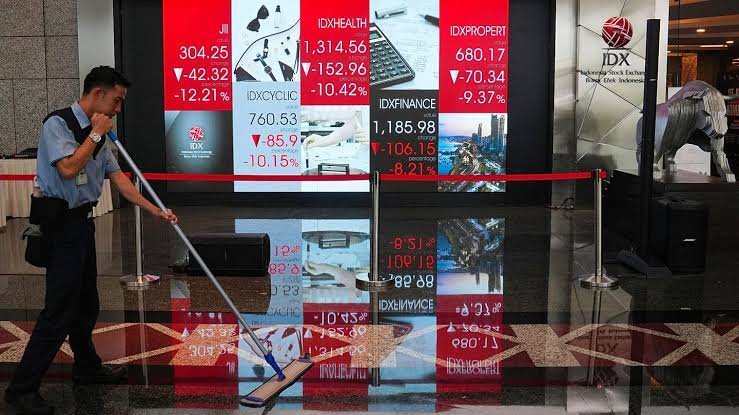
Indonesia’s stock market suffered another sharp decline on October 19, 2026, as investors reacted to MSCI’s proposal to reclassify the country from emerging market to standalone market status. Concerns over transparency, share ownership and trading practices have intensified pressure on Indonesian equities and the rupiah.
Jakarta Composite Index Falls More Than 5%
Indonesia’s stock market extended its losses on Monday, with the Jakarta Composite Index falling more than 5% in early trading after recording an 11.6% decline on Friday. The latest sell-off pushed the benchmark to a six-year low, highlighting the severity of investor concerns over the country’s financial markets.
The sharp decline followed an announcement by global index provider MSCI that it was consulting on a proposal to move Indonesia from its existing emerging market classification to standalone market status. The announcement has raised concerns about the country’s ability to attract international investment and maintain its position in global equity benchmarks.
The market reaction has been particularly significant because Indonesia is Southeast Asia’s largest economy and an important destination for investors seeking exposure to emerging Asian markets.
Investors are now assessing the potential consequences of the proposed reclassification, including the possibility of international funds reducing their exposure to Indonesian stocks. The immediate market pressure also reflects broader concerns about governance, market transparency and the effectiveness of regulatory reforms.
Why MSCI Is Reviewing Indonesia’s Emerging Market Status
MSCI announced its reclassification consultation on October 15, 2026, following concerns raised by international investors about the accessibility and functioning of Indonesia’s equity market.
The index provider identified persistent problems involving opaque shareholding structures, concentrated ownership and suspected coordinated trading behaviour. These issues have raised questions about whether investors can accurately assess the availability of shares for public trading and participate in the market on a fair and transparent basis.
MSCI had previously warned in June that Indonesia could face a review of its classification if meaningful improvements were not evident. Following its latest assessment, the organisation concluded that concerns remained despite reforms announced by Indonesian authorities.
The consultation proposes moving Indonesian securities from emerging market indexes to standalone market status. MSCI said the final decision would be announced by the end of June 2027, with a possible interim update during the consultation period.
This means Indonesia has not yet been formally downgraded. The proposed change remains subject to the consultation process and evidence of improvements in market governance and functioning.
What Standalone Market Status Could Mean for Investors
MSCI classifications matter because global investment funds use its indexes to guide portfolio allocation, benchmark performance and manage exposure to different markets.
Emerging market indexes provide international investors with access to a group of developing economies. Countries included in these benchmarks can attract capital from mutual funds, exchange-traded funds and institutional investors that track or use the indexes as investment references.
Standalone classification would remove Indonesia from MSCI’s emerging market category. Depending on their investment mandates, some funds could reduce or eliminate positions in affected Indonesian securities.
Such changes could create additional selling pressure, reduce liquidity and make it more difficult for local companies to attract foreign capital. Businesses seeking to raise funds through share offerings could also face a less favourable investment environment if international participation declines.
Reuters reported that a potential reclassification could put approximately $5.6 billion in passive investment flows at risk. This is an estimate of potential exposure, not a confirmed amount of money already withdrawn or guaranteed future outflows.
The actual financial impact would depend on the final classification decision, fund mandates, investor responses and the extent to which Indonesia addresses MSCI’s concerns.
Transparency and Share Ownership at the Centre of the Dispute
A major issue in MSCI’s assessment is the transparency of company ownership. Investors need reliable information about who owns listed businesses, how much of a company’s shares are available for public trading and whether trading activity reflects genuine market demand.
When shareholdings are concentrated among a small number of investors, the amount of stock available to ordinary market participants can be substantially smaller than a company’s total listed shares might suggest. This can affect liquidity and the reliability of market prices.
MSCI has also raised concerns about suspected coordinated trading behaviour. Such concerns can weaken confidence in price discovery, particularly when investors believe that trading patterns may not accurately reflect the underlying value of securities.
Indonesian authorities have announced several reforms, including enhanced disclosure requirements for shareholders holding more than 1%, more detailed investor classifications, reporting on high shareholding concentration and a roadmap towards a minimum free-float requirement of 15%.
However, MSCI has emphasised that announcing reforms is not enough. International investors want evidence that the measures are implemented consistently and produce meaningful improvements in market functioning.
The consultation therefore places pressure on regulators to demonstrate measurable progress rather than rely solely on policy commitments.
Indonesian Regulators Face Pressure to Restore Confidence
The sharp fall in share prices has increased scrutiny of Indonesia’s financial regulators and the government’s response to MSCI’s concerns.
The Financial Services Authority, known as OJK, and the Indonesia Stock Exchange have responsibilities involving market supervision, disclosure standards, trading integrity and investor protection.
Authorities have announced enforcement actions and sanctions related to alleged market manipulation and other market violations. Reuters reported that regulators imposed sanctions totalling approximately 2.1 trillion rupiah in response to cases involving trading manipulation.
Enforcement is only one part of the response. Investors are also likely to assess whether ownership disclosures become more reliable, whether public share availability improves and whether suspicious trading activity is investigated effectively.
The government must balance the need for stronger oversight with the objective of keeping the market accessible to domestic and international investors.
A credible response could help stabilise sentiment, although confidence may take time to recover after a sharp market sell-off. Investors will be watching future regulatory announcements and MSCI’s assessment of whether the changes address the underlying problems.
Rupiah Weakness Adds to Indonesia’s Financial Market Pressure
The stock market decline has coincided with pressure on Indonesia’s currency. The rupiah weakened to around 18,000 per US dollar during Monday’s trading, according to Reuters reporting.
Currency movements matter because a weaker rupiah can reduce the value of local-currency investments when returns are converted into dollars or other foreign currencies. This can make Indonesian assets less attractive to some international investors, particularly during periods of uncertainty.
A weaker currency can also raise the cost of imported goods and foreign-currency debt servicing for businesses exposed to exchange-rate movements. The overall impact depends on companies’ financial structures, export earnings and hedging arrangements.
However, the stock market decline and currency weakness should not be attributed to a single factor without further evidence. Investor sentiment, domestic economic conditions, global capital movements and expectations for monetary policy can all influence exchange rates.
The MSCI proposal has become a major source of uncertainty because it could affect how international investors access Indonesian equities. If concerns persist, the interaction between falling share prices, foreign capital flows and currency pressure could complicate efforts to stabilise the market.
What Happens Next for Indonesia’s Stock Market?
The next major milestone is MSCI’s consultation process, which is scheduled to culminate in a final decision by the end of June 2027.
Before then, investors will look for evidence that Indonesia’s reforms are improving transparency, public share availability and confidence in trading practices. MSCI may provide an interim update on feedback from market participants.
The existing freeze on Indonesian securities in MSCI indexes will remain in place until further notice. This adds another layer of uncertainty for investors who follow MSCI benchmarks or use them to guide portfolio decisions.
For Indonesia, the challenge extends beyond preventing a downgrade. Restoring confidence requires credible market oversight, consistent enforcement and dependable information about listed companies.
The country’s economic size and growth potential remain important considerations for investors, but these factors do not eliminate the need for transparent and accessible capital markets.
The coming months will show whether regulatory action can address MSCI’s concerns and reduce the risk of a change in classification. Until clearer evidence emerges, Indonesian equities may remain vulnerable to volatility as investors reassess their exposure.
Key Takeaways
- Jakarta’s benchmark index fell more than 5% in early trading on October 19, following an 11.6% decline on October 16.
- MSCI is consulting on a proposal to reclassify Indonesia from emerging market to standalone market status, citing transparency and trading concerns.
- Approximately $5.6 billion in passive investment flows could be at risk, although this is an estimate rather than confirmed outflows.
- MSCI expects to announce its final decision by the end of June 2027, making regulatory reforms and market transparency crucial.
Frequently Asked Questions
1. Why did Jakarta stocks plunge on October 19, 2026?
Jakarta stocks fell sharply after MSCI announced a consultation on moving Indonesia from emerging market to standalone market status. Concerns over share ownership transparency, suspected coordinated trading and possible foreign investment outflows intensified selling pressure.
2. Has Indonesia officially lost its emerging market status?
No. MSCI has proposed the reclassification and launched a consultation. The final decision is expected by the end of June 2027, and the outcome will depend on the consultation and evidence of improvements in market governance.
3. How could an MSCI downgrade affect foreign investors?
Some funds that track MSCI emerging market indexes may reduce or remove their exposure to Indonesian equities if the reclassification proceeds. This could affect liquidity and capital flows, although the actual impact will depend on fund mandates and investor decisions.
4. What must Indonesia do to address MSCI’s concerns?
Indonesia needs to demonstrate meaningful improvements in shareholder disclosure, free-float transparency, market accessibility and enforcement against suspected trading manipulation. Consistent implementation and measurable results will be important in restoring investor confidence.