
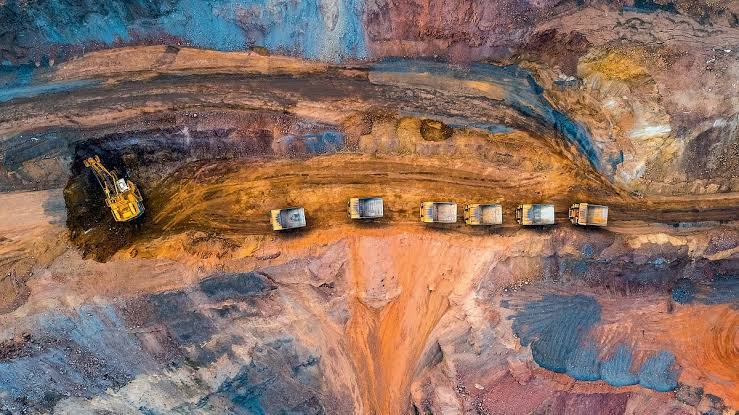
Coal India Limited has received a Letter of Intent from the Ministry of Heavy Industries to establish a rare earth permanent magnet manufacturing facility with an annual capacity of 1,200 tonnes. The project marks an important step in India’s efforts to strengthen domestic manufacturing and reduce dependence on imported magnets.
Article | 20 November 2026
Coal India Limited (CIL) is expanding its industrial ambitions beyond coal as the state-owned company moves into rare earth permanent magnet manufacturing. The company announced on November 19 that its consortium with the Non-Ferrous Materials Technology Development Centre (NFTDC) had received a Letter of Intent (LoI) from the Ministry of Heavy Industries to establish a facility for manufacturing sintered rare earth permanent magnets.
The proposed facility will have an annual production capacity of 1,200 tonnes. The development comes under the government’s Scheme to Promote Manufacturing of Sintered Rare Earth Permanent Magnet, which aims to establish a domestic manufacturing ecosystem for materials increasingly important to electric vehicles, renewable energy, electronics and defence industries.
Coal India Receives LoI Under Government Manufacturing Scheme
According to the company’s regulatory filing submitted to the stock exchanges, the Ministry of Heavy Industries issued the Letter of Intent on November 19, 2026. Coal India is the lead member of the consortium formed with NFTDC and has been declared the L2 bidder under the government programme.
The manufacturing facility will be established through a Special Purpose Vehicle (SPV), a separate business entity created to execute a specific project. The proposed unit will focus on producing sintered neodymium-iron-boron (NdFeB) permanent magnets.
The project has a total execution period of seven years. This includes two years for pre-construction activities, followed by five years of operations.
The LoI represents a significant project milestone, although the proposed facility is not yet operational. Construction, commissioning and commercial production will follow the necessary preparatory and implementation stages.
India’s ₹7,280 Crore Rare Earth Magnet Scheme Explained
The Coal India project is part of a larger government initiative designed to build domestic manufacturing capacity for rare earth permanent magnets.
In November 2025, the Union Cabinet approved the Scheme to Promote Manufacturing of Sintered Rare Earth Permanent Magnet with a financial outlay of ₹7,280 crore. The programme aims to establish an integrated manufacturing capacity of 6,000 metric tonnes per annum (MTPA) in India.
Under the scheme, manufacturing companies can receive financial support through capital subsidies and production-linked incentives. The government has provided for a capital subsidy of ₹150 crore and production incentives of up to ₹2,150 per kilogram, subject to the applicable scheme conditions.
The Ministry of Heavy Industries received 20 bids through a global tender in August 2026. Following the evaluation process, the programme moved towards selecting manufacturers capable of establishing integrated production facilities.
Coal India is among the companies that have received government approval through Letters of Intent. Other companies identified in the latest announcements include ReNew, Prozeal Green Energy and Midwest Energy.
The initiative is intended to encourage private and public sector participation in an industry where India has historically depended heavily on overseas suppliers.
Why Rare Earth Permanent Magnets Matter for India’s Economy
Rare earth permanent magnets are essential components in several modern industrial applications. Among the most widely used varieties are neodymium-iron-boron magnets, commonly known as NdFeB magnets.
These magnets are valued for their high magnetic strength, compact size and ability to deliver strong performance in demanding applications. Their importance has increased as industries move towards electrification, automation and renewable energy.
Some of their major applications include:
- Electric vehicles: NdFeB magnets are used in permanent magnet motors, helping improve motor efficiency and power output.
- Wind energy: Permanent magnets are used in certain wind turbine generator designs.
- Electronics: Smartphones, speakers, hard drives and other electronic equipment use specialised magnetic components.
- Aerospace and defence: Advanced equipment, motors, sensors and other systems depend on high-performance magnetic materials.
- Industrial automation: Robotics, precision motors and automated manufacturing equipment also use these magnets.
As demand for these applications grows, reliable access to permanent magnets becomes increasingly important for manufacturers.
For India, developing domestic production capabilities could help strengthen industrial supply chains and support the country’s broader manufacturing ambitions.
Reducing Dependence on China Becomes a Strategic Priority
One of the major reasons behind India’s rare earth manufacturing push is its dependence on international supply chains, particularly China.
China has established a dominant position in the global rare earth industry, covering several stages of the supply chain, including processing, refining and permanent magnet manufacturing.
Export restrictions introduced by China in April 2025 highlighted the vulnerabilities faced by countries dependent on Chinese rare earth materials and magnets. The restrictions raised concerns among manufacturers across the automotive, electronics, renewable energy and defence sectors.
India has significant rare earth resources, but possessing mineral reserves alone does not guarantee a strong position in the global magnet industry. Processing, separation, refining and manufacturing require specialised technology, infrastructure and technical expertise.
The government’s ₹7,280 crore scheme is an attempt to address this gap by encouraging integrated manufacturing facilities within the country.
Coal India’s participation adds another major public sector company to this strategic manufacturing effort. However, building a competitive industry will require more than establishing production facilities. Access to raw materials, technology development, skilled workers and consistent industrial demand will also be important.
What Coal India’s Expansion Means for Its Business Strategy
Coal India is traditionally associated with coal mining and supplying fuel to India’s power sector. Its participation in rare earth permanent magnet manufacturing represents a move towards a different industrial segment.
The proposed project could give the company an opportunity to participate in a supply chain linked to electric mobility, renewable energy and advanced manufacturing.
It also reflects a wider shift in India’s industrial strategy, where established public sector enterprises are being encouraged to explore opportunities beyond their traditional business activities.
Coal India will execute the project through an SPV with NFTDC, bringing together the company’s leadership in the consortium and the technology development institution’s materials expertise.
However, the project’s commercial performance will depend on several factors, including construction timelines, production efficiency, raw material availability and the ability to secure customers.
The company has not indicated that commercial production has started. The seven-year execution framework means the proposed facility will require considerable preparation before it can contribute to domestic magnet supplies.
Challenges Ahead for India’s Rare Earth Manufacturing Industry
Although the government’s manufacturing programme represents a major policy initiative, developing a competitive rare earth magnet industry will involve several challenges.
The first is access to processed rare earth materials. India needs a dependable supply of the specific elements required for NdFeB magnet production. Mining resources and converting them into industrial-grade materials are separate and technically demanding activities.
The second challenge involves manufacturing technology. Producing high-performance magnets requires specialised equipment, quality control systems and technical knowledge. Indian manufacturers will need to develop capabilities that meet the requirements of global automotive, electronics and industrial customers.
The third factor is commercial competitiveness. Domestic manufacturers must produce magnets at prices and quality levels that can compete with established international suppliers.
Finally, the industry will need consistent demand. Electric vehicle manufacturers, renewable energy companies and electronics producers will play an important role in creating a stable market for locally manufactured magnets.
The government’s financial incentives may help reduce the initial investment burden, but long-term competitiveness will depend on operational efficiency and technological development.
What Happens Next for Coal India’s Magnet Project?
Coal India’s immediate priority will be to move the proposed project through its pre-construction phase. The two-year period will be important for establishing the project structure, completing necessary preparations and developing the manufacturing facility.
The subsequent five-year operational period will be crucial for production and the implementation of the government’s incentive framework.
The consortium’s progress will also be relevant to India’s broader objective of establishing 6,000 tonnes per annum of integrated rare earth permanent magnet manufacturing capacity.
For the company, the project represents an opportunity to enter a strategically important industrial segment. For India, it is part of a wider attempt to reduce supply-chain vulnerabilities and develop domestic capabilities in advanced manufacturing.
The success of the initiative will ultimately depend on whether announced manufacturing capacity translates into consistent commercial production and reliable supplies for Indian industries.
Key Takeaways
- Coal India has received an LoI from the Ministry of Heavy Industries for a 1,200-tonne-per-year rare earth permanent magnet facility.
- The company is leading a consortium with the Non-Ferrous Materials Technology Development Centre (NFTDC).
- The project falls under India’s ₹7,280 crore government scheme to promote domestic magnet manufacturing.
- The seven-year project timeline includes two years of pre-construction and five years of operations.
Frequently Asked Questions (FAQs)
1. What has Coal India announced regarding rare earth magnets?
Coal India has received a Letter of Intent from the Ministry of Heavy Industries to establish a manufacturing facility for sintered rare earth permanent magnets with an annual capacity of 1,200 tonnes.
2. What is the production capacity of Coal India’s proposed magnet facility?
The proposed facility will have a manufacturing capacity of 1,200 tonnes per annum (TPA).
3. What is India’s ₹7,280 crore rare earth magnet scheme?
It is a government initiative approved in November 2025 to establish 6,000 metric tonnes per annum of integrated rare earth permanent magnet manufacturing capacity in India through financial incentives and capital support.
4. Where are rare earth permanent magnets used?
These magnets are used in electric vehicle motors, wind turbines, electronics, aerospace, defence equipment and industrial automation systems.