
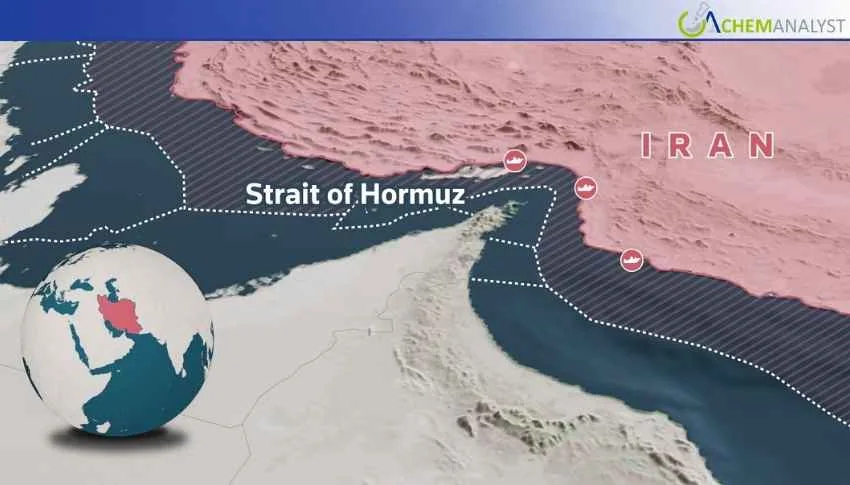
Rising security threats in the Strait of Hormuz are creating fresh uncertainty for global energy markets as attacks on commercial vessels disrupt shipping confidence. The strategic waterway remains critical to international oil and gas supplies, raising concerns about transportation costs, energy prices and supply-chain stability.
Strait of Hormuz Faces Renewed Maritime Security Threats
The Strait of Hormuz has become a major focus of international energy and maritime security concerns following repeated attacks on commercial vessels during November 2026.
The latest incidents have increased concerns among shipping companies, energy traders and governments that rely on the waterway for transporting crude oil, petroleum products and liquefied natural gas (LNG).
According to the Joint Maritime Information Center’s November 22 advisory, several tankers were struck by unidentified projectiles while travelling through the Strait.
On November 20, a tanker was hit on its port bow approximately eight nautical miles north of Khasab, Oman. Another tanker, identified as TORKEL, was struck on November 21, followed by an incident involving the tanker ARINA on the same day.
The attacks caused fires or damage to vessels, although no crew casualties were reported in those three incidents.
The developments have reinforced the maritime security warning level for the Middle East region, with commercial operators facing greater uncertainty over safe passage.
Why the Strait of Hormuz Is Important for Global Energy Trade
The Strait of Hormuz connects the Persian Gulf with the Gulf of Oman and the Arabian Sea. It lies between Iran and Oman and serves as a major export route for energy-producing countries across the Gulf.
Saudi Arabia, the United Arab Emirates, Kuwait, Qatar, Iraq, Bahrain and Iran depend on the surrounding maritime trade network to transport energy products to international buyers.
According to the International Energy Agency, approximately 25% of the world’s seaborne oil trade passed through the Strait in 2025. Around 20% of global LNG trade also moved through the waterway.
This makes it one of the most important maritime chokepoints in the global energy system.
The route is particularly important for Asian economies, which receive a substantial share of Gulf energy exports. China, India, Japan and South Korea are among the major Asian markets exposed to disruptions in regional energy transportation.
Because alternative export routes are limited, a prolonged interruption could affect supply availability, shipping schedules and international energy prices.
Tanker Attacks Increase Pressure on Commercial Shipping
The security situation has deteriorated as attacks on commercial vessels have continued during the wider conflict involving Iran, the United States and Israel.
On November 18, an attack involving the Panama-flagged LPG tanker Tara Gas resulted in a fire, with one crew member reported missing and 11 injured. Oman’s emergency authorities rescued 24 crew members while continuing the search for the missing person.
The incident added to concerns about the safety of commercial crews operating in the region.
The United Kingdom Maritime Trade Operations centre has continued issuing warnings about attacks and suspicious maritime activity.
According to an analysis of maritime incidents reported by ABC News on November 21, UKMTO recorded 31 attacks in and around the Strait of Hormuz during October and approximately 19 during November up to that date.
The increasing number of incidents has made shipping companies more cautious about routing vessels through the area.
For tanker operators, the risks extend beyond direct damage to ships. Delays, crew safety concerns, insurance requirements and the possibility of environmental damage can all increase the financial cost of operating in the region.
Oil Prices React to Security Risks and Supply Concerns
The Strait of Hormuz tensions have created uncertainty in oil markets, but prices have not moved consistently higher with every security incident.
On November 25, international oil prices declined as expectations of a potential global supply surplus outweighed concerns about Middle East shipping disruptions.
Brent crude fell approximately 1.5% to $90.05 per barrel, while US West Texas Intermediate crude declined 1.7% to $80.70.
The market reaction highlights the influence of several competing factors.
On one side, attacks on tankers and uncertainty over shipping routes can increase the risk premium included in oil prices. Traders may also anticipate supply disruptions if vessels cannot safely transport crude from Gulf producers.
On the other side, expectations of higher production and weaker demand can limit price increases. Concerns about a possible global surplus in 2027 have continued to influence market sentiment.
OPEC+ production decisions and developments in major consuming economies will also affect the direction of crude prices.
Consequently, the impact of Strait of Hormuz tensions depends not only on the number of attacks but also on whether energy exports are materially interrupted.
LNG Supplies and Asian Energy Markets Face Exposure
The Strait is equally important for the international natural gas market.
Qatar is one of the world’s major LNG exporters, and its shipments traditionally depend heavily on the Strait of Hormuz.
LNG is transported in specialised vessels to countries that use natural gas for electricity generation, industrial production and household consumption.
Any prolonged disruption can make it more difficult for importers to secure replacement cargoes.
Asian economies are particularly exposed because a large proportion of LNG moving through the Strait is destined for markets in the region.
If shipments become less reliable, buyers may compete for available cargoes from suppliers in other regions, potentially increasing prices.
The effects could extend to industries that depend on natural gas, including fertiliser production, chemicals, electricity generation and manufacturing.
For countries with limited domestic gas production, higher LNG procurement costs can also increase pressure on energy import bills.
Shipping Insurance and Freight Costs Could Increase
Security concerns around the Strait of Hormuz are also affecting the economics of maritime transportation.
When shipping companies operate in high-risk areas, insurers may increase war-risk premiums or impose additional conditions on coverage.
Vessel operators may also face higher expenses for security arrangements, route planning and crew protection.
These costs can eventually be reflected in freight rates and the prices paid by energy importers.
Another concern is the availability of vessels. If operators avoid the region or delay voyages, the effective supply of tankers available for other routes can become tighter.
Longer journeys and additional waiting periods can also increase fuel consumption and operating expenses.
For energy traders, the uncertainty makes it more difficult to estimate delivery schedules and manage contracts.
Even when oil production remains stable, difficulties in transporting cargoes can create regional shortages and price differences between markets.
What the Strait of Hormuz Crisis Means for India
India is particularly sensitive to developments in the Strait of Hormuz because it imports a substantial share of its crude oil and natural gas requirements.
The country purchases energy from several Gulf producers, making the security of regional shipping routes an important consideration for domestic energy planning.
A prolonged disruption could increase the cost of importing crude oil and LNG, depending on the availability of alternative supplies and the direction of international prices.
Higher crude prices can put pressure on Indian fuel costs, transportation expenses and industrial production.
The impact may also extend to the fertiliser sector. Natural gas is an important input in fertiliser manufacturing, while Gulf countries are significant suppliers of energy and industrial commodities.
If transportation costs rise or LNG supplies become less predictable, fertiliser producers could face additional cost pressures.
India’s oil import bill is also influenced by the rupee-dollar exchange rate. A weaker rupee combined with higher international crude prices can increase the amount the country spends on energy imports.
However, the actual domestic impact will depend on the duration of the disruption, global oil supply conditions and India’s ability to diversify procurement.
Alternative Routes Offer Limited Relief
Some Gulf producers have pipelines that allow crude oil to bypass the Strait of Hormuz.
Saudi Arabia operates the East-West pipeline, which can transport crude towards the Red Sea. The United Arab Emirates also has infrastructure connecting inland oil production areas with the port of Fujairah outside the Strait.
These routes provide some flexibility when maritime transportation becomes difficult.
However, they cannot replace the entire volume of energy normally transported through Hormuz.
The International Energy Agency estimates that Saudi Arabia and the UAE together have approximately 3.5 million to 5.5 million barrels per day of available capacity that could potentially bypass the Strait.
Other major regional exporters, including Qatar, Kuwait, Iraq and Bahrain, have much more limited alternatives for moving their energy exports.
This means that alternative pipelines can reduce some supply pressure but cannot completely eliminate the strategic importance of the waterway.
What Investors and Energy Companies Will Watch Next
Energy companies and international investors will closely monitor developments involving maritime security, tanker movements and regional diplomatic efforts.
The number of commercial vessels able to transit safely will be an important indicator of whether shipping conditions are improving or deteriorating.
Oil market participants will also track OPEC+ production decisions, global inventory levels and demand forecasts for 2027.
For shipping companies, the cost and availability of insurance will remain important factors when deciding whether to continue operating through the region.
The Strait of Hormuz situation demonstrates how a regional security crisis can influence energy markets, transportation networks and economic planning across multiple continents.
The immediate challenge is maintaining the safe movement of commercial vessels. Until shipping risks become more predictable, energy importers and exporters will continue facing uncertainty over costs, delivery schedules and supply reliability.
Key Takeaways
- Repeated attacks on commercial vessels have increased maritime security concerns in the Strait of Hormuz during November 2026.
- Approximately 25% of global seaborne oil trade and around 20% of LNG trade passed through the Strait in 2025.
- Oil prices declined on November 25 despite security concerns because expectations of a potential global supply surplus outweighed disruption fears.
- India and other Asian energy importers face potential exposure to higher oil, LNG, shipping and insurance costs if disruptions continue.
Frequently Asked Questions
1. Why is the Strait of Hormuz important for global energy trade?
The Strait connects the Persian Gulf with international shipping routes through the Gulf of Oman and Arabian Sea. It carries a significant share of global seaborne oil and LNG supplies from major Gulf producers.
2. How could Strait of Hormuz tensions affect oil prices?
Attacks on tankers and shipping disruptions can increase supply concerns and push oil prices higher. However, global production, demand expectations and inventory levels can offset this pressure.
3. How could the situation affect India?
India could face higher crude oil and LNG import costs if shipping disruptions continue. Increased energy expenses could also affect transportation, electricity generation, manufacturing and fertiliser production.
4. Can Gulf countries export oil without using the Strait of Hormuz?
Saudi Arabia and the UAE have operational pipelines that can bypass the Strait. However, their combined available capacity is limited and cannot fully replace the normal volume of energy exports moving through the waterway.
(Internal keywords: Strait of Hormuz tensions 2026, global energy trade disruption, oil tanker attacks, Middle East maritime security, global crude oil supply, LNG shipping routes, India energy imports, Gulf oil exports, international oil prices, Strait of Hormuz shipping risks)