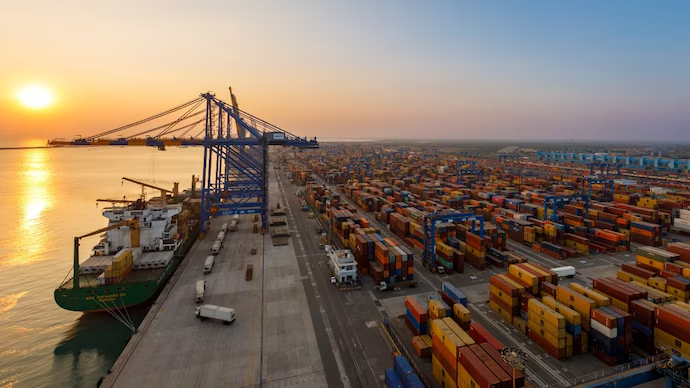
Adani Group is pursuing overseas ports expansion even as it continues to face regulatory scrutiny at home and abroad. The strategy signals a push to strengthen its global logistics footprint while managing investor concerns and compliance pressures.
Adani Group overseas ports expansion is gaining attention as the conglomerate looks to scale its presence beyond India. Despite ongoing scrutiny from regulators and market participants, the group is actively exploring international port assets to diversify revenue and strengthen its infrastructure portfolio.
Global Expansion Strategy Gains Momentum Despite Headwinds
Adani Group has built India’s largest private port network through Adani Ports and Special Economic Zone, handling a significant share of the country’s cargo traffic. Expanding overseas is a logical next step to become a global logistics player.
The group has previously acquired and operated port assets in regions such as Australia and Israel, demonstrating its ability to manage international infrastructure projects. Current expansion efforts are likely focused on strategic locations that can enhance trade connectivity and cargo volumes.
However, this expansion comes at a time when the group is under regulatory and market scrutiny. Allegations and investigations in recent years have increased focus on governance, financial disclosures, and compliance standards.
Despite these challenges, the group appears committed to executing its long-term global strategy.
Regulatory Scrutiny Shapes Investor Sentiment and Strategy
Regulatory scrutiny remains a key factor influencing Adani Group’s expansion plans. Authorities in India and other jurisdictions have been closely examining aspects of the group’s operations, financial practices, and disclosures.
While the group has denied wrongdoing and taken steps to address concerns, the scrutiny has impacted investor sentiment and access to capital. This makes overseas expansion both a strategic opportunity and a reputational test.
Investors are likely to closely monitor how the group manages compliance in new markets. Transparent governance and adherence to international regulatory standards will be critical for sustaining confidence.
The ability to navigate regulatory challenges while expanding globally will define the group’s next phase of growth.
Strategic Importance of Ports in Global Trade Networks
Ports are critical assets in global trade, serving as gateways for imports and exports. By expanding its international port portfolio, Adani Group aims to integrate more deeply into global supply chains.
Owning and operating ports in multiple regions can provide logistical advantages, including better control over cargo movement and diversified revenue streams. It also reduces dependence on domestic markets.
The global shipping and logistics sector is undergoing transformation due to supply chain disruptions and shifting trade patterns. Companies with integrated infrastructure capabilities are better positioned to capitalize on these changes.
Adani’s focus on ports aligns with this trend, as it seeks to build a network that connects key trade corridors.
Financing and Risk Management Remain Key Challenges
Overseas expansion requires significant capital investment, and financing such projects in the current environment presents challenges. Lenders and investors are likely to demand higher transparency and risk mitigation measures.
Adani Group has been working to improve its financial profile, including reducing leverage and strengthening balance sheets across its entities. These steps are aimed at restoring investor confidence and ensuring access to funding.
Currency risks, geopolitical factors, and regulatory differences across countries also add complexity to international operations. Effective risk management will be essential to ensure sustainable returns from overseas assets.
The group’s ability to secure funding at competitive rates will influence the pace and scale of expansion.
Competitive Landscape in Global Port Operations
The global port sector is highly competitive, with established players operating across regions. Adani Group will need to compete with international operators that have long-standing relationships and operational expertise.
However, the group’s experience in managing large-scale infrastructure projects in India provides a foundation for global expansion. Its integrated approach, combining ports, logistics, and energy, could offer competitive advantages.
Strategic partnerships or joint ventures may also play a role in entering new markets. Collaborating with local players can help navigate regulatory environments and operational challenges.
Success in overseas markets will depend on execution, efficiency, and the ability to adapt to local conditions.
Outlook for Adani’s Global Infrastructure Ambitions
Adani Group’s overseas ports expansion reflects its ambition to become a global infrastructure leader. While regulatory scrutiny adds complexity, it also underscores the importance of strong governance and transparency.
If the group can address investor concerns and execute projects effectively, it could significantly enhance its global presence. The next phase of expansion will likely be closely watched by both markets and regulators.
The broader implication is a growing trend of Indian infrastructure companies expanding internationally, leveraging domestic scale to compete globally.
Adani’s strategy, if successful, could set a precedent for others in the sector.
Takeaways
- Adani Group is pursuing overseas ports expansion despite regulatory scrutiny
- Global diversification is central to its long-term logistics strategy
- Investor confidence depends on governance and compliance standards
- Execution and financing will be key to successful expansion
FAQs
Why is Adani Group expanding overseas?
To diversify revenue, strengthen its global logistics network, and reduce dependence on domestic markets.
What challenges does the group face?
Regulatory scrutiny, financing constraints, and operational risks in international markets.
How important are ports to Adani’s business?
Ports are a core part of its infrastructure portfolio and key to its logistics strategy.
Will regulatory issues impact expansion plans?
They could influence investor sentiment and funding, but the group is continuing its expansion efforts.