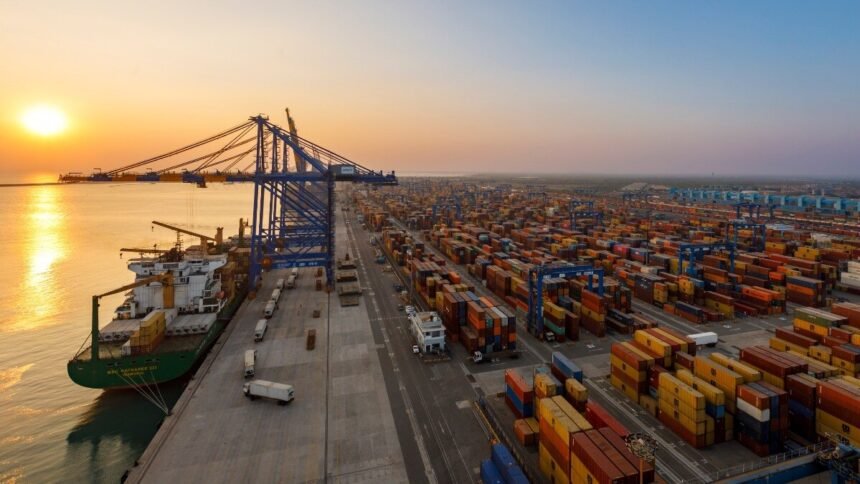
Adani Ports has reported strong cargo growth driven by increased activity along Middle East trade routes. The surge reflects shifting global shipping patterns, higher energy trade volumes, and India’s growing role in regional logistics and maritime connectivity.
Adani Ports cargo growth is gaining momentum as trade flows between India and the Middle East intensify. The company’s performance highlights how geopolitical shifts and supply chain adjustments are influencing port activity and boosting volumes across key terminals.
Middle East Trade Routes Drive Cargo Volume Expansion
The recent increase in Adani Ports cargo growth is closely linked to rising trade activity with Middle Eastern countries. Energy imports, including crude oil and LNG, continue to form a significant portion of cargo movement, while exports of goods such as chemicals, textiles, and engineering products are also contributing.
The Middle East remains a critical trade partner for India, with well-established shipping routes that support high-volume cargo flows. As global supply chains adapt to disruptions in other regions, these routes have gained further importance.
Adani Ports, with its strategically located terminals along India’s western coastline, is well positioned to benefit from this trend. Ports such as Mundra have become key hubs for handling large volumes of containerized and bulk cargo linked to Middle Eastern trade.
This growth reflects both increased demand and improved operational efficiency at major port facilities.
Strategic Port Network Strengthens Logistics Advantage
Adani Ports has built an extensive network of ports and logistics infrastructure that enhances its ability to capture growing trade volumes. The company’s integrated approach combines port operations with rail, road, and warehousing services, enabling seamless cargo movement.
This integrated logistics model allows faster turnaround times and better handling capacity, which are critical factors for shipping companies and exporters. As trade volumes increase, efficiency becomes a key differentiator.
The company has also invested in expanding capacity at key ports to accommodate larger vessels and higher throughput. These investments are starting to translate into measurable growth in cargo volumes.
In addition, digital systems and automation are improving operational visibility and reducing bottlenecks, further supporting growth.
Global Shipping Shifts Impact India Port Activity
Changes in global shipping patterns are playing a role in boosting cargo volumes at Indian ports. Ongoing disruptions in certain maritime routes have led shipping lines to adjust their operations, increasing reliance on alternative corridors.
Middle East trade routes have remained relatively stable compared to other regions, making them more attractive for consistent cargo movement. This stability benefits ports that are closely connected to these routes.
India’s position as a major importer of energy and a growing exporter of manufactured goods adds to the volume of trade passing through these corridors. As a result, ports handling these routes are seeing increased activity.
Adani Ports, as one of the largest private port operators in India, is directly benefiting from these shifts in global logistics dynamics.
Revenue and Operational Implications for Adani Ports
The rise in cargo volumes has direct implications for Adani Ports’ revenue and operational performance. Higher volumes typically lead to increased port handling charges, logistics revenue, and improved asset utilization.
However, sustaining this growth requires continuous investment in infrastructure and operational efficiency. Port operations are capital-intensive, and maintaining competitiveness depends on the ability to scale capacity while controlling costs.
The company’s focus on diversifying cargo types, including containers, bulk, and liquid cargo, helps reduce dependence on any single segment. This diversification provides stability in revenue streams.
At the same time, external factors such as global trade conditions, fuel prices, and regulatory changes continue to influence performance.
Outlook for India Maritime Trade and Port Growth
Adani Ports cargo growth reflects broader trends in India’s maritime sector, where increasing trade volumes are driving demand for efficient port infrastructure. The government’s focus on port-led development and logistics efficiency is expected to support long-term growth.
As India strengthens its trade ties with the Middle East and other regions, cargo volumes are likely to remain strong. Investments in port capacity, connectivity, and technology will be critical in sustaining this momentum.
For Adani Ports, the challenge will be to maintain growth while navigating global uncertainties and competitive pressures. The company’s scale and integrated approach position it well, but execution will remain key.
The current growth phase highlights the importance of strategic positioning in global trade networks and the role of ports as critical infrastructure in economic development.
Takeaways
Adani Ports is seeing strong cargo growth driven by Middle East trade routes
Energy imports and exports are key contributors to rising volumes
Integrated logistics and infrastructure investments support growth
Global shipping shifts are increasing reliance on stable trade corridors
FAQs
Why is Adani Ports experiencing cargo growth?
The growth is driven by increased trade activity with the Middle East and shifts in global shipping routes.
Which types of cargo are contributing to this growth?
Energy imports, bulk cargo, and containerized goods are major contributors.
How do Middle East trade routes impact Indian ports?
These routes provide stable and high-volume trade flows, boosting activity at ports connected to them.
What is the future outlook for Adani Ports?
The outlook remains positive, supported by strong trade demand and continued investment in infrastructure.