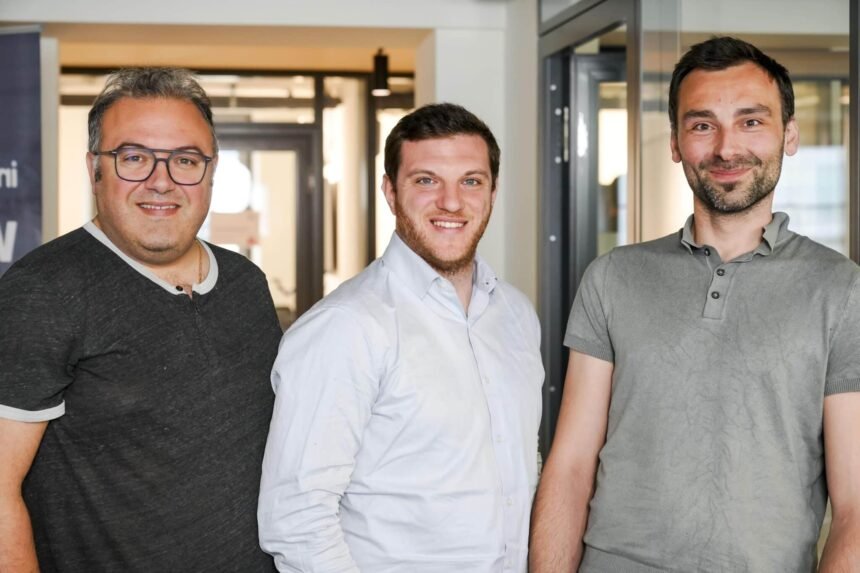
The AI-hardware startup NcodiN has raised a €16 million seed round, marking a significant infusion into the main keyword AI hardware sector at a time when deep-tech innovation is attracting global capital. The funding, led by MIG Capital AG, signals renewed investor appetite for specialised hardware beyond traditional software-led AI plays.
Why NcodiN’s seed round matters for AI hardware
NcodiN’s seed funding stands out not only for its size but for its timing. As AI models become more complex, traditional chip architectures are hitting performance and efficiency ceilings. This is driving demand for new hardware optimised for low-latency, high-bandwidth and energy-efficient computation. NcodiN focuses on next-generation architectures tailored for AI inference workloads, positioning itself in a rapidly emerging category of European deep-tech players working to reduce dependency on legacy chip ecosystems. The €16 million round provides the financial depth needed for prototyping, early manufacturing and first customer trials.
Growing investor appetite for deep-tech and hardware innovation
The participation of MIG Capital AG, a known backer of deep-tech and industrial tech, highlights a broader shift: global investors are again warming to capital-intensive hardware startups. After years dominated by software and platform-based investments, the resurgence in specialised hardware comes from structural changes in AI deployment. Edge computing, autonomous systems and real-time analytics demand hardware that traditional semiconductor players cannot develop quickly enough. Investors recognise that winning the next decade of AI progress depends not just on algorithms but on the chips enabling them. NcodiN’s funding is part of a broader pattern across the US, Europe and Asia, where early-stage hardware players are securing meaningful rounds.
Europe’s role in the AI hardware race
Europe has historically lagged behind the US and parts of Asia in semiconductor innovation. But the continent is now pushing to reclaim strategic ground through targeted funding, sovereign initiatives and corporate-venture involvement. NcodiN’s seed round aligns with Europe’s push to reduce supply-chain dependence and increase technological sovereignty. With energy-efficient chip design high on the agenda, European startups like NcodiN are positioned to fill gaps in local AI infrastructure. This also complements the region’s broader strategy to strengthen advanced-manufacturing capabilities, stimulate R&D, and attract international partnerships. While challenges remain, the funding underlines Europe’s growing relevance in the global chip development landscape.
Challenges ahead: capital intensity and scale requirements
Despite the optimism, AI-hardware development remains resource-heavy and complex. NcodiN must navigate long development cycles, high manufacturing costs and competition from established semiconductor firms. Achieving chip-level differentiation requires flawless execution in design, fabrication partnerships and software-hardware integration. Early customer pilots will be crucial in validating performance claims. Moreover, scaling to commercial volumes demands sustained investment far beyond a seed round. Supply-chain constraints, export-control regimes and market timing also pose risks. For investors, these realities underscore the importance of backing founders who combine technical depth with operational discipline.
What this means for global hardware innovation
NcodiN’s funding reflects the broader global resurgence of hardware-centric innovation. As AI shifts from cloud-centric to distributed and real-time computing, the need for specialised processors, memory systems and novel architectures is intensifying. Startups occupy a unique space: large enough to innovate boldly, small enough to move fast. The trend also signals that global capital markets are diversifying beyond software in anticipation of the next hardware-led growth cycle. If early prototypes succeed, NcodiN could join a growing cohort of companies shaping the future of AI at the silicon level.
Takeaways
- Deep-tech hardware regains investor focus: NcodiN’s €16 million seed round highlights renewed capital interest in AI hardware innovation.
- Europe’s semiconductor push gains momentum: The funding supports Europe’s effort to build local capability and reduce external dependence.
- Hardware remains a high-stakes category: Long development cycles and scalability demands make execution critical for emerging chip startups.
- Global trend toward specialised AI chips: Investors are betting that next-gen AI performance gains will come from hardware as much as software.
FAQs
Q: What does NcodiN focus on within AI hardware?
A: NcodiN develops next-generation chip architectures designed specifically for AI inference, aiming to improve performance and energy efficiency beyond conventional processors.
Q: Why is a €16 million seed round significant for hardware?
A: Hardware requires substantial upfront capital for design, prototyping and early manufacturing. A seed round of this size enables meaningful progress toward commercial readiness.
Q: How does this funding strengthen Europe’s semiconductor position?
A: It supports local innovation, reduces reliance on external chip ecosystems and aligns with broader European ambitions for technological sovereignty.
Q: What risks lie ahead for NcodiN?
A: Key risks include high development cost, supply-chain dependencies, intense competition and the difficulty of achieving reliable commercial-scale manufacturing.