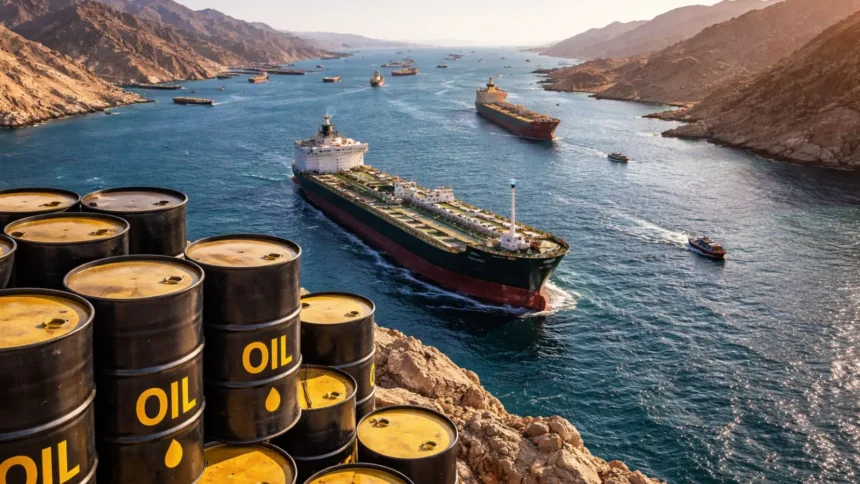
The Brent crude surge past $100 has intensified concerns across global markets, with India facing renewed pressure on fuel pricing. Rising oil costs are expected to impact inflation, government finances, and consumer spending in the coming weeks.
Brent Crude Surge Past $100 Shakes Global Oil Markets
The Brent crude surge past $100 marks a significant shift in global energy markets, driven largely by geopolitical tensions and supply uncertainties. This price level, last seen during periods of heightened global instability, has once again brought oil volatility into focus.
Global benchmark Brent crude crossing the $100 mark affects not just energy companies but entire economies. Higher crude prices directly increase the cost of transportation, manufacturing, and logistics, creating a ripple effect across industries.
Market participants are reacting cautiously. Equity markets have shown signs of volatility, while bond yields and commodity prices are adjusting to reflect inflationary expectations. For oil-importing countries like India, the impact is immediate and visible.
Impact on India Fuel Pricing and Inflation Outlook
India fuel pricing is now under pressure as the country depends heavily on crude oil imports to meet its energy needs. When global crude prices rise, domestic fuel costs eventually follow, unless offset by government intervention.
Oil marketing companies in India revise petrol and diesel prices based on international benchmarks. While there can be a lag due to pricing mechanisms, sustained high crude prices often lead to retail price increases.
This has a direct impact on inflation. Fuel is a key input cost across sectors, from agriculture to logistics. A rise in diesel prices, in particular, increases the cost of transporting goods, which can push up food and commodity prices.
For policymakers, this creates a difficult balance between controlling inflation and maintaining fiscal discipline.
Government Response and Excise Duty Strategy
The Indian government has historically used excise duty adjustments to manage fuel price shocks. During periods of rising crude prices, excise cuts can provide temporary relief to consumers.
However, reducing excise duties also impacts government revenue. Fuel taxes are a significant source of income, and any reduction must be weighed against fiscal targets.
With Brent crude staying above $100, there is growing speculation about potential policy interventions. These could include targeted tax cuts, subsidies, or strategic use of oil reserves to stabilize supply.
At the same time, policymakers may adopt a wait and watch approach, especially if the price spike is driven by short-term disruptions.
Broader Economic Impact of Rising Crude Oil Prices
The broader economic impact of rising crude oil prices extends beyond fuel stations. Industries such as aviation, logistics, chemicals, and manufacturing are particularly sensitive to energy costs.
Airlines may increase ticket prices due to higher aviation turbine fuel costs. Logistics companies could pass on higher diesel expenses to businesses, affecting supply chains.
Small businesses and consumers also feel the pressure. Higher fuel costs reduce disposable income, which can dampen consumption and slow economic momentum.
India’s current account deficit may also widen, as higher import bills increase the outflow of foreign exchange. This can put additional pressure on the rupee.
Global Oil Supply Concerns and Market Volatility
The Brent crude surge is closely linked to global supply concerns. Disruptions in key oil-producing regions, especially in the Middle East, have raised fears about supply shortages.
The Strait of Hormuz, a critical oil transit route, plays a vital role in global energy supply. Any instability in this region can quickly push prices higher.
OPEC+ production decisions also influence the market. If supply remains constrained while demand holds steady, prices may stay elevated for a longer period.
Investors are closely tracking geopolitical developments and inventory data to assess the direction of oil prices. Volatility is expected to remain high in the near term.
Key Takeaways
- Brent crude crossing $100 has increased global market volatility and inflation concerns
- India’s fuel pricing is under pressure due to heavy dependence on oil imports
- Government may consider excise duty adjustments to manage retail fuel prices
- Rising crude prices impact multiple sectors, including transport, aviation, and consumer goods
FAQs
Q1. Why has Brent crude crossed $100?
The surge is driven by geopolitical tensions, supply disruptions, and concerns over limited production from key oil-producing regions.
Q2. How does this affect petrol and diesel prices in India?
Higher global crude prices typically lead to increased domestic fuel prices, depending on government tax policies and pricing mechanisms.
Q3. Will the government reduce fuel taxes?
It is possible, but not guaranteed. Any decision will depend on inflation levels, fiscal considerations, and the duration of high crude prices.
Q4. What sectors are most affected by rising oil prices?
Transport, aviation, logistics, and manufacturing sectors are among the most impacted due to their dependence on fuel.