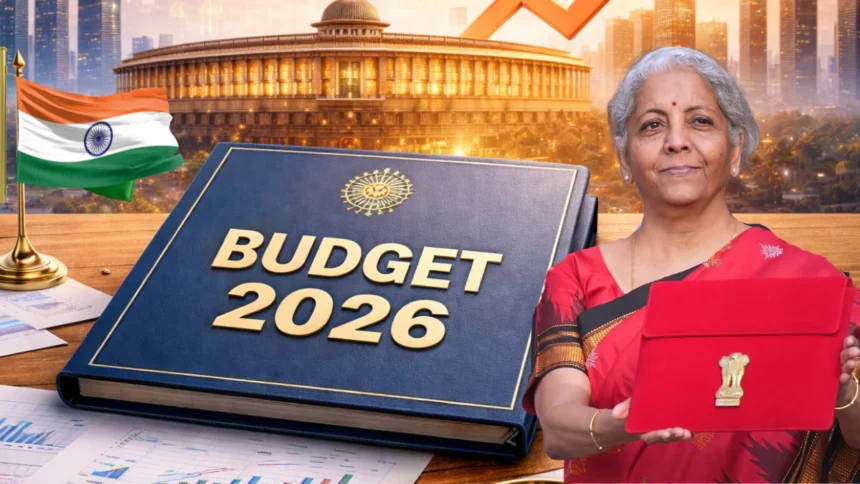
Budget 2026 defence stocks are firmly in focus as HAL and BEL brace for churn amid a clear policy tilt toward domestic modernisation. The market is positioning for allocation shifts, execution cues, and order visibility as the government aligns capital spending with indigenisation and capability upgrades.
India’s defence allocation has been on a steady upward path over recent years, with capital outlay increasingly earmarked for domestic procurement. Budget 2026 is time sensitive news, and the tone across markets is reactive. Traders are parsing not just headline numbers, but the mix between revenue and capital spend, timelines for big-ticket programs, and signals on private sector participation. For Hindustan Aeronautics Limited and Bharat Electronics Limited, the budget read-through is expected to be immediate and volatile.
Capital allocation signals and defence spending priorities
The first read of Budget 2026 defence stocks will hinge on capital allocation signals. Markets expect continued emphasis on platforms, sensors, avionics, and electronic warfare rather than pure manpower or imports. This aligns with recent procurement patterns where domestic manufacturing has gained preference through policy and contracting frameworks.
HAL stands to be sensitive to announcements around fighter aircraft, helicopters, and engine programs. Any clarity on delivery schedules, export push, or additional funding for upgrades can move the stock sharply. BEL’s sensitivity lies in electronics-heavy allocations including radars, communication systems, and battlefield management systems. Even modest shifts in allocation language can influence order inflow expectations and near-term earnings models.
Importantly, the budget’s language around multi-year procurement commitments matters as much as headline numbers. Markets reward visibility. A clear signal on long-term contracts tends to compress uncertainty premiums across defence PSUs.
HAL stock outlook amid indigenous manufacturing push
HAL is at the center of the domestic modernisation narrative. As Budget 2026 defence stocks react, HAL’s valuation will be driven by execution confidence rather than sentiment alone. Investors will look for confirmation that production bottlenecks are easing and that delivery timelines remain intact.
Any mention of expanded production capacity, engine development funding, or export enablement could trigger sharp moves. Conversely, silence on execution challenges or working capital cycles may cap upside despite strong policy intent. The market has learned to separate intent from implementation.
HAL’s stock historically reacts quickly to budget cues but tends to stabilize once clarity emerges on order conversion and cash flows. Short-term churn should be expected, especially in derivatives, but medium-term direction will follow execution metrics rather than one-day reactions.
BEL positioning as electronics spend rises
BEL occupies a different but equally critical space in the defence ecosystem. Budget 2026 defence stocks include BEL as a proxy for electronics-led modernisation. Increased spending on network-centric warfare, surveillance, and digital integration plays directly into BEL’s strengths.
The key variable for BEL is breadth of allocation. A diversified electronics spend across Army, Navy, and Air Force reduces dependency risk and smooths revenue recognition. Markets will watch for signals on exports, co-development projects, and private sector collaboration, which can alter BEL’s growth profile.
Unlike platform-heavy players, BEL’s order book typically has shorter execution cycles. This makes it more sensitive to near-term allocation changes. Any positive surprise in electronics funding can translate quickly into earnings upgrades, which explains why BEL often sees sharper intraday moves on budget day.
Market churn, valuations, and trader behavior
The phrase primed for churn is not speculative. Budget days historically bring elevated volumes and rapid price discovery in defence stocks. HAL and BEL both have significant retail and institutional ownership, amplifying volatility when expectations diverge.
Valuations ahead of Budget 2026 already reflect optimism around domestic modernisation. That means upside requires confirmation, not just continuity. If allocations meet expectations without exceeding them, stocks may see knee-jerk profit booking before stabilizing.
Derivatives data often shows increased hedging in defence names ahead of the budget. This points to traders preparing for both directions. For long-term investors, the budget is less about day-one price action and more about signals that shape order pipelines over the next three to five years.
Strategic context beyond the headline numbers
Budget 2026 defence stocks should be read in a broader strategic context. India’s push for self-reliance, export competitiveness, and technology depth is not a one-year theme. HAL and BEL are beneficiaries, but also bear the burden of execution and governance scrutiny.
Markets increasingly reward companies that convert policy support into measurable outcomes. That means delivery schedules, margin discipline, and capital efficiency will matter more than allocation headlines after the initial churn fades.
In that sense, Budget 2026 acts as a trigger, not a conclusion. The real stock performance will unfold as orders translate into revenues and cash flows across quarters.
Takeaways
Budget 2026 is a near-term volatility trigger for defence stocks
HAL reacts to platform and production clarity more than headline allocations
BEL benefits from electronics-heavy modernisation spend with faster execution cycles
Long-term performance depends on execution, not just policy intent
FAQs
Why are defence stocks volatile during the budget
Because allocations and policy signals directly affect order visibility, execution timelines, and earnings expectations.
Which stock is more sensitive to budget announcements, HAL or BEL
Both react sharply, but BEL often sees quicker moves due to shorter execution cycles.
Does a higher defence budget guarantee stock gains
No. Markets price expectations in advance. Gains depend on clarity, execution confidence, and follow-through.
Is Budget 2026 a long-term turning point for defence stocks
It reinforces an existing trend toward domestic modernisation rather than creating a new one.