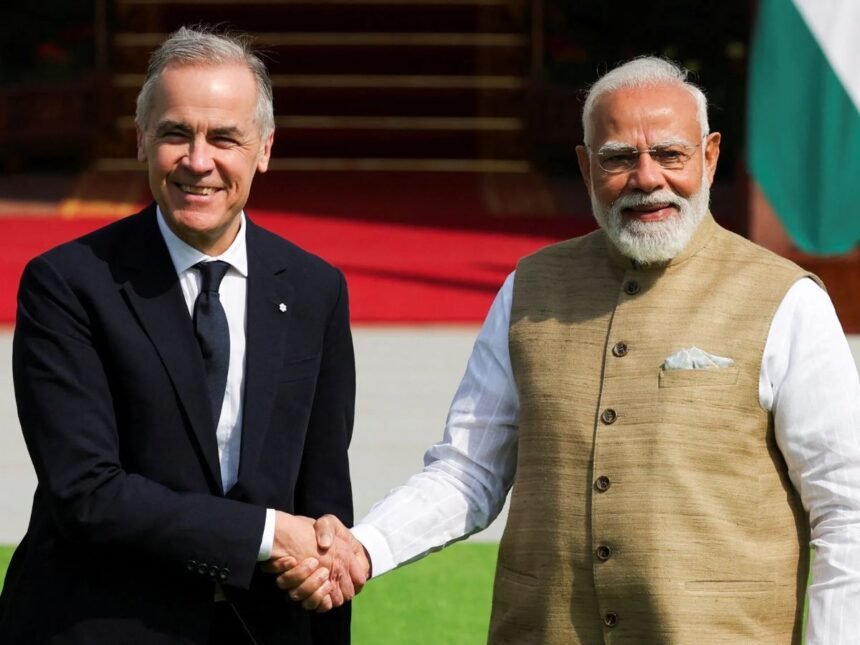
Canada–India trade talks are gaining momentum with a renewed push to revive CEPA negotiations. Both countries are exploring ways to deepen economic ties after a period of diplomatic strain, signaling a cautious but strategic reset in bilateral trade engagement.
Canada–India trade talks gather pace with fresh push on CEPA negotiations, marking a notable shift in bilateral economic engagement. The Comprehensive Economic Partnership Agreement, or CEPA, has been under discussion for years, but recent developments suggest both sides are now looking to move forward with renewed urgency.
Renewed efforts to revive CEPA negotiations
The CEPA between India and Canada aims to reduce trade barriers, improve market access, and strengthen investment flows. Negotiations had slowed in the past due to unresolved differences and broader diplomatic tensions.
Recent signals indicate that officials from both countries are re-engaging to find common ground. The renewed push reflects a recognition of the economic benefits that a trade agreement could bring, particularly at a time when global supply chains are being reconfigured.
Key areas under discussion include tariff reductions, services trade, and investment protection. Both sides are also exploring interim arrangements that could deliver early gains while full negotiations continue.
Strategic importance of bilateral trade relations
India and Canada have complementary economic strengths that make deeper trade ties mutually beneficial. Canada is rich in natural resources, including energy and agricultural products, while India offers a large consumer market and a growing services sector.
Strengthening trade relations aligns with India’s broader strategy of diversifying its economic partnerships. For Canada, engaging with India provides an opportunity to expand its presence in one of the fastest-growing major economies.
The two countries already share significant trade links, but the potential remains underutilized. A comprehensive agreement could unlock new opportunities in sectors such as technology, education, and clean energy.
This renewed engagement also reflects a broader trend of countries seeking to build resilient and diversified trade networks.
Key sectors driving CEPA discussions
Several sectors are central to the ongoing Canada–India CEPA negotiations. Agriculture and agri-products are a major focus, with Canada looking to expand exports of pulses, grains, and other commodities to India.
In return, India is seeking greater access for its pharmaceuticals, textiles, and information technology services. The services sector, in particular, is a key area where India has a competitive advantage.
Energy cooperation is another important dimension. Canada’s resources, including oil and natural gas, could play a role in supporting India’s growing energy needs.
Education and mobility are also part of the conversation, given the large number of Indian students in Canada. Policies that facilitate movement of professionals and students could further strengthen economic ties.
Challenges and sensitivities in negotiations
Despite the positive momentum, several challenges remain. Trade negotiations between India and Canada have historically faced hurdles related to market access, regulatory standards, and political considerations.
Agricultural trade is a sensitive area for India, where domestic farmers’ interests must be carefully balanced. Similarly, Canada has its own regulatory frameworks that could impact Indian exports.
Diplomatic relations have also experienced periods of strain, which can influence the pace and direction of negotiations. While economic interests often drive engagement, political factors cannot be ignored.
Both sides will need to navigate these complexities carefully to ensure that progress is sustained.
Economic impact of a potential CEPA agreement
If successfully concluded, the CEPA could significantly boost bilateral trade and investment flows. Businesses in both countries would benefit from reduced tariffs and improved market access.
For Indian exporters, Canada represents a high-value market with opportunities across multiple sectors. Canadian companies, in turn, could gain better access to India’s large and growing consumer base.
Investment flows are also expected to increase, supporting infrastructure development and job creation. Enhanced economic cooperation could lead to stronger business partnerships and innovation.
However, the benefits will depend on the scope and depth of the agreement, as well as its implementation.
Outlook as negotiations regain traction
The renewed push for Canada–India CEPA negotiations signals a pragmatic approach by both governments. While challenges remain, the willingness to re-engage suggests that economic priorities are taking precedence.
Progress may be gradual, with interim agreements or sector-specific deals paving the way for a comprehensive partnership. The evolving global trade environment adds urgency to these efforts.
For now, the focus is on rebuilding trust, aligning interests, and creating a framework that supports long-term cooperation. The coming months will be critical in determining whether this momentum translates into concrete outcomes.
Takeaways
- Canada–India CEPA talks are gaining momentum after a period of slowdown
- Both countries aim to boost trade, investment, and economic cooperation
- Key sectors include agriculture, services, energy, and education
- Challenges remain around market access, regulations, and political factors
FAQs
What is CEPA between India and Canada?
It is a proposed trade agreement aimed at reducing tariffs and improving economic ties between the two countries.
Why are the talks gaining momentum now?
Both countries are looking to strengthen trade partnerships amid changing global economic conditions.
Which sectors will benefit from CEPA?
Agriculture, services, energy, and education are expected to see significant gains.
Are there any challenges to the agreement?
Yes, issues related to market access, regulatory standards, and political factors remain key challenges