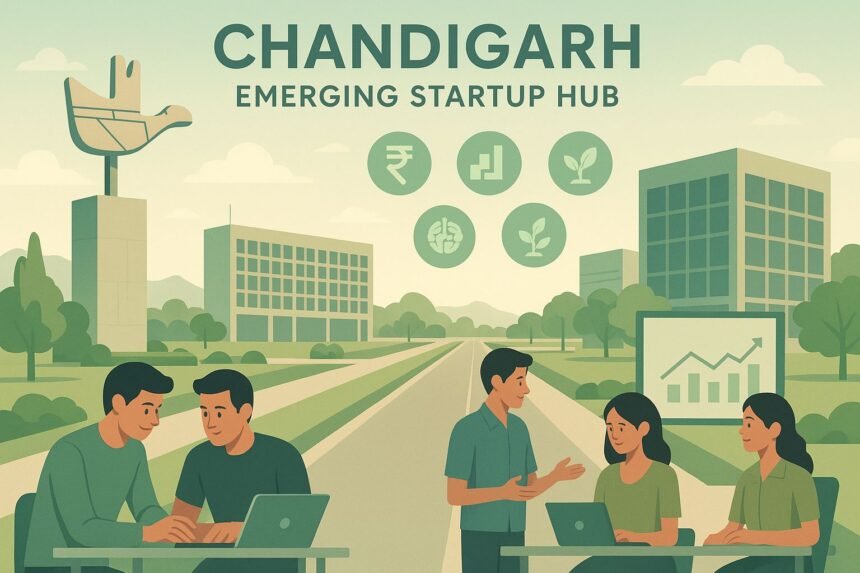
Chandigarh startup count jumps from 10 to 633 in 10 years, marking one of the fastest ecosystem expansions among smaller Indian regions. Policymakers are now pushing a focused regional strategy to convert this growth into sustainable jobs, innovation depth and long term investment inflows.
Chandigarh startup count jumps from 10 to 633 in 10 years, a shift that reflects how smaller cities are emerging as credible startup hubs beyond India’s traditional metros. What began as a handful of early stage ventures has evolved into a dense network of technology, services and consumer focused startups. This rapid rise is now shaping policy priorities at the state and regional level.
From nascent ecosystem to visible startup cluster
A decade ago, Chandigarh’s startup presence was minimal, largely limited to a few IT services and local consumer ventures. Access to capital was scarce, mentorship was informal and most founders eventually relocated to larger cities. The situation has changed materially over the last ten years.
Improved digital infrastructure, better access to early stage funding and the spillover of talent from nearby cities such as Mohali, Panchkula and Delhi NCR have helped accelerate formation rates. Startups today span sectors including SaaS, health tech, edtech, fintech, logistics and consumer brands. The rise in coworking spaces, incubators and accelerator programs has also reduced friction for first time founders.
Importantly, many startups are now choosing to stay and scale locally rather than treating Chandigarh as a temporary launchpad. This retention is a key indicator of ecosystem maturity.
Talent availability and cost advantage drive momentum
One of the strongest drivers behind Chandigarh’s startup surge is its talent profile. The region produces a steady pipeline of graduates from engineering, management and design institutes across Punjab, Haryana and Himachal Pradesh. For startups, this translates into access to skilled talent without the salary inflation seen in metro markets.
Lower operating costs have further strengthened the case for building companies in the region. Office rentals, employee churn and basic infrastructure expenses remain significantly lower than in Bengaluru, Mumbai or Gurugram. This cost efficiency allows startups to extend runway and focus capital on product development and customer acquisition rather than overheads.
Quality of life has also emerged as a differentiator. Founders cite shorter commute times, cleaner urban planning and better work life balance as factors that help attract and retain employees. This soft advantage is increasingly relevant in a post pandemic work environment.
Policy support evolves from promotion to execution
As the startup count has scaled, policymakers have shifted focus from promotional initiatives to execution led strategies. Early efforts centered on registration drives, awareness programs and startup events. The current phase is about building depth through targeted incentives, sector focus and infrastructure support.
The regional strategy being pushed emphasizes incubation capacity, access to government procurement and linkages with larger enterprises. Policymakers are also working to simplify compliance and provide faster approvals for startups operating in regulated sectors. The goal is to reduce friction at critical growth stages rather than just encouraging formation.
Another priority is capital access. While early stage funding has improved, growth stage capital remains limited locally. The strategy includes attracting venture funds and corporate investors to set up regional presence, reducing the need for startups to relocate for scale funding.
Sector specialization becomes the next frontier
With numbers rising rapidly, attention is turning to specialization. Policymakers and ecosystem leaders are encouraging startups to cluster around sectors where the region has natural advantages. These include healthcare services, agritech linked to Punjab’s farm economy, education technology and enterprise software.
By developing sector specific clusters, Chandigarh aims to move beyond volume driven growth to capability driven leadership. Concentration enables shared talent pools, supplier networks and customer access. It also improves the region’s visibility among national and global investors looking for thematic exposure.
Startups themselves are beginning to collaborate more actively, sharing resources and market insights. This peer driven ecosystem behavior marks a shift from isolated company building to networked growth.
Challenges beneath the headline growth
Despite the impressive numbers, challenges remain. Many startups are still early stage and vulnerable to funding cycles. Revenue scalability and global market access are uneven across the ecosystem. Some founders continue to migrate to larger hubs once they reach later stages.
Infrastructure gaps also persist, particularly in advanced research facilities and deep tech support. While software and services startups thrive, hardware and manufacturing linked ventures face higher barriers. Policymakers acknowledge these gaps and are prioritizing partnerships with academic institutions and industry players to address them.
Another concern is data quality. Startup registration growth does not always translate into sustainable businesses. The next phase will require sharper metrics focused on survival rates, revenue growth and employment creation rather than headline counts.
What the surge means for India’s startup geography
Chandigarh’s rise is part of a broader shift in India’s startup geography. As metros become saturated and expensive, founders are increasingly open to building from smaller cities with strong fundamentals. This decentralization aligns with national objectives of balanced regional development and job creation.
For investors, regions like Chandigarh offer early access to undervalued talent and business models. For policymakers, they present an opportunity to design ecosystem strategies from the ground up rather than retrofitting congested hubs. The success or failure of the current regional push will influence how similar cities position themselves.
If execution matches intent, Chandigarh could evolve from a fast growing startup count story into a sustainable innovation hub with national relevance.
Takeaways
Chandigarh startup numbers have grown from 10 to 633 in a decade.
Lower costs and strong talent availability are key growth drivers.
Policymakers are shifting from promotion to execution focused strategies.
Sector specialization and funding access will shape the next growth phase.
FAQs
Why has Chandigarh seen such rapid startup growth?
Affordable costs, steady talent supply and improving ecosystem support have made it attractive for founders.
What sectors dominate the Chandigarh startup ecosystem?
SaaS, health tech, edtech, fintech and consumer focused startups are prominent, with agritech and enterprise software gaining ground.
What challenges do startups in the region face?
Limited growth stage funding, infrastructure gaps for deep tech and retention at scale remain key issues.
How does this impact India’s broader startup landscape?
It highlights the shift toward non metro startup hubs and supports more balanced regional innovation growth.