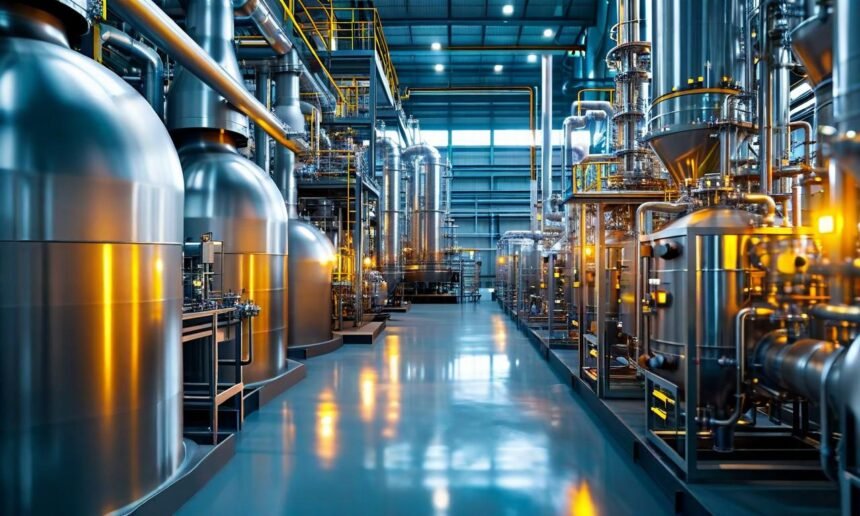
India’s chemical industry leaders have gathered in Mumbai to discuss evolving global supply chains and emerging opportunities for the sector. The meeting focuses on trade dynamics, geopolitical risks, and strategies to strengthen India’s role in international chemical manufacturing.
India’s chemical industry leaders meeting in Mumbai highlights the sector’s response to major global supply chain shifts. Executives, policymakers, and industry experts are examining how geopolitical tensions, changing trade policies, and new manufacturing trends are reshaping the international chemical market.
Global supply chain shifts reshape chemical industry strategy
The discussions in Mumbai center on global supply chain shifts affecting the chemical industry. Over the past few years, disruptions caused by geopolitical tensions, trade restrictions, and logistics bottlenecks have forced companies to rethink production and sourcing strategies.
Chemical manufacturers rely on complex supply chains that include raw materials, intermediate chemicals, specialized equipment, and international shipping networks. When disruptions occur in one region, they can quickly affect production worldwide.
Industry leaders are increasingly focused on building resilient supply chains that can withstand economic shocks and geopolitical uncertainties. This includes diversifying raw material sources, investing in domestic manufacturing capacity, and strengthening regional trade partnerships.
For India’s chemical sector, these global changes present both challenges and opportunities. Companies are exploring ways to expand production capabilities and attract new international customers seeking alternative manufacturing locations.
India chemical industry growth and export potential
The Indian chemical industry is one of the largest manufacturing sectors in the country. It contributes significantly to industrial output and exports a wide range of products including specialty chemicals, agrochemicals, petrochemicals, and pharmaceutical intermediates.
Industry participants in the Mumbai meeting are examining how India can expand its presence in global chemical markets. Rising demand for specialty chemicals, advanced materials, and sustainable chemical solutions is creating new opportunities for manufacturers.
India’s chemical exports have grown steadily as global companies diversify sourcing away from traditional production hubs. Competitive manufacturing costs, a strong engineering talent pool, and expanding industrial infrastructure have helped India gain international attention.
However, scaling export capacity requires continued investment in research and development, advanced production technologies, and environmental compliance systems.
Industry leaders are discussing strategies to strengthen India’s position as a reliable supplier in global chemical supply chains.
Geopolitical factors influencing global chemical trade
Geopolitical developments are playing a major role in shaping chemical industry supply chains. Trade tensions between major economies, shifting environmental regulations, and regional conflicts have all influenced how companies plan production and sourcing.
Many multinational chemical companies are adopting supply chain diversification strategies to reduce dependency on a single region. This shift often involves relocating manufacturing facilities or establishing new partnerships with suppliers in emerging industrial markets.
India is increasingly seen as a potential destination for chemical manufacturing expansion. The country offers a large domestic market as well as access to global shipping routes that connect Asia, Europe, and the Middle East.
During the Mumbai discussions, industry leaders are evaluating how India can benefit from these shifts by strengthening domestic production capabilities and attracting foreign investment.
Specialty chemicals and innovation driving sector growth
A major focus of the conference involves specialty chemicals, which represent one of the fastest growing segments of the chemical industry. Unlike commodity chemicals, specialty chemicals are designed for specific industrial applications and often command higher profit margins.
Industries such as pharmaceuticals, electronics manufacturing, automotive production, and renewable energy rely heavily on specialized chemical formulations. As these industries expand, demand for advanced chemical products continues to increase.
Indian companies have already built strong capabilities in certain specialty chemical segments, particularly those linked to pharmaceuticals and agricultural products.
Industry experts at the Mumbai meeting are discussing how companies can invest in research and development to create higher value products. Developing advanced materials and sustainable chemical technologies could help Indian manufacturers capture larger shares of global markets.
Innovation and technology adoption will play a crucial role in determining how competitive the sector becomes over the next decade.
Sustainability and environmental compliance challenges
Sustainability is becoming a central issue for chemical manufacturers worldwide. Governments and regulators are introducing stricter environmental standards for industrial emissions, waste management, and resource efficiency.
Chemical companies operating in global markets must increasingly meet environmental, social, and governance expectations from regulators and investors. This includes adopting cleaner production processes, improving energy efficiency, and reducing environmental impact.
In India, industry leaders are discussing how companies can invest in green chemistry technologies and environmentally responsible manufacturing practices.
Sustainable chemical production not only helps meet regulatory requirements but also improves competitiveness in global markets where buyers are prioritizing environmentally responsible suppliers.
The Mumbai meeting provides an opportunity for industry stakeholders to exchange ideas on how the sector can grow while maintaining high environmental standards.
Takeaways
Chemical industry leaders met in Mumbai to discuss global supply chain shifts
India aims to strengthen its role in international chemical manufacturing
Specialty chemicals and innovation are key growth areas for the sector
Sustainability and environmental compliance are becoming industry priorities
FAQs
Why are global supply chains important for the chemical industry?
Chemical production depends on international networks for raw materials, intermediate chemicals, and distribution, making supply chain stability crucial for manufacturing operations.
Why is India attracting attention in the chemical sector?
India offers competitive manufacturing costs, strong engineering expertise, and expanding industrial infrastructure, making it an attractive location for chemical production.
What are specialty chemicals?
Specialty chemicals are products designed for specific industrial applications such as pharmaceuticals, electronics, and agriculture rather than general industrial use.
How does sustainability affect chemical manufacturing?
Stricter environmental regulations require chemical companies to adopt cleaner production processes and reduce emissions, making sustainability a key industry priority.