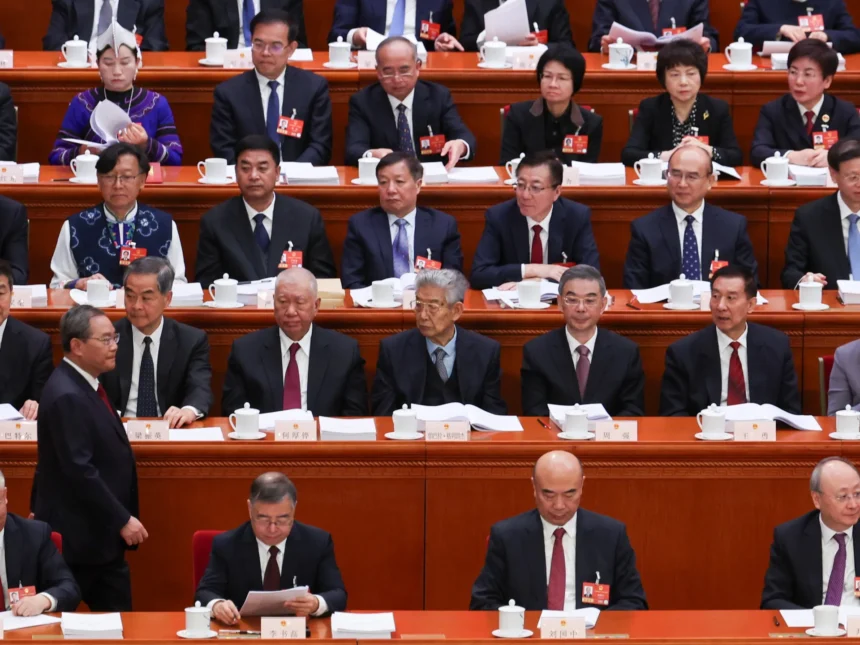
China has set its 2026 economic growth target between 4.5 and 5 percent as it begins implementing a new five year development plan. The target reflects Beijing’s attempt to balance steady economic expansion with structural reforms and global economic uncertainties.
China Announces 2026 Growth Target as New Plan Begins
China sets a 2026 economic growth target around 4.5 to 5 percent as the country begins implementing its new five year development plan. The target signals Beijing’s intention to maintain stable economic expansion while navigating domestic structural challenges and uncertain global economic conditions.
Economic growth targets are closely watched by investors, policymakers, and global markets because China remains the world’s second largest economy and a major driver of international trade. The target provides guidance for fiscal policy, industrial investment, and regional development strategies.
China’s leadership typically outlines these targets during major government planning cycles. The new five year framework is expected to emphasize technological innovation, industrial modernization, energy transition, and domestic consumption.
While the growth range appears slightly lower than the rapid expansion China experienced in earlier decades, economists note that the country’s economic structure has evolved significantly as it shifts toward higher quality growth.
China’s Economic Strategy Under the New Five Year Plan
The new five year plan represents a strategic blueprint guiding China’s economic and industrial policies through the second half of the decade. The plan focuses on balancing stable growth with structural transformation in key sectors of the economy.
Chinese policymakers have increasingly emphasized technological self reliance, advanced manufacturing, and digital infrastructure. These priorities aim to strengthen China’s position in global technology supply chains while reducing dependence on foreign innovation.
The growth target of 4.5 to 5 percent reflects a realistic approach given the size and maturity of China’s economy. As economies expand and reach higher income levels, maintaining extremely high growth rates becomes more difficult.
Instead of pursuing purely rapid expansion, policymakers are focusing on improving productivity, encouraging research and development investment, and upgrading industrial capabilities.
This approach is intended to ensure sustainable economic development while managing financial risks and demographic changes.
Domestic Consumption and Industrial Policy
Domestic consumption is expected to play a major role in achieving China’s economic growth target. Over the past decade, the government has attempted to reduce reliance on export driven growth by encouraging stronger consumer spending.
Policies supporting household income growth, urbanization, and service sector expansion are designed to stimulate internal demand. Expanding domestic consumption can help stabilize the economy when external demand fluctuates.
At the same time, China continues to invest heavily in strategic industries such as semiconductors, renewable energy, artificial intelligence, and advanced manufacturing.
Industrial policy has become a central pillar of China’s economic strategy. By supporting high technology sectors, policymakers aim to move up the global value chain and maintain competitiveness in emerging industries.
Infrastructure investment also remains an important tool for economic management. Transportation networks, digital infrastructure, and energy systems are expected to receive continued funding under the new development framework.
Global Economic Implications of China’s Growth Target
China’s economic growth target has significant implications for global trade, commodity markets, and investment flows. Many countries rely on Chinese demand for exports such as raw materials, industrial components, and consumer goods.
A stable growth rate around 4.5 to 5 percent could support steady global demand for commodities including iron ore, copper, and energy resources. These markets often respond quickly to signals about China’s economic outlook.
Global investors also monitor China’s economic policies closely. Decisions related to fiscal stimulus, monetary policy, and regulatory reforms can influence international financial markets.
China’s role in global supply chains means that its economic performance affects manufacturing activity worldwide. Companies that rely on Chinese production or consumer demand adjust their strategies based on economic forecasts from Beijing.
The growth target also reflects China’s effort to maintain economic stability amid global uncertainties, including geopolitical tensions and fluctuating international demand.
Challenges Facing China’s Economic Growth
Despite the ambitious planning framework, China’s economy faces several structural challenges. Slowing population growth, an aging workforce, and rising debt levels are among the issues policymakers must manage.
The real estate sector has also experienced periods of volatility in recent years. Property markets play a large role in China’s domestic economy, influencing household wealth, local government revenues, and financial sector stability.
Additionally, global economic conditions remain uncertain. Trade dynamics, technological competition, and shifting supply chains can affect China’s export performance.
Chinese authorities are attempting to address these challenges through policy reforms, financial regulation, and strategic investment in new industries.
The 4.5 to 5 percent growth target suggests that policymakers aim to balance economic ambition with caution, prioritizing stability while continuing long term structural transformation.
As the new five year plan unfolds, economic indicators such as industrial output, consumer spending, and investment levels will provide insight into how effectively China meets its growth objectives.
Takeaways
• China has set a 2026 economic growth target between 4.5 and 5 percent
• The target aligns with the country’s new five year development plan
• Policymakers are emphasizing technological innovation and domestic consumption
• China’s economic performance will influence global trade and commodity markets
FAQ
Why did China set a growth target of 4.5 to 5 percent?
The target reflects a balanced approach that aims to maintain stable economic expansion while managing structural challenges and global economic uncertainties.
What is the purpose of China’s five year economic plan?
The plan provides a long term framework guiding government policy on industrial development, infrastructure investment, technology innovation, and economic reforms.
How does China’s economic growth affect global markets?
As the world’s second largest economy, China influences global trade flows, commodity demand, manufacturing supply chains, and international investment trends.
What challenges could affect China’s growth target?
Key challenges include demographic changes, property sector volatility, global trade tensions, and the need to transition toward technology driven economic growth.