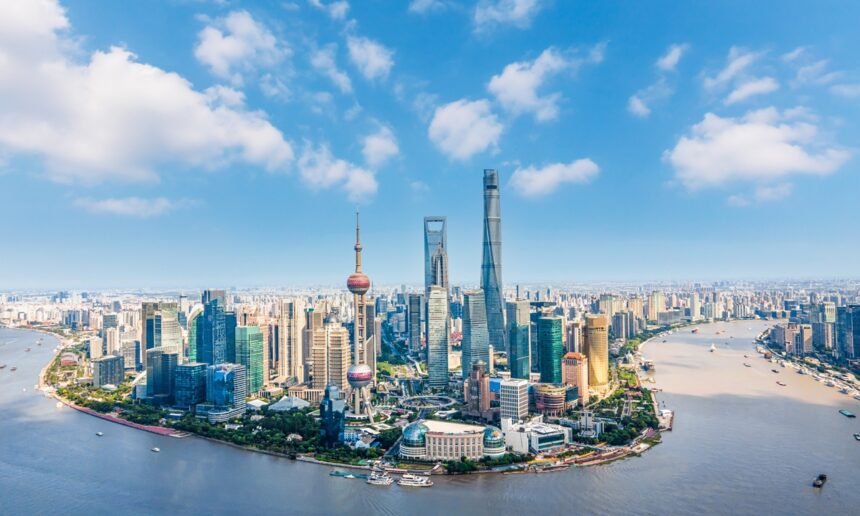
China has set a GDP growth target of around 4.5 to 5 percent for 2026 as the government intensifies its focus on technology, advanced manufacturing and industrial self reliance. The target signals Beijing’s attempt to stabilize the economy while reshaping long term growth drivers.
China’s 2026 GDP Growth Target Signals Policy Priorities
China’s GDP growth target of about 4.5 to 5 percent for 2026 reflects a cautious but strategic approach to economic management. The goal was announced during the annual policy meetings in Beijing where leaders outline priorities for the country’s economy and development agenda.
The GDP growth target China 2026 indicates that policymakers are aiming for stable expansion rather than aggressive growth. In previous decades China frequently targeted growth rates above 6 or even 8 percent. However structural changes in the economy, including a shrinking workforce and slower real estate activity, have led the government to adopt more moderate expectations.
Officials have emphasized that the growth target must be supported by stronger domestic consumption, technological innovation and industrial upgrading. The government has also reiterated its commitment to maintaining financial stability while continuing reforms across key sectors.
Focus on Technology Self Reliance and Industrial Policy
A central theme of China’s economic strategy is the push for technology self reliance. Beijing has significantly expanded investment in semiconductors, artificial intelligence, electric vehicles and advanced manufacturing.
China tech policy 2026 is designed to reduce dependence on foreign technology while strengthening domestic innovation capabilities. The government is increasing funding for research and development, supporting national laboratories and encouraging private companies to invest in high tech sectors.
Industrial policy is also being reinforced through targeted subsidies and strategic planning. Advanced industries such as robotics, aerospace, green energy and high performance computing are being positioned as long term growth engines.
At the same time authorities are encouraging the integration of digital technologies into traditional industries. Smart manufacturing, industrial internet platforms and automation are expected to improve productivity across sectors ranging from automotive to consumer electronics.
Balancing Growth with Structural Economic Challenges
Despite the optimistic tone surrounding the growth target, China continues to face several economic challenges. The property sector slowdown has reduced investment activity and weakened local government finances in many regions.
China economic outlook 2026 is also shaped by demographic trends. The country’s population has begun to decline and the working age population is shrinking. These factors are expected to place pressure on long term growth potential.
External factors also remain important. Trade tensions and export controls in advanced technology sectors have pushed China to accelerate domestic innovation. Global demand fluctuations and geopolitical risks can influence export performance, which historically played a major role in the country’s economic expansion.
To address these issues the government is focusing on boosting domestic consumption. Policies encouraging household spending, improving social welfare systems and expanding middle class purchasing power are being considered as part of the broader economic strategy.
Investment and Global Market Implications
China’s economic policy direction carries significant implications for global markets and supply chains. The emphasis on high technology manufacturing and green industries could reshape investment flows both within China and internationally.
China industrial policy growth strategy is expected to attract increased capital into sectors such as electric vehicles, renewable energy equipment, battery technology and semiconductor manufacturing. Domestic companies are likely to receive greater policy support while foreign firms may face more competition from local players.
For global investors the moderate GDP growth target signals stability rather than rapid expansion. Markets often interpret such targets as an indication that authorities are prioritizing quality of growth over speed.
China remains one of the world’s largest economies and a major driver of global demand. Changes in its industrial strategy therefore influence commodity markets, technology supply chains and international trade patterns.
Takeaways
China has set a GDP growth target of about 4.5 to 5 percent for 2026 as part of its economic policy roadmap.
The government is prioritizing technology self reliance and advanced manufacturing through expanded industrial policy.
Structural challenges such as the property slowdown and demographic changes are shaping the country’s growth outlook.
Global markets are watching China’s technology investments and industrial strategy for potential supply chain shifts.
FAQs
Why did China set a lower GDP growth target for 2026?
China is shifting toward more sustainable growth as structural factors such as an aging population and slower property investment reduce the pace of expansion compared to previous decades.
Which industries are likely to benefit from China’s tech focused strategy?
Semiconductors, artificial intelligence, electric vehicles, robotics and renewable energy technologies are among the sectors receiving strong policy support.
How does China’s industrial policy affect global businesses?
Companies around the world may face increased competition from Chinese firms while also benefiting from new opportunities in supply chains related to green technology and advanced manufacturing.
Is China still a major driver of global economic growth?
Yes. Even with slower growth rates, China remains one of the largest contributors to global economic expansion due to the size of its economy and manufacturing sector.