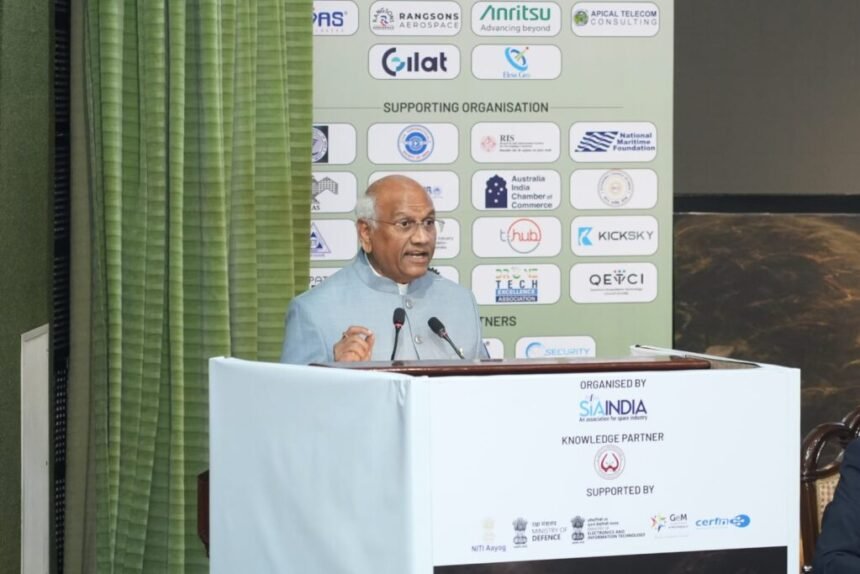
MoUs inked at DefSAT 2026 have sparked fresh interest in the defense space supply chain, with startups positioning to tap into satellite manufacturing, launch services, and dual use technologies. The agreements signal deeper industry collaboration in India’s evolving space defense ecosystem.
MoUs inked at DefSAT 2026 have placed the spotlight on India’s growing defense space supply chain and the role of startups in strengthening domestic capabilities. The event, focused on defense and satellite technologies, witnessed multiple agreements between public sector units, private firms, and emerging space ventures. These memorandums of understanding reflect a coordinated push to integrate innovation driven startups into national security and space infrastructure frameworks.
The development comes at a time when India is expanding its space ambitions while prioritizing self reliance in critical defense technologies. The convergence of defense modernization and commercial space growth is creating new entry points for young technology firms.
Expanding Defense Space Collaboration
The MoUs signed at DefSAT 2026 underline increasing collaboration between defense agencies and private industry. Agreements span areas such as satellite components, communication systems, surveillance payloads, and ground infrastructure support. By formalizing cooperation through MoUs, stakeholders aim to accelerate technology transfer and streamline project execution.
India’s defense space segment has evolved rapidly following policy reforms that opened the sector to private participation. The establishment of regulatory frameworks to support commercial space launches and satellite services has encouraged startups to enter previously restricted domains.
These agreements are expected to reduce dependency on imports for critical components and build resilient domestic supply chains. For startups, participation in defense linked projects offers long term revenue visibility and access to advanced research ecosystems.
Startup Interest in Space Supply Chain
The defense space supply chain encompasses manufacturing of satellite subsystems, propulsion units, electronics, data processing platforms, and launch support services. Startups are increasingly targeting niche areas such as small satellite platforms, onboard sensors, and space based data analytics.
MoUs inked at DefSAT 2026 provide early stage companies with credibility and partnership opportunities. Collaboration with established defense players enhances technical validation and improves access to funding channels. Venture capital interest in space technology has grown steadily, particularly in areas combining commercial viability with strategic importance.
Young companies focusing on dual use technologies stand to benefit significantly. Solutions designed for civilian applications such as remote sensing or telecommunications can often be adapted for defense use. This overlap strengthens business models and diversifies revenue streams.
Policy Push and Self Reliance Goals
India’s emphasis on self reliance in defense production aligns closely with the momentum generated at DefSAT 2026. Government initiatives aimed at indigenization encourage domestic sourcing of high value components. MoUs serve as a mechanism to formalize joint development and procurement plans within this framework.
The defense space domain is strategically sensitive, requiring secure communication networks and robust satellite systems. By integrating startups into this ecosystem, policymakers seek to harness agility and innovation alongside institutional experience.
Regulatory clarity around private participation in space activities has also contributed to growing confidence. Streamlined licensing processes and dedicated space promotion bodies have lowered entry barriers. This supportive environment enhances the impact of agreements announced at sector specific events.
Economic and Strategic Implications
The MoUs signed at DefSAT 2026 extend beyond symbolic intent. They are likely to translate into project level collaborations involving research contracts, prototype development, and manufacturing scale up. This can generate employment in high skill engineering fields and attract specialized talent into the defense space sector.
Strategically, a robust domestic supply chain strengthens national security. Satellite systems underpin communication, navigation, disaster response, and intelligence operations. Reducing reliance on external vendors enhances resilience during geopolitical uncertainties.
From an economic standpoint, export potential also exists. As domestic capabilities mature, Indian defense space firms may explore partnerships in friendly markets seeking cost effective solutions. Startups integrated into supply chains early can leverage these international opportunities.
Challenges and Execution Risks
Despite the optimism surrounding MoUs inked at DefSAT 2026, execution remains critical. Defense projects involve stringent testing, long development cycles, and strict compliance requirements. Startups must scale operational capabilities and maintain quality standards to meet institutional expectations.
Funding constraints can also pose challenges. While defense contracts offer stability, initial research and certification processes require sustained investment. Access to patient capital and government backed funding schemes will influence how effectively startups convert agreements into commercial success.
Coordination between agencies, timely procurement decisions, and transparent evaluation frameworks are equally important to maintain momentum.
Outlook for Defense Space Ecosystem
DefSAT 2026 has reinforced the narrative that India’s defense space supply chain is transitioning from a closed system to a collaborative innovation network. MoUs signed at the event signal intent to deepen industry integration and accelerate technological advancement.
If partnerships announced at the conference translate into tangible projects, the next few years could witness substantial growth in indigenous satellite capabilities and advanced defense technologies. Startups that combine technical expertise with strategic alignment are well positioned to benefit.
The convergence of defense and commercial space markets is reshaping opportunity landscapes. MoUs inked at DefSAT 2026 represent a milestone in that journey.
Takeaways
• MoUs at DefSAT 2026 aim to strengthen India’s defense space supply chain.
• Startups are gaining access to strategic partnerships and long term contracts.
• Policy reforms and self reliance goals support domestic innovation in space technologies.
• Execution capability and funding access will determine long term success.
FAQs
What is the significance of MoUs signed at DefSAT 2026?
They formalize collaboration between defense institutions and private firms, encouraging domestic innovation in satellite and space technologies.
How do startups benefit from these agreements?
Startups gain credibility, partnership access, and potential defense contracts that provide revenue visibility and technical validation.
Why is the defense space supply chain important?
It ensures secure communication, surveillance, and strategic capabilities while reducing reliance on imports.
Are there risks involved in defense space projects?
Yes, projects require strict compliance, long development cycles, and sustained funding, making execution critical.