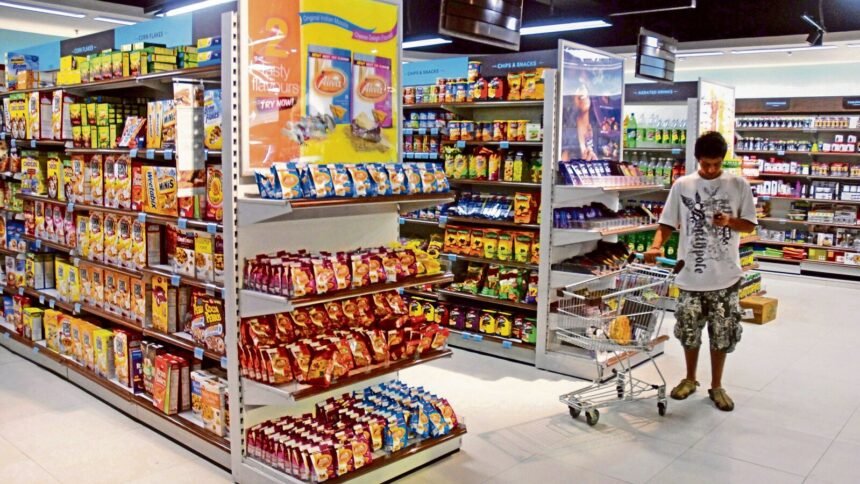
FMCG companies in India are planning price hikes and shrinkflation strategies to protect margins amid rising input costs. The move reflects ongoing pressure from commodities, packaging, and logistics, forcing brands to recalibrate pricing without sharply impacting demand.
FMCG giants planning price hikes and shrinkflation has emerged as a key development in the current consumption landscape, as companies respond to sustained cost pressures. This is a time sensitive shift driven by fluctuating commodity prices and margin protection strategies across the sector.
Rising input costs push FMCG pricing strategies
The primary driver behind FMCG price hikes is the steady increase in input costs. Key raw materials such as palm oil, wheat derivatives, milk solids, and crude-linked packaging materials have seen volatility in recent months.
Packaging costs, including plastics and paperboard, have also remained elevated due to global supply chain adjustments. Logistics expenses have increased with fuel price fluctuations, adding another layer of cost pressure.
FMCG companies typically operate on tight margins, making it difficult to absorb prolonged cost increases. As a result, passing on some of the burden to consumers becomes necessary to maintain profitability.
Shrinkflation emerges as a subtle margin protection tool
Shrinkflation has become a widely used strategy among FMCG players to manage pricing without directly increasing product prices. This involves reducing product quantity while keeping the price unchanged.
Consumers may notice smaller pack sizes or slight changes in product weight across categories such as snacks, personal care items, and household goods. This approach allows companies to maintain price points that are psychologically acceptable to consumers.
Shrinkflation is particularly effective in price-sensitive markets like India, where even small price increases can impact demand. It enables companies to balance affordability with cost recovery.
Impact on consumer demand and buying behavior
Price hikes and shrinkflation are likely to influence consumer purchasing patterns. Urban consumers may absorb moderate increases, but rural and price-sensitive segments could shift toward smaller packs or alternative brands.
There is also a growing trend of downtrading, where consumers switch to lower-priced options within the same category. This creates competitive pressure among brands to maintain value perception.
At the same time, premium segments may remain relatively resilient, as higher-income consumers are less sensitive to incremental price changes.
Competitive dynamics across FMCG companies
FMCG pricing decisions are rarely made in isolation. Companies closely monitor competitor actions before implementing price hikes or shrinkflation measures.
If one major player increases prices, others often follow to maintain industry-wide margin stability. However, aggressive pricing can also lead to temporary market share shifts if competitors hold prices steady.
This creates a delicate balance where companies must protect margins while avoiding significant demand disruption or loss of market share.
Broader economic signals from FMCG trends
The FMCG sector is often seen as a proxy for consumption trends in the economy. Pricing strategies adopted by these companies provide insights into underlying demand conditions and inflationary pressures.
The current move toward price hikes and shrinkflation indicates that cost pressures are persistent rather than temporary. It also reflects cautious optimism, where companies expect demand to remain stable enough to absorb gradual increases.
For policymakers and analysts, these trends offer clues about consumption resilience and inflation dynamics in the broader economy.
Takeaways
FMCG companies are increasing prices and using shrinkflation to protect margins
Rising raw material, packaging, and logistics costs are driving these decisions
Consumers may shift buying behavior toward smaller packs or cheaper alternatives
FMCG pricing trends reflect broader inflation and consumption patterns
FAQs
What is shrinkflation in FMCG?
It is the practice of reducing product quantity while keeping the price the same to manage rising costs.
Why are FMCG companies increasing prices now?
Due to higher input, packaging, and logistics costs impacting profitability.
Will consumers be heavily affected?
Impact varies, but price-sensitive consumers may adjust purchasing habits or switch brands.
Is this a temporary trend?
It depends on how input costs evolve, but current signals suggest continued pressure in the near term.