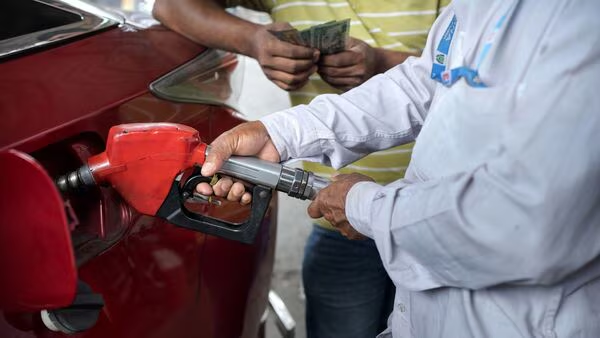
Fuel prices in India remain unchanged even as global oil tensions push crude prices higher. The decision to maintain stable petrol and diesel rates reflects a balancing act between global energy volatility, domestic inflation concerns, and government policy management.
Fuel Prices in India Hold Steady Amid Oil Market Volatility
Fuel prices in India have remained stable despite rising geopolitical tensions affecting global crude oil markets. Petrol and diesel rates across major Indian cities have not been revised, even as international oil prices fluctuate due to supply uncertainties and geopolitical developments.
India imports the majority of its crude oil requirements from international markets. As a result, changes in global oil prices usually influence domestic fuel costs. However, retail fuel prices do not always move immediately in response to international price movements.
State owned oil marketing companies typically review prices regularly while considering multiple factors including global crude trends, exchange rates, transportation costs, and domestic tax structures. When global oil markets experience sudden volatility, domestic fuel prices may remain temporarily stable to avoid sharp inflationary impacts.
This approach helps maintain economic stability, especially during periods of global uncertainty.
Global Oil Tensions Affect Energy Markets Worldwide
Global oil tensions have increased in recent months due to geopolitical developments in major energy producing regions. These tensions often influence crude oil supply expectations, which in turn affect global energy prices.
Oil is one of the most actively traded commodities in the world. Even small disruptions in supply or transportation routes can lead to significant price changes in international markets.
Countries that depend heavily on imported crude oil, including India, closely monitor these developments. Rising crude prices can increase fuel import bills, affect trade balances, and influence domestic inflation.
Energy price fluctuations also affect industries such as transportation, logistics, manufacturing, and aviation, where fuel costs represent a major operating expense.
Despite these global pressures, India has managed to maintain relatively stable retail fuel prices for now.
Role of Oil Marketing Companies in Price Decisions
Oil marketing companies play a central role in determining petrol and diesel prices in India. Major public sector companies involved in fuel distribution regularly evaluate pricing adjustments based on international crude benchmarks and currency exchange rates.
Although petrol and diesel prices were deregulated several years ago, companies still balance market realities with broader economic considerations. Sharp price increases can affect inflation levels and consumer spending patterns.
When crude prices rise globally, oil marketing companies sometimes absorb part of the cost temporarily or adjust prices gradually instead of implementing sudden increases.
Government tax structures also influence final fuel prices paid by consumers. Central and state taxes contribute significantly to the retail cost of petrol and diesel.
Because of this complex pricing structure, domestic fuel prices may not immediately mirror global crude oil movements.
Fuel Price Stability and Inflation Management
Fuel price stability plays an important role in controlling inflation in India’s economy. Transportation costs influence the price of many goods including food, consumer products, and industrial materials.
When fuel prices rise sharply, businesses often pass those costs to consumers through higher product prices. This chain reaction can increase overall inflation levels.
Maintaining stable fuel prices during periods of global volatility can therefore help protect household purchasing power and stabilize economic expectations.
However, prolonged periods of high international crude prices may eventually require adjustments to domestic fuel rates. Policymakers often balance the need to manage inflation with the financial sustainability of oil marketing companies.
India’s approach to fuel pricing therefore reflects a combination of market dynamics, economic policy considerations, and energy security priorities.
Energy Security and India’s Long Term Strategy
India’s long term energy strategy focuses on reducing vulnerability to global oil price fluctuations. While crude oil imports remain essential, the country is investing in renewable energy, biofuels, and electric mobility to diversify its energy sources.
Solar and wind power capacity has expanded significantly in recent years. The government has also encouraged ethanol blending in petrol as part of efforts to reduce dependence on imported fossil fuels.
Electric vehicle adoption is another component of this transition. Increasing EV usage could gradually reduce petrol and diesel demand in the long run.
However, conventional fuels will continue to play a major role in India’s energy mix for the foreseeable future. As global energy markets evolve, domestic fuel pricing will remain closely linked to international developments.
For now, stable fuel prices provide temporary relief for consumers and businesses navigating uncertain global energy conditions.
Takeaways
Fuel prices in India remain unchanged despite rising global crude oil tensions.
India imports most of its crude oil, making global energy prices important.
Oil marketing companies consider multiple factors before adjusting fuel rates.
Stable fuel prices help control inflation and protect consumer purchasing power.
FAQs
Why have fuel prices remained unchanged in India despite rising oil prices?
Oil marketing companies evaluate global crude prices along with exchange rates, taxes, and domestic economic conditions before making pricing decisions.
Does India control petrol and diesel prices directly?
Petrol and diesel prices were deregulated, but oil companies and government tax policies influence the final retail price.
How do global oil prices affect India’s economy?
Higher crude oil prices increase import costs and can raise inflation by increasing transportation and manufacturing expenses.
Is India reducing dependence on crude oil imports?
India is investing in renewable energy, ethanol blending, and electric vehicles to diversify its energy sources over time.