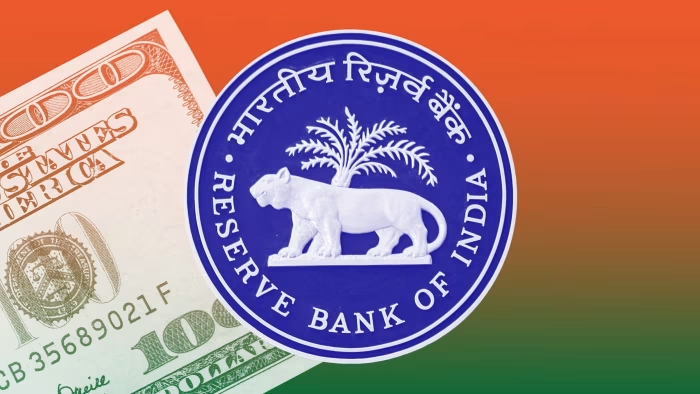
Global banking bets India as overseas banks increase their stakes in Indian lenders following regulatory relaxations. The move could bring fresh capital inflows into India’s banking sector, boosting liquidity and potentially accelerating credit growth just when macro conditions look favourable.
Short summary: Overseas banks are upping their investments in Indian banks after regulators loosen norms on foreign ownership. This influx of foreign capital may strengthen balance sheets, support credit growth and amplify investor confidence in Indian financial markets.
Regulatory Changes Open Door For Foreign Investment
India’s regulatory environment for foreign bank participation has become more accommodating recently. Eased norms now allow overseas banks and global financial institutions to raise their shareholding in domestic lenders without needing complex approvals. This shift is designed to attract foreign capital at a time when Indian banks are looking to expand credit, upgrade technology and deepen their balance sheets.
The regulatory clarity and streamlined process have generated interest from global banks. They view India as a high-growth market with rising financial inclusion, expanding middle class, and improving macro fundamentals. As a result, capital inflows into Indian banks are seen as both strategic and long term.
Why Overseas Banks Are Betting On Indian Lenders
Attractive growth potential and rising credit demand
India’s economy continues to grow at a healthy pace, and credit demand across retail, small business and infrastructure segments remains elevated. Overseas banks are targeting this expanding demand. By increasing stakes in Indian lenders, they gain access to growth potential across loans, deposits and financial services. The rising need for infrastructure financing, affordable housing loans and rural credit make India an attractive playing field.
Their involvement also brings in global best practices in risk management, corporate governance and technology deployment — all of which can benefit Indian banks over time.
Improving asset quality and healthier bank balance sheets
Over the last few years, India’s banks — especially public and mid-sized private lenders — have cleaned up their non-performing assets. Capital infusion from global players can further shore up capital adequacy ratios, reducing vulnerability to credit shocks. This aligns with global banks’ need to maintain strong capital buffers and manage regulatory compliance while investing abroad.
Stronger balance sheets make Indian banks more creditworthy borrowers and lenders, attracting more business and driving long-term stability in the sector.
Implications For Credit Growth And Financial Markets
More liquidity and competitive lending rates ahead
Fresh foreign capital in banks increases their capacity to lend. That could result in more competitive interest rates and better access to loans for businesses and individuals. Retail credit, housing finance, SMEs and infrastructure borrowers stand to benefit from this improved liquidity.
Greater availability of credit may also spur investment in infrastructure projects, manufacturing expansion and consumption — all of which feed broader economic growth. For markets, stronger bank performance could drive gains in financial sector stocks, boosting overall market sentiment.
Foreign investor confidence and inflows into banking stocks
As global banks increase stakes, confidence in the Indian banking sector rises. This could attract more institutional and foreign portfolio investment in Indian financial stocks. A perception of stronger capitalization, lower risk and improving governance may lead international investors to reassess valuations and increase exposure. That could translate into longer term capital inflows beyond just banking assets.
Risks And Considerations Amid Rising Foreign Stakes
Regulatory changes must hold firm
The success of this foreign investment hinges on sustained regulatory clarity and consistency. Any policy reversals, increased restrictions on foreign holdings or changes in capital controls could dampen enthusiasm. Global investors typically price in stability and predictable regulatory environments before committing large capital.
Asset quality and macro cycles remain uncertain
Although banks have improved asset quality, macroeconomic shocks or credit cycles could still trigger defaults or stress. Overseas banks may face risks if borrowers in stressed sectors or risky segments default. Similarly, sharp interest rate shifts or currency volatility could impact returns.
Impact on domestic ownership and control dynamics
Rising foreign stakes may raise governance and control questions. Management decisions, board representation and local responsiveness might be affected if large shareholding shifts occur. Ensuring balance between foreign capital benefits and domestic priorities will require careful regulatory oversight.
What This Means For Indian Banking Sector And Economy
The increased involvement of global banks could mark a turning point for India’s banking sector — enabling stronger capitalization, broader credit access and improved financial stability. For borrowers and businesses, this could mean easier loans, lower rates and better financial products.
For investors, the development signals long term growth potential in Indian banks, possibly triggering renewed interest in financial sector stocks. It may also encourage other sectors linked to credit growth — infrastructure, real estate, manufacturing — creating a ripple effect across the economy.
However, stakeholders must watch regulatory developments, global economic conditions and domestic credit trends closely. The inflow of foreign capital, while beneficial, needs prudent management and governance for sustainable impact.
Takeaways
Global banks are increasing stakes in Indian lenders as foreign ownership norms ease.
This could boost liquidity, credit growth and improve banking sector stability.
Stronger capitalization may attract further foreign and domestic investment into financial stocks.
Risks remain around regulatory stability, asset-quality cycles and governance dynamics.
FAQ
Why are overseas banks investing more in Indian banks now?
Because relaxed foreign ownership norms, improving credit demand and healthier bank balance sheets make India a favourable long-term growth market.
Will this investment lower interest rates for borrowers?
Potentially yes, as increased liquidity and competition among lenders may lead to more favourable lending rates.
Could rising foreign stakes affect control over Indian banks?
Possibly. Large shareholdings by global investors could influence governance and strategic decisions, requiring balanced regulatory oversight.
Does this mean higher risk for Indian banking sector?
Not necessarily. If banks maintain strong asset quality and governance, foreign capital can strengthen resilience — but economic cycles and global conditions remain factors to monitor.