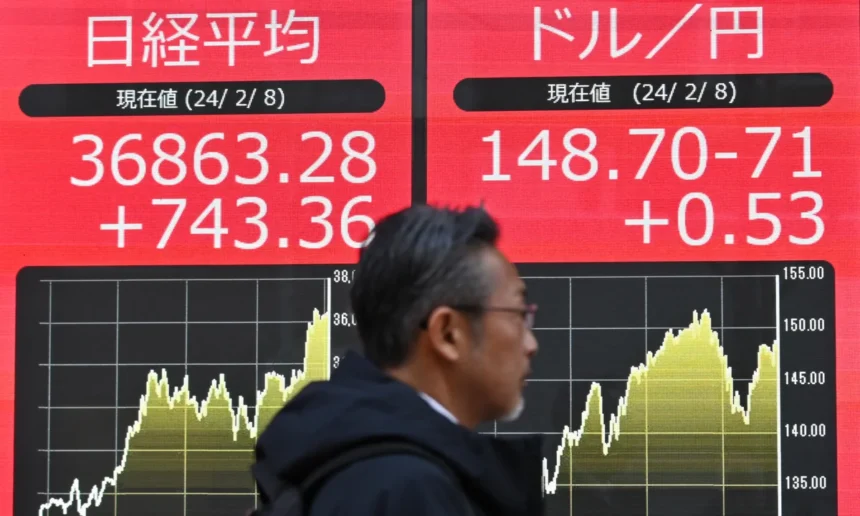
Global markets today opened on a cautious note as Lunar New Year holidays reduced trading volumes across Asia and Japan’s Q4 GDP miss intensified debate around further economic stimulus. Thin liquidity and soft macro data kept investor sentiment restrained.
Global markets today reflected subdued momentum across major Asian indices as several exchanges remained closed for Lunar New Year celebrations. With China, South Korea and other regional markets either shut or operating with limited participation, liquidity remained thin. Against this backdrop, Japan’s fourth quarter GDP data came in weaker than market expectations, adding fresh pressure on policymakers and influencing currency and bond movements.
Japan Q4 GDP Miss Raises Economic Concerns
Japan’s Q4 GDP miss became the central macro trigger for the session. The economy grew at a slower pace than anticipated, reflecting weaker private consumption and softer capital expenditure trends. External demand provided limited support, while domestic spending remained fragile.
For investors, the slowdown highlights structural challenges in Japan’s growth cycle. The country has been navigating inflation normalization after decades of ultra low price growth. While wages have shown signs of gradual improvement, consumer confidence remains uneven. A weaker than expected quarterly performance strengthens the case for targeted fiscal measures and keeps attention on the Bank of Japan’s monetary stance.
The Japanese yen showed sensitivity to the data, with currency traders assessing whether policy normalization could slow or whether stimulus expectations might resurface.
Lunar New Year Holiday Dampens Trading Activity
Lunar New Year typically leads to reduced participation across key Asian markets, and this year is no exception. With mainland China closed and Hong Kong operating on limited schedules, trading volumes across the region declined sharply.
Lower liquidity tends to amplify volatility on isolated data points. However, in this session, the overall tone remained defensive rather than reactive. Investors preferred to hold positions steady rather than initiate large directional bets.
Global fund managers also used the lighter trading environment to reassess exposure to emerging markets. Portfolio flows often pause during extended regional holidays, creating a temporary cooling effect across equity and commodity markets.
Stimulus Pressure Builds on Policymakers
The combination of Japan’s GDP miss and muted regional activity is increasing stimulus pressure. Policymakers now face a balancing act between supporting growth and maintaining credibility on inflation management.
Japan’s government has previously deployed fiscal packages focused on energy subsidies, business support and household relief. If growth momentum continues to soften, additional fiscal measures could be considered. At the same time, the Bank of Japan has gradually adjusted its yield curve control framework in recent years, signaling a cautious move away from ultra loose monetary policy.
Markets are closely watching whether economic softness will delay further normalization or trigger selective support measures. Bond yields and equity valuations in Japan will likely respond to any policy signals in the coming weeks.
Impact on Global Equities and Currencies
Outside Asia, global equities remained steady but lacked strong directional cues. US and European futures reflected a neutral tone, with investors awaiting further economic data and corporate earnings updates.
Currency markets were particularly sensitive to the Japanese GDP figures. The yen’s movement influences carry trades and capital flows across Asia Pacific. A weaker growth outlook can impact investor appetite for risk assets, especially in export driven economies.
Commodities also traded within narrow ranges. Oil prices remained supported by supply side considerations, while gold held near recent levels as traders balanced macro uncertainty with steady US economic data.
Broader Macro Context for 2026
The current subdued market environment fits into a broader 2026 macro narrative marked by cautious optimism. Inflation has moderated in several advanced economies compared to peak levels seen in prior years. However, growth remains uneven across regions.
Japan’s performance carries significance because it is the world’s third largest economy. A sustained slowdown could influence global supply chains, technology exports and capital investment flows. Investors are therefore assessing whether the Q4 GDP miss is a temporary fluctuation or part of a more persistent trend.
In the near term, low liquidity conditions due to Lunar New Year may continue to suppress volatility. Once full trading resumes across Asia, markets are expected to react more decisively to policy commentary and upcoming economic releases.
Takeaways
Global markets today were subdued due to Lunar New Year related low liquidity and Japan’s weaker Q4 GDP data.
Japan’s GDP miss increases expectations of potential fiscal or monetary stimulus adjustments.
Currency and bond markets are closely tracking policy signals from Tokyo.
Broader global sentiment remains cautious as investors await clearer growth direction in 2026.
FAQs
Why were global markets subdued today?
Reduced trading activity during Lunar New Year holidays and weaker than expected Japan Q4 GDP data contributed to cautious investor sentiment.
What does Japan’s GDP miss imply?
It suggests slower economic momentum, potentially increasing pressure on policymakers to consider supportive fiscal or monetary measures.
How does Lunar New Year affect markets?
Many Asian exchanges close or operate with limited participation, leading to lower liquidity and muted trading volumes.
Will this impact global markets long term?
Short term effects are tied to policy responses and upcoming data. Long term impact depends on whether Japan’s slowdown persists.