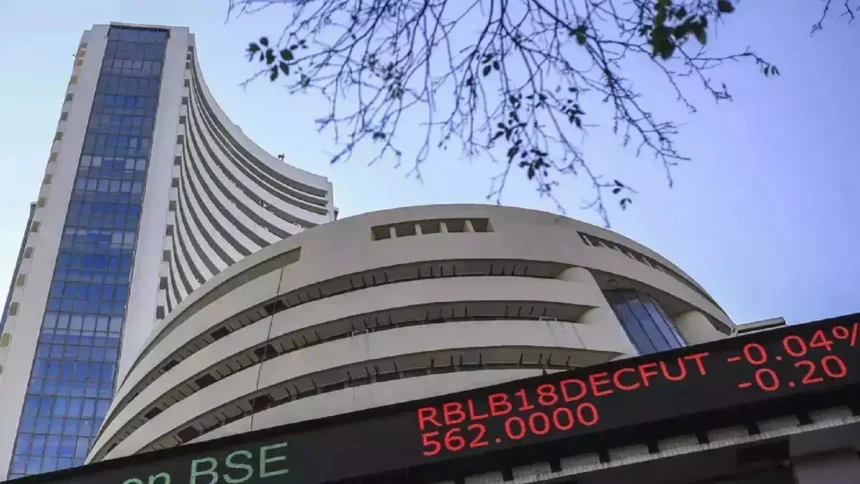
Global markets limped lower as US tariff uncertainty resurfaced, triggering sustained risk aversion and renewed foreign outflows from Indian equities. Investors cut exposure to risk assets amid fears that trade disruptions could slow global growth and pressure corporate earnings.
Global markets have entered a cautious phase as US tariff uncertainty once again dominates investor sentiment. Equity indices across regions have struggled to find direction, with risk appetite weakening steadily over recent sessions. Indian equities have not been immune to this trend, as foreign investors trimmed positions and moved capital towards safer assets. The mood reflects a broader reassessment of growth expectations at a time when geopolitical and policy risks are rising.
US tariff uncertainty revives global risk aversion
The return of tariff related concerns has unsettled global markets. Investors are wary that fresh trade restrictions or escalation of existing measures could disrupt supply chains and raise input costs for businesses. Even without immediate policy action, the lack of clarity has been enough to trigger defensive positioning.
Markets tend to react sharply to trade uncertainty because tariffs directly affect inflation, margins, and consumer demand. Sectors linked to global trade such as manufacturing, technology, and commodities have seen increased volatility. This uncertainty has pushed investors to reduce exposure to equities and rotate towards cash, bonds, and other defensive assets.
Indian equities feel the pressure from foreign outflows
Indian equities have come under pressure as foreign portfolio investors turned cautious. Foreign outflows hit Indian equities amid concerns that prolonged global risk aversion could weigh on emerging market flows. Selling pressure has been visible in large cap stocks, particularly those with higher foreign ownership.
Financials, capital goods, and export oriented sectors have seen notable selling. While domestic institutional investors have provided some support, their buying has not been sufficient to fully offset foreign selling. As a result, benchmark indices have struggled to hold key levels, reinforcing near term caution.
Currency and bond markets reflect defensive positioning
The sustained risk aversion story is also visible in currency and bond markets. Emerging market currencies, including the Indian rupee, have traded with a weak bias as the dollar gained strength. Investors typically prefer holding dollars during periods of global uncertainty, adding pressure on local currencies.
Bond markets have seen increased demand for safety, though yields remain sensitive to domestic liquidity and borrowing expectations. In India, bond traders are balancing global cues with local factors such as government borrowing and central bank liquidity management. The overall tone suggests caution rather than panic.
Global growth concerns add to market anxiety
Beyond tariffs, investors are increasingly focused on the broader global growth outlook. Slower demand in key economies, combined with tighter financial conditions, has raised concerns about earnings visibility. Equity valuations that looked reasonable during risk on phases now appear vulnerable in a risk averse environment.
Global companies with exposure to cross border trade face margin uncertainty, while emerging markets dependent on capital inflows are more exposed to sentiment swings. These factors have contributed to a gradual but persistent de risk mode across markets rather than a sharp one day sell off.
Why foreign investors are reducing exposure
Foreign investors tend to reassess emerging market exposure when global risks rise. Higher volatility, uncertain policy outcomes, and stronger developed market yields reduce the relative appeal of emerging market equities.
In the case of India, while long term fundamentals remain intact, short term risks have prompted profit booking. Foreign investors who entered at lower levels are locking in gains and waiting for clarity on global trade policy before redeploying capital. This approach has amplified market swings even in the absence of negative domestic triggers.
Domestic factors offer limited insulation
Strong domestic fundamentals such as stable growth, improving balance sheets, and ongoing reforms have helped limit the downside in Indian equities. However, in the short term, global factors are outweighing local positives.
Sectors driven by domestic consumption have shown relative resilience, but even these have not escaped volatility. Market participants recognise that in a globally connected financial system, insulation from external shocks is limited, especially when foreign capital flows play a significant role.
What investors should watch going forward
The next phase for markets will depend on clarity around US trade policy and broader global macro signals. Any indication of de escalation or clearer policy timelines could improve sentiment and support risk assets. Conversely, further ambiguity could extend the risk off phase.
Investors are also watching global bond yields, currency movements, and corporate earnings commentary for signals on demand trends. For Indian markets, foreign flow data and sector specific performance will remain key indicators of sentiment.
In the near term, markets are likely to remain volatile, with rallies facing selling pressure until uncertainty eases.
Takeaways
Global markets are under pressure due to renewed US tariff uncertainty
Foreign outflows have added pressure on Indian equities
Currency and bond markets signal defensive investor positioning
Near term market direction depends on clarity around global trade policy
FAQs
Why are global markets reacting strongly to tariff uncertainty
Tariffs impact supply chains, costs, and demand, making them a direct risk to growth and corporate earnings.
How do foreign outflows affect Indian equities
Foreign selling reduces liquidity and adds downward pressure on indices, especially in large cap stocks.
Are Indian market fundamentals still strong
Yes, long term fundamentals remain stable, but short term movements are driven by global sentiment.
What could improve market sentiment from here
Clearer trade policy signals, easing global financial conditions, and supportive earnings outlooks could help.