
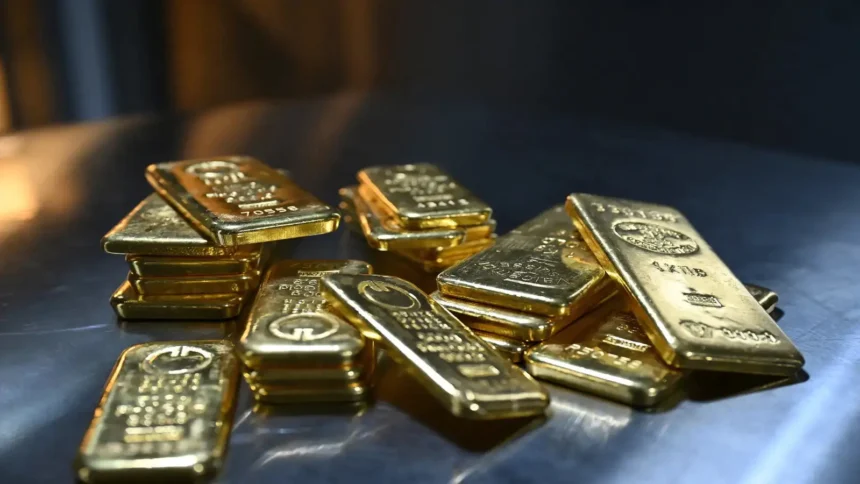
Gold rallies as safe havens attract capital amid rising geopolitical tension and market volatility. The surge in bullion prices reflects strong investor demand for protective assets as equities weaken, bond yields fluctuate, and global uncertainty reshapes portfolio strategies.
Gold rallies as safe haven demand strengthens
Gold rallies as safe havens attract capital during periods of heightened uncertainty, and the latest move in bullion prices reflects a classic risk off reaction. Investors shifted funds into gold as geopolitical developments and volatile equity markets triggered a reassessment of risk exposure.
When uncertainty rises, gold often benefits from its historical role as a store of value. Unlike equities, gold does not depend on corporate earnings. Unlike currencies, it is not tied to a single economy. This independence makes it attractive during systemic stress.
Bullion prices climbed across major trading centers, supported by both institutional and retail demand. Exchange traded funds backed by physical gold typically record inflows during such phases, amplifying price momentum. The rally was also reinforced by currency fluctuations and changes in bond yields.
Bullion demand spikes across investor segments
Bullion demand spikes during periods of volatility because gold serves multiple strategic purposes. Portfolio managers use it as a hedge against inflation and currency depreciation. Retail investors often buy gold to preserve purchasing power during uncertain times.
Jewelry demand can also remain resilient in markets where gold is culturally significant. However, in the current context, investment demand has been the primary driver of price gains. Futures trading volumes increased as speculators positioned for further upside.
Central banks in several countries maintain gold reserves as part of their foreign exchange diversification strategy. While reserve adjustments tend to be gradual, the broader narrative of gold as a strategic asset reinforces its appeal during global stress.
The combination of geopolitical risk, currency volatility, and shifting monetary policy expectations creates a favorable backdrop for bullion.
Bond yields, dollar movement, and gold price dynamics
Gold prices often move inversely to bond yields and the US dollar. When real yields decline or investors expect looser monetary policy, gold becomes relatively more attractive because the opportunity cost of holding non yielding assets decreases.
In the current environment, fluctuating bond yields and shifting rate expectations have contributed to gold’s momentum. If investors anticipate that central banks may delay tightening or consider easing due to economic uncertainty, gold demand tends to rise.
The US dollar also plays a significant role. A weaker dollar makes gold cheaper for holders of other currencies, supporting global demand. Conversely, a strong dollar can limit gains, though geopolitical demand sometimes offsets currency effects.
Inflation expectations are another factor. If energy prices rise or supply chains face disruption, investors may view gold as protection against rising consumer prices.
Impact on global markets and investor strategy
The gold rally has influenced broader asset allocation decisions. Equity investors reduced exposure to cyclical sectors and rotated toward defensive holdings. Portfolio diversification strategies increasingly emphasize assets that are less correlated with traditional stocks and bonds.
Mining stocks often gain alongside bullion prices, reflecting improved revenue prospects. However, mining equities also carry operational risks and do not always mirror spot gold movements precisely.
For emerging markets, rising gold prices can have mixed implications. Countries with strong gold consumption may see increased import bills, while gold producing nations can benefit from higher export revenue.
Wealth managers often recommend limited but strategic gold allocation within diversified portfolios. The current spike in bullion demand underscores how quickly capital can shift when risk perceptions change.
Outlook for gold amid ongoing uncertainty
The sustainability of the gold rally depends on the trajectory of geopolitical tensions and global economic data. If uncertainty persists, safe haven flows may continue to support prices. Any escalation in conflict or sustained market volatility could reinforce demand.
However, if geopolitical risks ease and risk appetite returns, gold may face consolidation. Rising real yields or a strengthening dollar could also temper upward momentum.
Investors are closely monitoring central bank communication, inflation data, and global macro indicators. Gold’s performance will likely remain sensitive to these variables in the near term.
In volatile markets, gold often acts as a stabilizer within portfolios. The current surge highlights its enduring role in global finance as a hedge against systemic risk.
Takeaways
Gold prices surged as investors moved toward safe haven assets.
Bullion demand increased across institutional and retail segments.
Bond yield movements and dollar trends influenced price dynamics.
Future gains depend on geopolitical developments and monetary policy signals.
FAQs
Why does gold rise during geopolitical tension?
Gold is considered a safe haven asset. Investors buy it to protect wealth during periods of uncertainty and market volatility.
How do interest rates affect gold prices?
Lower real interest rates reduce the opportunity cost of holding gold, often supporting higher prices.
Is gold a good hedge against inflation?
Gold is commonly used as a hedge against inflation because it tends to preserve value when purchasing power declines.
Can gold prices fall after a rally?
Yes. If geopolitical risks ease or interest rates rise significantly, gold prices may correct.

