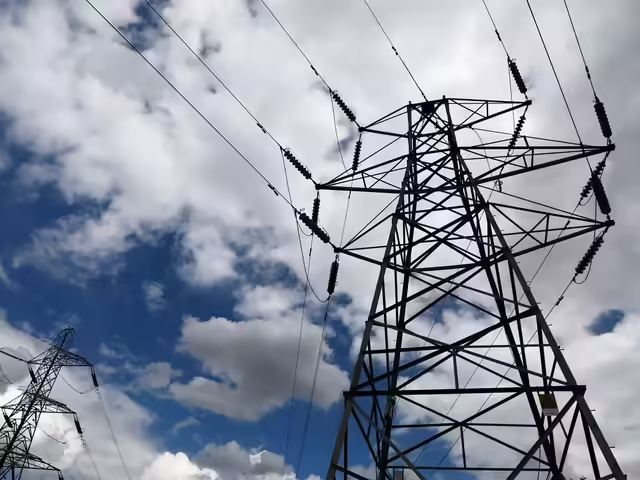
The government is pushing an aggressive coal ramp-up strategy as India prepares for peak summer electricity demand. Rising temperatures, supply risks, and logistics constraints are forcing policymakers to act quickly to prevent power shortages.
Government pushes coal ramp-up plan as summer power demand and fuel risks collide, highlighting the urgency within India’s energy sector. With electricity consumption expected to surge in the coming months, authorities are focusing on boosting coal production, improving transportation, and ensuring adequate stock at thermal power plants.
Rising summer power demand strains energy infrastructure
India experiences a sharp increase in electricity demand during summer due to higher cooling needs across households, industries, and commercial establishments. This seasonal spike often tests the limits of power generation and distribution systems.
Recent trends indicate that peak demand levels are likely to surpass previous records. Urbanization, industrial activity, and widespread use of air conditioning are driving consumption higher each year. As a result, ensuring uninterrupted power supply has become a critical priority for the government.
Thermal power plants, which rely heavily on coal, continue to account for a significant share of India’s electricity generation. Any disruption in coal supply can quickly translate into power shortages, making pre-emptive action essential.
Coal production ramp-up and supply chain coordination
To address the situation, the government has directed coal producers to increase output and maintain higher dispatch levels. State-owned companies such as Coal India Limited play a central role in this effort, as they supply the majority of coal used by power plants.
In addition to boosting production, authorities are focusing on improving logistics. Railway networks are being optimized to prioritize coal transportation, ensuring timely delivery to power plants across the country.
Stock levels at thermal power stations are being closely monitored. Plants have been instructed to maintain sufficient coal reserves to handle demand spikes without interruption. This coordinated approach aims to minimize the risk of supply bottlenecks during peak consumption periods.
Fuel risks and global market pressures
The government pushes coal ramp-up plan not only due to domestic demand but also because of uncertainties in global energy markets. Fluctuations in international coal prices and supply disruptions can affect import availability, making domestic production even more crucial.
India imports a portion of its coal requirements, particularly for specific grades used in certain industries. However, reliance on imports exposes the country to price volatility and geopolitical risks.
By increasing domestic production, policymakers aim to reduce dependence on external sources and enhance energy security. This strategy also aligns with broader efforts to stabilize fuel costs and protect consumers from sudden price increases.
At the same time, balancing coal expansion with environmental commitments remains a challenge. India continues to invest in renewable energy, but coal remains indispensable in meeting immediate demand.
Impact on power sector and consumers
The ramp-up in coal supply is expected to support stable electricity generation during the summer months. For consumers, this translates into fewer outages and more reliable power availability.
Industries, particularly those with high energy consumption, stand to benefit from consistent power supply. Interruptions can lead to production losses and increased operational costs, making reliability a key factor for economic activity.
However, the increased focus on coal also raises questions about long-term sustainability. While short-term measures are necessary to address demand, the transition to cleaner energy sources remains an ongoing priority.
Power distribution companies are also under pressure to manage costs and ensure efficient delivery. The interplay between fuel supply, pricing, and demand will shape the overall performance of the sector.
Government strategy and long-term outlook
The current push reflects a pragmatic approach to energy management. While renewable capacity is expanding rapidly, it is not yet sufficient to fully replace coal in meeting peak demand.
The government’s strategy involves maintaining a balance between immediate needs and long-term goals. Investments in solar, wind, and storage technologies are continuing alongside efforts to strengthen coal supply chains.
Looking ahead, the effectiveness of the coal ramp-up plan will depend on execution. Efficient coordination between mining companies, transport networks, and power plants is essential to avoid disruptions.
As climate conditions become more unpredictable and demand continues to grow, India’s energy policy will need to remain flexible. The current measures underline the importance of preparedness in managing seasonal demand surges.
Takeaways
- Government is increasing coal production to meet rising summer power demand
- Thermal power remains critical for India’s electricity supply
- Logistics and stock management are key to avoiding shortages
- Domestic production is being prioritized to reduce import dependency
FAQs
Why is the government increasing coal production?
To ensure sufficient fuel supply for thermal power plants during peak summer demand and prevent electricity shortages.
How does summer affect electricity demand in India?
Higher temperatures lead to increased use of cooling systems, significantly raising power consumption.
What role does coal play in India’s energy mix?
Coal remains the primary source of electricity generation, especially for meeting base and peak demand.
Is this strategy affecting renewable energy goals?
The coal ramp-up is a short-term measure, while long-term investments in renewable energy continue.