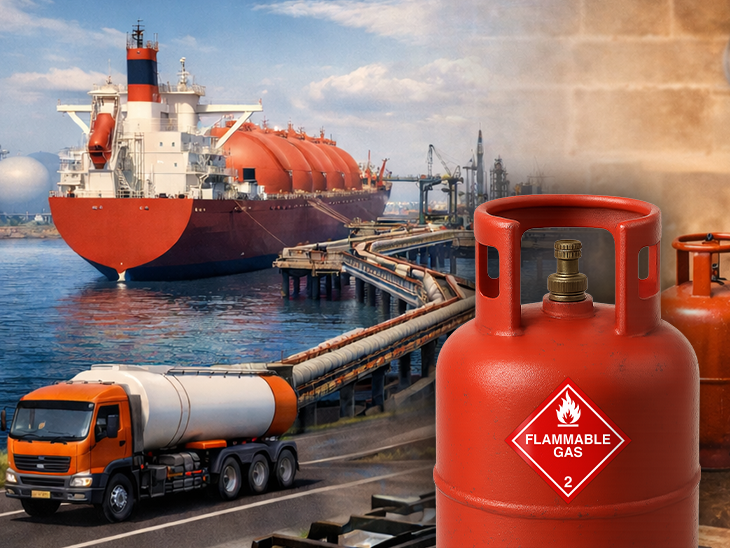
Escalating tensions in the Gulf region are raising concerns about LPG and gas supply stability for Indian industries. Businesses dependent on imported energy are monitoring developments closely as geopolitical risks threaten global fuel logistics and commodity prices.
LPG and Gas Supply Risks Grow Amid Gulf Conflict
LPG and gas supply concerns are rising for Indian industries as the Gulf conflict escalates and creates uncertainty in global energy markets. India imports a large share of its liquefied petroleum gas and liquefied natural gas from energy producing nations in the Middle East, making the country sensitive to geopolitical developments in the region.
When conflicts intensify in major oil and gas producing areas, supply chains often face disruption risks. Shipping routes may become less secure, insurance costs can rise and logistics delays may occur. Even the perception of potential disruption can influence global energy prices and availability.
Indian industries that depend heavily on LPG and natural gas are closely watching the situation. Any prolonged instability in the Gulf region could tighten supply conditions and increase energy costs across several sectors of the economy.
India’s Energy Dependence on the Gulf Region
India’s energy security is closely connected to the Gulf region because several Middle Eastern countries are among the world’s largest exporters of crude oil, LPG and natural gas. Nations such as Saudi Arabia, Qatar, the United Arab Emirates and Kuwait supply significant volumes of fuel used across India’s industrial and residential sectors.
LPG is widely used not only for household cooking but also for industrial processes such as manufacturing, metal processing and chemical production. Liquefied natural gas is another key energy source that supports power generation, fertilizer production and heavy industry.
India has diversified some of its energy imports in recent years by purchasing LNG from countries such as the United States and Australia. However, the Gulf region remains one of the most important suppliers due to geographic proximity and established trade relationships.
Any disruption in this region can therefore have a rapid impact on energy availability and pricing within India.
Industrial Sectors Most Vulnerable to Gas Supply Disruptions
Several Indian industries depend heavily on consistent gas supply to maintain operations. Fertilizer manufacturers are among the most sensitive sectors because natural gas is a key raw material in ammonia and urea production.
Petrochemical companies also rely on LPG and natural gas for manufacturing plastics, chemicals and synthetic materials used across multiple industries. A sudden increase in gas prices or supply constraints can directly affect production costs.
Other sectors such as ceramics, glass manufacturing and steel processing also use gas based energy for high temperature industrial processes. Disruptions in supply can slow production schedules and increase operational expenses.
Industries that operate on tight margins may find it difficult to absorb sudden energy price spikes, which could lead to higher product prices in domestic markets.
Global Energy Markets React to Geopolitical Uncertainty
Energy markets typically react quickly when geopolitical tensions threaten supply stability. Traders often increase prices in anticipation of possible shortages or logistical challenges.
The Gulf region plays a crucial role in global oil and gas transportation routes, including maritime corridors that connect energy exporters with international markets. When tensions rise, shipping companies may reroute vessels or increase risk premiums for transporting energy cargo.
These changes can push up freight costs and delivery times, indirectly affecting import dependent countries such as India.
Energy analysts note that markets often respond not only to actual supply disruptions but also to perceived risks. This means prices can rise even before any real shortage occurs.
Government and Industry Monitor Energy Security
Indian policymakers and industry leaders are closely monitoring the evolving Gulf conflict to assess potential risks to energy supply chains. The government has previously taken steps to strengthen energy security through strategic petroleum reserves and diversified import sources.
India has also invested in expanding LNG import terminals and strengthening domestic gas infrastructure to support industrial demand.
Companies that rely heavily on imported gas are reviewing procurement strategies and exploring alternative supply options where possible. Some businesses may increase fuel inventories or adjust production schedules to manage potential volatility.
While immediate supply disruptions have not been confirmed, the situation highlights the importance of long term energy diversification and resilient supply chains for India’s industrial growth.
Takeaways
• Escalating Gulf conflict is raising concerns about LPG and gas supply for Indian industries.
• India depends heavily on energy imports from Middle Eastern producers.
• Fertilizer, petrochemical and manufacturing sectors are most vulnerable to gas supply disruptions.
• Global energy markets often react quickly to geopolitical risks affecting fuel transportation routes.
FAQs
Why are Indian industries worried about LPG and gas supplies?
Many industries depend on imported LPG and natural gas. Rising tensions in the Gulf region could disrupt energy transportation routes or increase fuel prices.
Which sectors rely most on gas supply in India?
Fertilizer production, petrochemical manufacturing, ceramics, glass and steel industries depend heavily on gas based energy.
How does the Gulf conflict influence energy prices?
Conflicts in major energy producing regions create uncertainty about supply stability, which can push global oil and gas prices higher.
Is India taking steps to strengthen energy security?
Yes. India has diversified energy imports, expanded LNG infrastructure and developed strategic reserves to reduce risks from global supply disruptions.