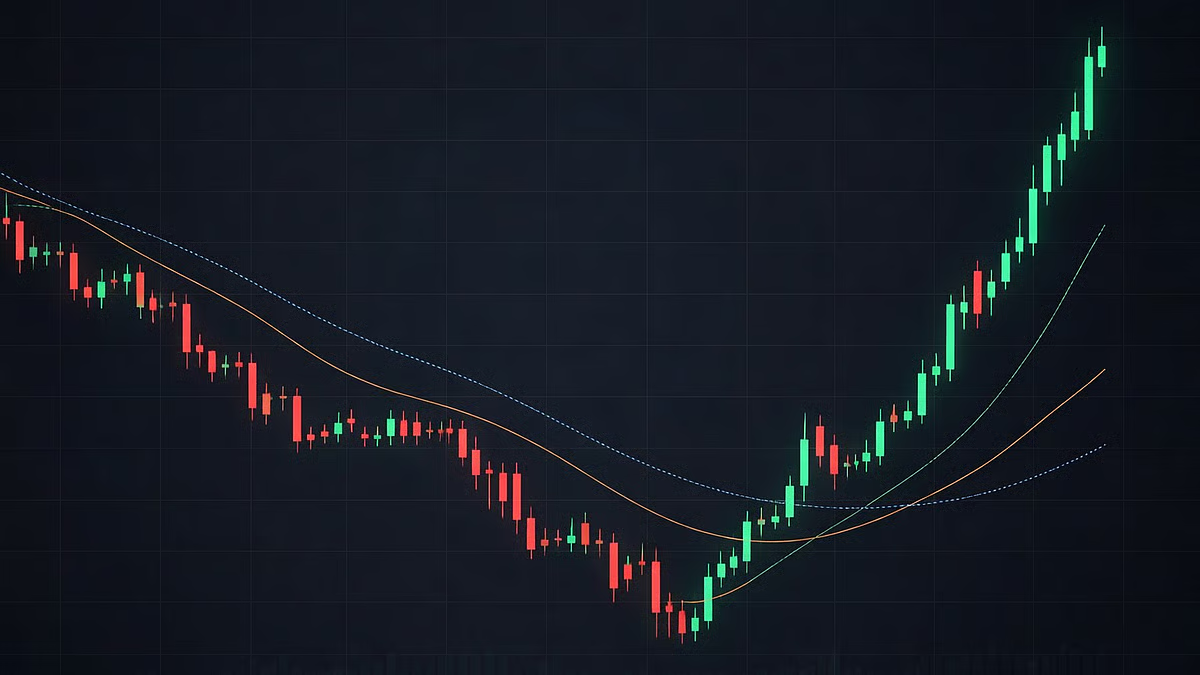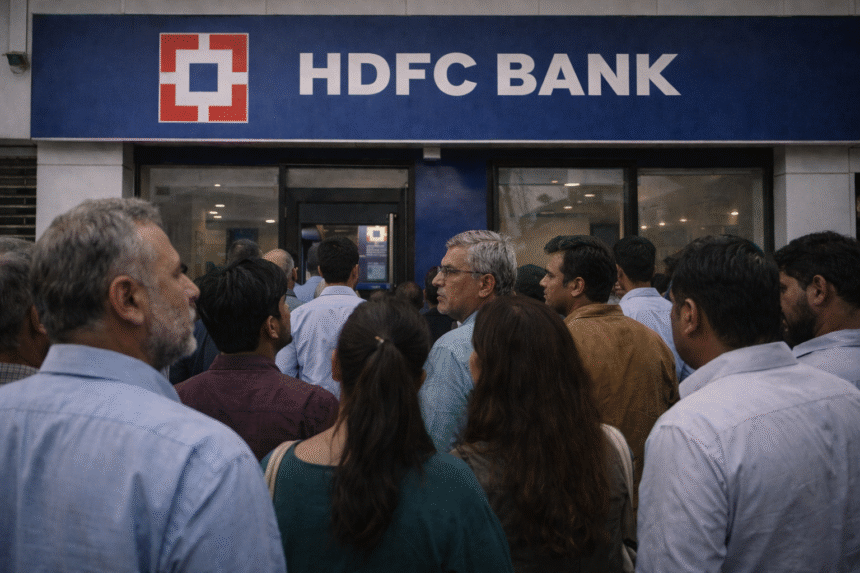
The HDFC Bank chairman exit has triggered fresh concerns around corporate governance and leadership stability, leading to cautious sentiment among investors. The development comes at a time when the bank is navigating post-merger integration and regulatory expectations.
The HDFC Bank chairman exit has quickly become a key talking point in India’s banking sector, with investors closely tracking its implications on governance standards and long-term strategy. Leadership transitions in large financial institutions often influence market confidence, and this move has done exactly that.
Leadership Change Triggers Governance Questions in Banking Sector
The sudden exit of a chairman in a systemically important bank like HDFC Bank raises immediate questions around succession planning and board-level stability. In India’s banking ecosystem, leadership continuity is closely linked to institutional credibility.
HDFC Bank has historically maintained a strong reputation for governance, risk management, and operational discipline. Any unexpected change at the top tends to attract heightened scrutiny from both regulators and institutional investors.
Market participants are now assessing whether the transition reflects a routine leadership shift or signals deeper internal realignments. Governance concerns in banking stocks often lead to short-term valuation corrections as uncertainty increases.
Stock Sentiment Turns Cautious Amid Leadership Transition
Following the announcement, stock sentiment around HDFC Bank turned cautious, with investors adopting a wait-and-watch approach. Large-cap banking stocks are typically seen as stable, but leadership uncertainty can temporarily disrupt that perception.
Institutional investors, including foreign funds, are particularly sensitive to governance signals. Even in the absence of operational impact, perception-driven selling can influence stock movement.
The banking sector’s weightage in benchmark indices like the Sensex and Nifty amplifies the impact of such developments. A cautious stance on HDFC Bank often spills over to broader financial stocks.
Post-Merger Integration Adds Complexity to Transition
The chairman exit comes at a critical phase when HDFC Bank is integrating with its parent housing finance entity. The merger has significantly expanded the bank’s balance sheet and operational scale.
Leadership stability is crucial during such transitions, as integration requires alignment across systems, culture, and regulatory compliance. Any disruption at the board level can slow decision-making or create uncertainty around execution.
Investors are particularly focused on how the bank manages asset quality, credit growth, and margin stability during this phase. Strong leadership oversight plays a key role in maintaining confidence across these parameters.
Regulatory Oversight and Corporate Governance Standards
India’s banking sector operates under strict regulatory supervision, with the Reserve Bank of India placing significant emphasis on governance practices. Any leadership change in a major private bank is closely monitored for compliance and transparency.
Corporate governance standards have become a defining factor for valuations in the financial sector. Banks with consistent leadership and clear succession planning tend to attract higher investor trust and premium valuations.
The current situation is expected to prompt discussions around board independence, risk oversight, and strategic continuity. These factors will influence how quickly investor confidence stabilizes.
What Investors Should Watch Going Forward
The immediate focus for investors will be on the bank’s communication strategy and clarity around leadership succession. Transparent updates can help reduce uncertainty and restore confidence.
Operational performance will remain a key indicator. If the bank continues to deliver stable earnings, maintain asset quality, and execute its integration strategy effectively, sentiment is likely to recover.
Analysts also expect management continuity at the executive level to play a stabilizing role. A strong management team can offset concerns arising from board-level changes.
In the near term, the stock may remain range-bound as the market digests the development. Long-term investors are likely to focus on fundamentals rather than short-term noise.
Takeaways
• Chairman exit has raised short-term governance concerns in HDFC Bank
• Investor sentiment has turned cautious despite stable fundamentals
• Leadership transition comes during a critical post-merger phase
• Market focus will remain on succession clarity and operational performance
FAQs
Q1. Why is the HDFC Bank chairman exit significant?
It impacts investor confidence because leadership stability is closely linked to governance standards in large financial institutions.
Q2. Has the bank’s performance been affected?
There is no immediate impact on operations, but market sentiment has turned cautious due to uncertainty.
Q3. Will this affect the stock price long term?
Long-term impact depends on how effectively the bank manages succession and maintains performance.
Q4. What should investors monitor now?
Investors should watch leadership announcements, quarterly results, and progress in post-merger integration.