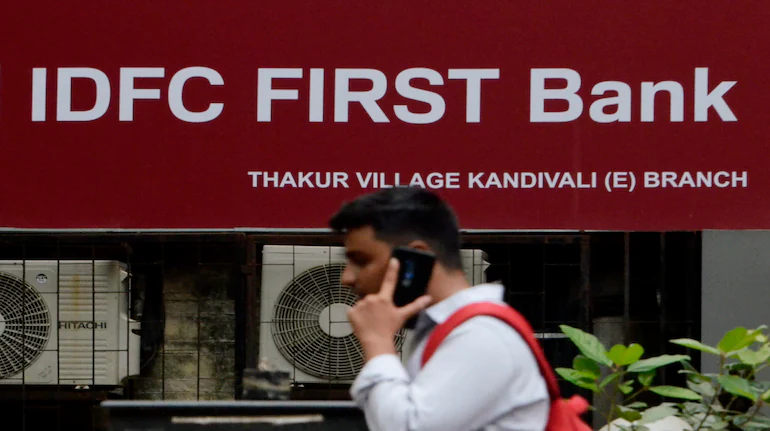
IDFC First Bank share is in focus after a weekend stock alert triggered fraud probe fears, unsettling investor sentiment across banking counters. The development has led to heightened volatility, with traders closely watching regulatory updates and management clarification.
IDFC First Bank share saw sharp attention at the start of the trading week following a weekend stock alert that raised concerns about a potential fraud probe. While the exact contours of the issue are being assessed, the mere mention of regulatory scrutiny was enough to roil banking plays and increase short term volatility in the counter. In the current market environment, where compliance and asset quality remain central themes, any signal of investigation draws swift investor reaction.
Market Reaction and Immediate Price Action
The first visible impact was on price movement and trading volumes. Banking stocks tend to be sensitive to governance related headlines because investor confidence plays a critical role in valuation multiples. In this case, the alert triggered risk aversion among short term traders, leading to sharp intraday swings.
Volume spikes typically indicate repositioning by institutional and high frequency participants. When uncertainty rises, leveraged positions are often trimmed quickly. Even if fundamentals remain intact, sentiment can dominate price action in the immediate aftermath of such alerts.
Other mid tier banking counters also experienced sympathy moves. The sector wide response reflects how closely interlinked investor perception is within financial stocks. Any hint of fraud probe risk tends to revive memories of past corporate governance cases in the broader banking system.
Understanding Fraud Probe Sensitivity in Banking
Fraud probe fears carry greater weight in banking compared to other sectors because banks operate on trust and regulatory oversight. Asset quality, internal controls, and transparency are central to their credibility. A probe, even at a preliminary stage, raises questions around internal risk management and supervisory compliance.
Regulatory bodies in India have strengthened oversight over the years, especially after high profile corporate defaults and fraud cases. As a result, markets now react faster to potential red flags. The banking sector has also invested heavily in strengthening audit systems and early warning mechanisms.
In the case of IDFC First Bank, investors are likely assessing whether the alert relates to isolated exposure, operational lapse, or broader systemic concern. Until clarity emerges, risk premiums often widen.
Impact on Banking Sector Sentiment
The development has not occurred in isolation. Banking plays had been trading with a mix of optimism and caution, driven by credit growth momentum on one side and margin pressure concerns on the other. A fraud related headline adds another layer of uncertainty.
Sector indices often respond collectively to governance issues. Even banks with strong asset quality may see temporary corrections if market mood turns defensive. Portfolio managers managing diversified financial allocations tend to rebalance exposure when uncertainty increases.
However, experienced investors differentiate between confirmed regulatory action and preliminary alerts. The severity and scope of any probe determine long term impact. Short term volatility does not automatically translate into structural damage.
Asset Quality and Capital Position Context
One of the key factors investors will evaluate is asset quality trajectory. Banks with stable gross non performing asset ratios and adequate provisioning buffers are better positioned to absorb isolated shocks. Capital adequacy ratios also play a crucial role in cushioning unexpected losses.
IDFC First Bank has historically focused on retail lending and granular loan books to reduce concentration risk. Diversified portfolios tend to be less vulnerable to single large account stress. If the current alert relates to a contained exposure, the financial impact could remain limited.
Management communication becomes critical in such scenarios. Transparent disclosure and prompt clarification often help restore confidence and reduce speculation driven selling.
Regulatory Environment and Compliance Expectations
India’s regulatory framework for banks has tightened considerably over the last decade. The Reserve Bank of India conducts periodic inspections and imposes penalties where lapses are detected. Fraud reporting standards require banks to classify and disclose material incidents.
Markets understand that probes and inspections are part of supervisory processes. The key issue is whether findings indicate systemic governance weakness or procedural gaps that can be rectified. Investors will monitor official filings and regulatory statements before forming long term conclusions.
Compliance culture has become a differentiator among banks. Institutions that demonstrate swift corrective action typically regain investor trust faster.
What Investors Should Watch Next
In the coming sessions, traders will track official clarifications, exchange filings, and analyst commentary. Earnings guidance and asset quality commentary in upcoming quarterly disclosures will also be scrutinized.
Volatility may persist until clarity improves. However, valuation corrections sometimes create entry opportunities if fundamentals remain stable. Long term investors often look beyond headline noise and focus on balance sheet strength and growth prospects.
At the broader level, this episode reinforces the sensitivity of banking stocks to governance headlines. It underscores the importance of risk management and regulatory alignment in sustaining market confidence.
Takeaways
• IDFC First Bank share reacted sharply to fraud probe fears
• Banking stocks are highly sensitive to governance related headlines
• Asset quality and capital buffers will shape long term impact
• Transparent management communication is critical for sentiment recovery
FAQs
Why did IDFC First Bank share come under pressure
A weekend stock alert indicating potential fraud probe concerns triggered uncertainty and investor selling.
Does a fraud probe mean confirmed wrongdoing
Not necessarily. Probes can be preliminary and may relate to specific exposures or procedural issues. Final conclusions depend on regulatory findings.
How do such developments affect the broader banking sector
Governance related headlines often impact sector sentiment, leading to temporary volatility across banking stocks.
What should long term investors consider
Investors should assess asset quality, capital adequacy, and official disclosures before making decisions based solely on initial reports.