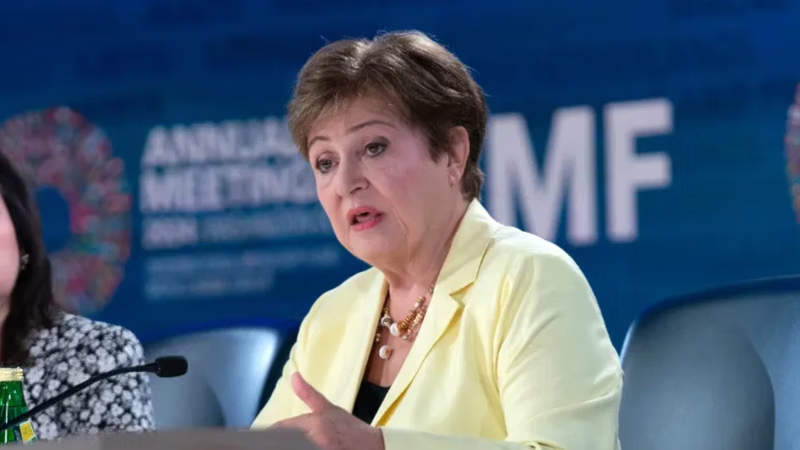
The International Monetary Fund has warned that escalating geopolitical conflicts could challenge global economic resilience in 2026. Rising tensions across several regions may disrupt trade, energy markets and investment flows, creating new risks for economic stability and growth worldwide.
IMF Warning Highlights Rising Global Economic Risks
The IMF geopolitical conflicts warning has drawn attention to the growing risks facing the global economy in 2026. According to the institution, rising political tensions and regional conflicts could undermine economic stability by affecting trade routes, supply chains and financial markets.
The IMF regularly monitors global economic conditions and evaluates risks that could affect economic growth. In recent assessments, the organization emphasized that geopolitical fragmentation and strategic rivalries between major economies are becoming increasingly important economic factors.
These tensions can create uncertainty for businesses and investors. When geopolitical risks increase, companies often delay investment decisions, financial markets become more volatile and cross border trade flows may weaken.
Global economic resilience depends on stable international cooperation and predictable trade conditions. When geopolitical tensions rise, these foundations can weaken, making economies more vulnerable to shocks.
Geopolitical Conflicts and Global Trade Disruptions
Geopolitical conflict impact on global trade is one of the IMF’s major concerns. Modern supply chains rely on complex international networks that depend on open trade routes and stable political relationships.
Conflicts or tensions between countries can lead to trade restrictions, sanctions or disruptions in transportation corridors. Such developments can slow the movement of goods and increase costs for businesses.
Global shipping routes are particularly sensitive to geopolitical developments. Maritime corridors such as the Strait of Hormuz, the Red Sea region and major Asian trade routes carry a large share of the world’s energy and manufactured goods. Any instability in these regions can affect global commerce.
Supply chain disruptions often ripple across industries. Manufacturing sectors that depend on imported raw materials or components may face production delays. This in turn can affect global industries including electronics, automobiles and industrial machinery.
Companies are increasingly adjusting their strategies to reduce geopolitical risks by diversifying suppliers and relocating production closer to key markets.
Energy Markets and Inflation Pressures
Energy market volatility is another key concern highlighted by the IMF. Geopolitical tensions in energy producing regions can quickly influence oil and gas prices, which directly affects inflation levels in many economies.
Global energy inflation risk becomes more pronounced when conflicts threaten energy supply routes or production capacity. Rising fuel prices increase transportation costs and production expenses across multiple industries.
Many countries have been trying to bring inflation under control after the sharp price increases experienced in recent years. A sudden rise in energy prices could reverse some of that progress and force central banks to maintain tighter monetary policies.
Higher interest rates designed to combat inflation can slow economic growth by increasing borrowing costs for businesses and households. This creates a delicate balancing act for policymakers trying to support economic recovery while managing inflation risks.
Energy price volatility also affects developing economies more severely because they often rely heavily on imported fuel.
Global Financial Markets and Investment Outlook
Financial markets often react quickly to geopolitical developments because uncertainty affects investor confidence. The IMF global economic outlook notes that rising tensions can trigger capital market volatility and changes in investment patterns.
Investors typically shift toward safer assets during periods of geopolitical stress. Government bonds, gold and stable currencies often attract capital when risk levels rise in global markets.
Stock markets can also experience sector specific effects. Energy companies may benefit from rising oil prices while industries that rely heavily on fuel or international trade may face pressure.
Long term investment trends may also change as businesses reassess geopolitical risks. Companies may invest more heavily in domestic manufacturing or regional supply chains to reduce dependence on unstable regions.
This shift toward economic resilience strategies could reshape global trade patterns over the coming decade.
Policy Responses and Economic Resilience Strategies
Governments and international organizations are increasingly focused on strengthening global economic resilience. This involves building systems that can better withstand geopolitical shocks and economic disruptions.
Economic resilience strategies include diversifying supply chains, investing in energy security and strengthening international cooperation. Governments are also exploring ways to improve financial system stability during periods of geopolitical stress.
Regional trade partnerships and economic alliances are becoming more important as countries seek to protect supply chains and maintain economic stability. Infrastructure investments in ports, logistics and energy networks are also part of broader resilience efforts.
The IMF continues to emphasize the importance of global cooperation in addressing economic risks. While geopolitical tensions can create uncertainty, coordinated policy responses can help mitigate their impact on the global economy.
Takeaways
The IMF has warned that rising geopolitical conflicts could challenge global economic resilience in 2026.
Trade routes, supply chains and energy markets are particularly vulnerable to geopolitical instability.
Energy price volatility caused by conflicts can increase inflation and complicate monetary policy decisions.
Governments and businesses are exploring strategies to strengthen economic resilience and reduce geopolitical risk exposure.
FAQs
Why does the IMF warn about geopolitical conflicts affecting the economy?
Geopolitical conflicts can disrupt trade routes, increase energy prices and create uncertainty in financial markets, all of which can slow economic growth.
How do geopolitical tensions affect global trade?
Conflicts can lead to sanctions, trade restrictions and disruptions in transportation routes, making it harder for goods and raw materials to move across borders.
Why are energy markets sensitive to geopolitical risks?
Many major oil and gas producers are located in geopolitically sensitive regions. Tensions or conflicts can threaten supply and push energy prices higher.
What does economic resilience mean in this context?
Economic resilience refers to the ability of economies to withstand shocks such as geopolitical conflicts, supply chain disruptions or financial instability.