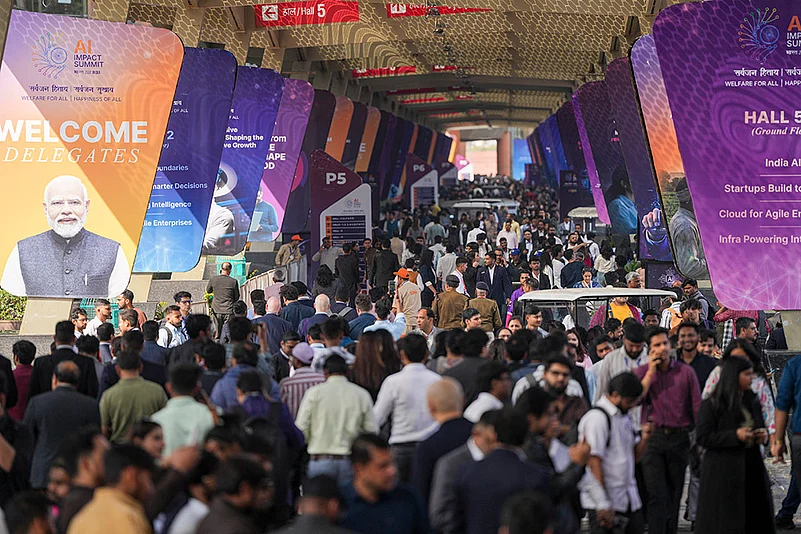
The India AI Impact Summit opened in New Delhi with significant logistical disruptions that left startup founders frustrated and raised questions about event management standards. Overflow crowds and coordination gaps at Bharat Mandapam overshadowed the intended focus on artificial intelligence innovation and global tech diplomacy.
The India AI Impact Summit was positioned as a flagship gathering to showcase India’s artificial intelligence ambitions. Hosted at Bharat Mandapam in New Delhi, the event aimed to bring together global policymakers, investors, founders, and researchers. However, Day 1 saw operational issues that quickly became the dominant narrative.
Long entry queues, delayed registrations, overcrowded halls, and limited access to scheduled sessions were reported by several attending startup founders. Many early stage entrepreneurs who had secured delegate passes struggled to enter key panel discussions on time. For an event centered around high level technology and digital transformation, the basic execution gaps stood out sharply.
Crowd Management Failures Raise Operational Questions
The primary issue at Bharat Mandapam was crowd management. The venue, known for hosting large scale international events, faced unexpected footfall pressure during the summit’s opening hours. Registration desks reportedly could not handle the volume efficiently, leading to extended waiting times.
Security screening bottlenecks further slowed movement. Attendees missed networking windows and investor roundtables, which are often the most valuable components of such summits. For startup founders operating on tight schedules, these missed opportunities carry real business costs.
The India AI Impact Summit chaos also exposed gaps in communication. Schedule changes were not clearly conveyed through official channels in real time. Several delegates relied on informal WhatsApp groups and social media updates to track session shifts and room reallocations.
Impact on Startup Ecosystem Participation
For India’s startup ecosystem, global summits are more than symbolic events. They are deal making platforms. Founders use these spaces to pitch, build partnerships, and access capital. When access to halls and sessions becomes unpredictable, early stage companies are disproportionately affected.
Established corporations typically have dedicated teams and reserved access. In contrast, independent founders and small startup teams depend on open networking zones and scheduled pitch forums. Operational disruptions therefore skew the experience.
Some founders publicly expressed concern that logistical inefficiencies dilute the credibility of India’s technology events at a time when the country is positioning itself as a global AI hub. With policymakers and foreign delegations present, perception management becomes critical.
Tech Diplomacy Under the Spotlight
The summit carries strategic importance beyond startups. India has been actively pushing for leadership in artificial intelligence governance, infrastructure, and ethical frameworks. Events like the India AI Impact Summit serve as soft power instruments in global tech diplomacy.
On Day 1, however, operational challenges competed with policy discussions. High level panels on AI regulation, compute infrastructure, and cross border collaboration were held amid visible crowd congestion. While the substance of discussions remained intact, the execution risked undermining the optics.
For a nation advocating scalable digital public infrastructure and efficient technology deployment, the gap between ambition and on ground logistics became a talking point. Diplomatic engagements rely not only on policy depth but also on seamless execution.
Event Management and Scale Lessons
Large scale conferences often face Day 1 friction. However, in the era of real time social amplification, even minor disruptions can escalate into reputational concerns. Attendees posted live updates highlighting registration delays and overcrowding, amplifying the narrative within hours.
From an operational standpoint, key lessons include dynamic capacity planning, real time attendee tracking, and adaptive session scheduling. AI themed summits, in particular, are expected to showcase digital efficiency. Simple improvements such as staggered entry slots, digital check in kiosks, and better signage could significantly reduce friction.
Bharat Mandapam has previously handled international summits effectively. This suggests that the surge in delegate interest may have exceeded projections rather than reflecting structural inadequacy. Still, expectation management becomes crucial when branding an event as globally significant.
What This Means for Future Tech Summits
The India AI Impact Summit remains strategically important. A chaotic opening day does not erase the policy announcements, investment dialogues, or collaborative frameworks under discussion. However, it does underline the need for execution excellence to match narrative ambition.
India’s AI roadmap includes expanding compute capacity, nurturing AI startups, and shaping international AI governance conversations. As global attention intensifies, flagship events must function as proof points of organizational capability.
For founders, investors, and policymakers, the Day 1 experience serves as a reminder that ecosystem building is not just about capital and code. It is also about systems, processes, and operational discipline.
Takeaways
Operational execution is as critical as policy ambition in global tech summits.
Startup founders are disproportionately impacted by logistical disruptions at large events.
Tech diplomacy depends on perception as much as substance.
Future AI summits in India will likely incorporate tighter crowd and session management frameworks.
FAQs
What is the India AI Impact Summit?
It is a large scale conference focused on artificial intelligence innovation, policy discussions, startup engagement, and international collaboration hosted in New Delhi.
Where is Bharat Mandapam located?
Bharat Mandapam is a major convention and exhibition complex in New Delhi used for international conferences and large government events.
Did the chaos affect official policy sessions?
Core policy sessions continued as scheduled, but crowd congestion and access delays affected attendee experience and networking efficiency.
Will this impact India’s AI ambitions?
The logistical issues are operational rather than strategic. India’s broader AI initiatives in infrastructure, governance, and startup support continue beyond the event.