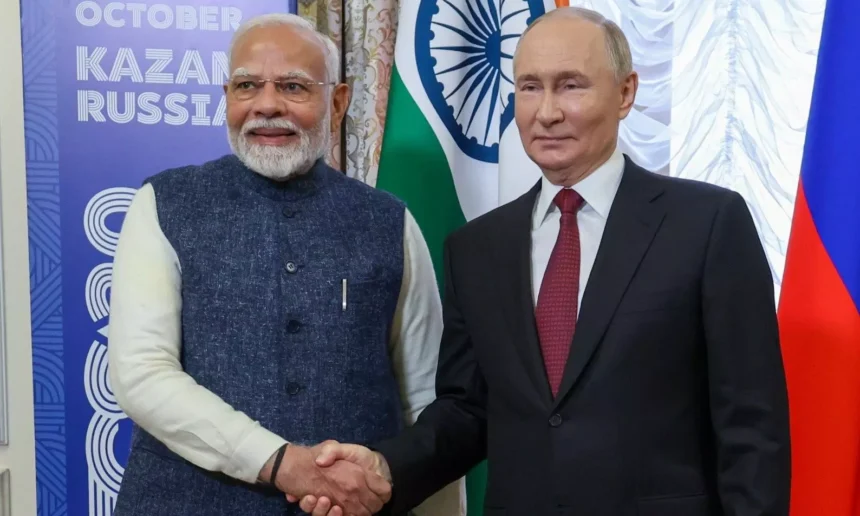
India Russia trade deals inked across energy, defence and high tech during the recent business forum signal a strategic push toward deeper economic integration. The topic is time sensitive because global supply chains are undergoing major realignments driven by geopolitical tensions, resource security concerns and shifting trade priorities.
The agreements strengthen commercial and strategic ties while creating new pathways for cooperation in sectors undergoing technological transformation. As both countries seek to reduce dependency on vulnerable trade corridors, the deals reflect an attempt to diversify sourcing, secure long term partnerships and stabilise supply chains exposed to global volatility.
Energy cooperation expands as both nations seek stable partnerships
Energy was at the core of the new trade agreements. India is prioritising energy security as global energy prices remain volatile and geopolitical disruptions threaten supply continuity. Russia, meanwhile, is cultivating stronger relationships with Asian buyers due to shifting dynamics in European markets. The deals include expanded crude oil supplies, exploration collaboration and potential investments in downstream infrastructure.
These arrangements reinforce India’s strategy of diversifying suppliers and locking in long term contracts that mitigate exposure to price shocks. Russia benefits from predictable demand and expanded access to a large, growing market. Strengthening energy routes also supports India’s refining sector, which relies heavily on imported crude. The partnership helps stabilise supply lines at a time when shipping routes and global logistics face recurring disruptions.
Energy cooperation therefore becomes a major pillar of bilateral economic resilience and a foundational component of emerging supply chain strategies.
Defence agreements reinforce long term strategic alignment
Defence cooperation has historically been a central element of the India Russia partnership, and the new agreements reaffirm this alignment. India continues to depend on Russia for maintenance, spares and upgrades across several legacy defence platforms. The new deals emphasise joint production, technology transfer and expanded repair capabilities.
India’s focus on self reliance in defence manufacturing means future collaborations will increasingly involve co development rather than just procurement. Russia remains a critical partner in areas such as missiles, aircraft systems, radar technology and high endurance equipment. The agreements also support defence supply chain stability by ensuring secure access to components at a time when global defence markets face capacity constraints.
These partnerships help India reduce operational vulnerabilities while enabling Russia to strengthen Asian defence cooperation amid shifting global power dynamics.
High tech collaboration aims to build next generation capabilities
High tech sectors were a key focus of the business forum, reflecting the shared ambition to deepen technological cooperation. Joint initiatives in quantum computing, advanced materials, cybersecurity, space technology and semiconductor equipment were discussed. These align with India’s drive to strengthen its innovation ecosystem and Russia’s expertise in specialised scientific domains.
The agreements create opportunities for co development projects, research exchanges and integration of startups into cross border innovation networks. For India, partnerships can accelerate progress in frontier technologies and reduce dependence on concentrated global supply hubs. For Russia, collaboration provides access to India’s growing digital market, innovation hubs and engineering talent pool.
As supply chain realignment increasingly favours nations with diversified technology partnerships, these deals strengthen bilateral positioning in the long term.
Supply chain realignment becomes a strategic theme in bilateral engagement
Global supply chains are being reconfigured as countries seek to reduce concentration risk in sectors such as energy, minerals, defence components and advanced technology. India and Russia are aligning their trade strategy to ensure greater resilience against future disruptions. The new agreements highlight deeper coordination in procurement, logistics, research and manufacturing.
India’s interest in critical minerals, such as rare earths and battery metals, was also discussed. Russia’s significant reserves make it a strategic supplier as India ramps up electric vehicle, renewable energy and electronics manufacturing capacities. Securing access to critical minerals strengthens India’s supply chain independence and supports large scale industrial programs.
The two countries are also working toward improving transport infrastructure, including the International North South Transport Corridor, to reduce shipping times and diversify trade routes. These logistics upgrades help reduce dependence on traditional corridors that are frequently disrupted by geopolitical developments.
Balancing geopolitical shifts while expanding economic ties
The expanding India Russia trade relationship unfolds at a time when global alliances are shifting quickly. India maintains diversified partnerships and avoids exclusive alignments, ensuring strategic autonomy in economic and geopolitical decision making. The new deals are part of a multi vector approach that includes cooperation with Western economies, Asian partners and emerging markets.
For Russia, strengthening ties with India provides access to a large and stable economic partner amid sanctions and restricted access to some global markets. These complementary interests make bilateral trade expansion a logical step in the current environment.
As supply chain security becomes a defining global theme, India and Russia are positioning themselves to benefit from long term shifts rather than short term tactical gains.
Takeaways
Energy, defence and high tech deals signal deeper India Russia economic alignment
Agreements support supply chain diversification amid global volatility
Critical minerals, technology transfer and logistics corridors gain prominence
Bilateral cooperation strengthens resilience against geopolitical disruptions
FAQs
Why are India Russia trade deals significant now
They support long term economic resilience as global supply chains face uncertainty. The agreements deepen cooperation in energy, defence and high tech sectors.
How will energy cooperation benefit India
It provides stable crude supply, reduces exposure to price fluctuations and strengthens India’s refining and energy security framework.
What role does defence collaboration play
It ensures access to critical components, supports joint production and strengthens strategic continuity in India’s defence capabilities.
How do these deals impact supply chain realignment
They diversify sourcing, expand logistics options and secure access to critical resources required for future manufacturing and technology growth.