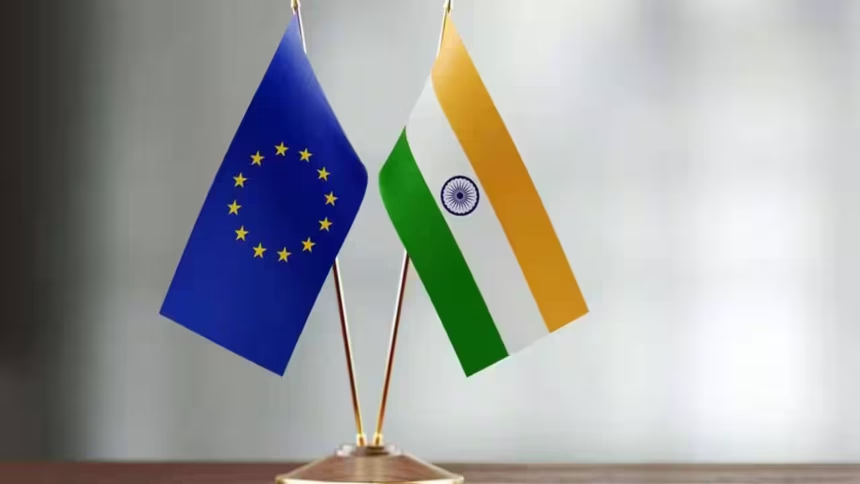
India EU Free Trade Agreement negotiations face renewed uncertainty as consent from the European Parliament remains pending. The delay adds pressure to ongoing trade talks, with both sides balancing market access, regulatory alignment, and geopolitical priorities.
India EU Free Trade Agreement discussions have entered a sensitive phase as the delay in European Parliament consent complicates the trade timeline. The proposed agreement aims to deepen economic ties between India and the European Union, covering goods, services, investment protection, and sustainable development standards. However, institutional procedures within the EU require parliamentary scrutiny and approval before final ratification, creating potential roadblocks.
The development is significant given the scale of India EU trade, which has steadily expanded in recent years. The European Union is among India’s largest trading partners, and a comprehensive free trade agreement is expected to unlock additional growth opportunities for both sides.
Why European Parliament Consent Matters
Under EU governance rules, trade agreements negotiated by the European Commission must receive approval from the European Parliament before they can enter into force. This step ensures democratic oversight and compliance with EU legal frameworks. Delays in parliamentary consent can arise from concerns over labor standards, environmental safeguards, data protection, and market access provisions.
For the India EU Free Trade Agreement, sensitive issues include tariffs on automobiles and agricultural products, intellectual property rights, data localization norms, and sustainability commitments. Members of the European Parliament may seek further clarification or amendments before granting approval.
Such procedural delays do not necessarily signal rejection. However, they can slow down implementation timelines and introduce uncertainty for businesses planning cross border investments.
Trade Negotiation Sticking Points
Several longstanding sticking points continue to shape negotiations. On the goods front, India has traditionally maintained higher tariffs in certain sectors to protect domestic industries. The European Union seeks greater tariff reductions and improved access for industrial products, wines, and automobiles.
On services, India is pushing for easier mobility of professionals and greater recognition of qualifications. The EU, meanwhile, emphasizes regulatory alignment, digital trade norms, and stronger intellectual property enforcement.
Sustainability clauses are another area of focus. Modern EU trade agreements often include binding commitments on environmental protection and labor standards. Aligning these expectations with India’s development priorities requires careful balancing.
The delay in parliamentary consent reflects the complexity of these issues rather than a breakdown in talks. Both sides have reiterated commitment to advancing negotiations, but finalizing a comprehensive deal remains a detailed and politically sensitive process.
Economic Impact on India and the EU
The India EU Free Trade Agreement has the potential to significantly boost bilateral trade volumes. The EU is a major destination for Indian exports such as pharmaceuticals, textiles, engineering goods, and information technology services. For European companies, India represents a large and growing consumer market with strong infrastructure and manufacturing ambitions.
An agreement could reduce tariff barriers, streamline customs procedures, and enhance investment flows. It may also strengthen supply chain diversification at a time when global trade patterns are shifting.
However, until parliamentary consent is secured and ratification processes conclude, businesses must operate under existing trade frameworks. The delay may temporarily slow down investment decisions that were contingent on preferential tariff access.
Geopolitical Context and Strategic Importance
Beyond economics, the India EU Free Trade Agreement carries strategic significance. Both sides have sought to deepen cooperation in areas such as technology, climate action, and resilient supply chains. In a global environment marked by shifting alliances and trade realignments, strengthening India EU ties is viewed as a stabilizing factor.
The European Union aims to expand its partnerships in the Indo Pacific region, while India seeks to diversify export markets and attract advanced technology investments. The trade agreement is seen as a cornerstone of this broader strategic engagement.
Parliamentary scrutiny within the EU reflects internal democratic processes rather than opposition to the partnership itself. Still, timing matters. Extended delays could create perception challenges and require renewed political engagement at the highest levels.
What Happens Next
The next steps involve continued negotiations to address outstanding concerns and ensure that the final text satisfies legal and political requirements. The European Parliament may conduct debates, committee reviews, and consultations before voting on consent.
On the Indian side, policymakers are likely to continue diplomatic engagement to resolve sticking points and maintain momentum. Industry bodies from both regions have expressed interest in a swift and balanced conclusion.
For now, the India EU Free Trade Agreement remains a work in progress. The delay underscores the complexity of modern trade deals, where economic ambitions intersect with regulatory, environmental, and political considerations.
Takeaways
• European Parliament consent delay has slowed progress on the India EU Free Trade Agreement.
• Key sticking points include tariffs, services access, intellectual property, and sustainability clauses.
• The EU remains one of India’s largest trading partners, making the agreement strategically important.
• Continued negotiations and political engagement are expected to shape the final outcome.
FAQs
Why is European Parliament consent required for the trade agreement?
Under EU rules, trade agreements negotiated by the European Commission must receive approval from the European Parliament before they can take effect.
What are the main issues in the India EU trade talks?
Major issues include tariff reductions, mobility of professionals, intellectual property rights, and sustainability commitments.
Will the delay cancel the agreement?
A delay does not mean cancellation. It reflects procedural and political scrutiny, and negotiations are expected to continue.
How does this affect businesses currently trading between India and the EU?
Until the agreement is finalized and ratified, trade continues under existing tariff and regulatory frameworks.