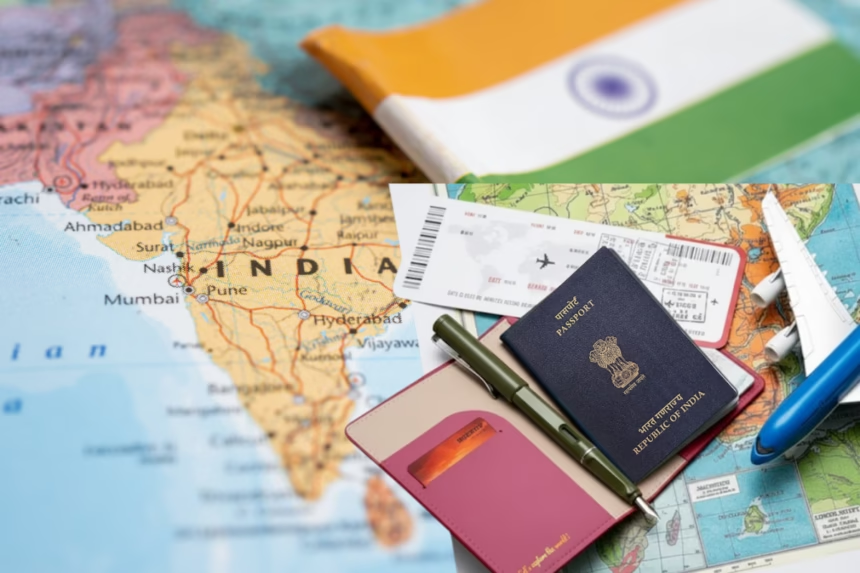
India expands e-Tourist visa access to 166 countries, marking a significant policy shift aimed at boosting inbound travel, business mobility, and short-term corporate visits. The expansion is expected to simplify entry for global professionals, investors, and executives evaluating India as a commercial destination.
The move comes at a time when India is pushing for stronger trade ties, higher foreign investment, and deeper integration into global supply chains.
What the E-Tourist Visa Expansion Covers
The expansion of e-Tourist visa access allows citizens of 166 countries to apply online for short-duration visits without visiting an Indian embassy or consulate. The visa is primarily designed for tourism but is frequently used by foreign professionals for attending conferences, trade fairs, client meetings, and exploratory business travel.
This update broadens India’s digital visa footprint and reduces friction for first-time visitors. Applicants can now complete the process online, receive electronic authorization, and enter India through designated airports and seaports.
While the visa does not replace formal employment or long-term business visas, it plays a critical role in enabling short, high-frequency business travel that fuels deal-making and market entry discussions.
Impact on Inbound Corporate Travel
For inbound corporate travel, the policy change lowers both cost and time barriers. Executives, startup founders, consultants, and investors can now plan India visits with shorter lead times, making it easier to respond to live business opportunities.
Multinational companies often rely on quick on-ground assessments before committing capital or partnerships. The expanded e-Tourist visa network supports this need by allowing senior decision-makers to travel without lengthy documentation cycles.
Industries such as IT services, manufacturing, logistics, renewable energy, and consumer goods are expected to benefit most, as they frequently host overseas partners and clients for short engagements.
The change also supports India’s growing role as a hub for global conferences, exhibitions, and industry summits.
What This Means for Business Visa Demand
While the e-Tourist visa expansion improves access, it does not replace traditional business visas. Activities such as long-term assignments, employment, and revenue-generating operations still require appropriate business or employment visas.
However, the policy may reduce initial dependency on business visas for early-stage engagement. Foreign companies can now explore partnerships, conduct site visits, and initiate negotiations before committing to longer-term visa categories.
This could streamline decision-making and shorten the time between first contact and formal investment. Over time, this may increase demand for business visas as exploratory visits convert into operational presence.
For Indian companies, especially startups and MSMEs, this creates more opportunities to host international partners without administrative delays.
Economic and Policy Context Behind the Move
India’s decision to expand e-Tourist visa access aligns with its broader economic strategy. The country is actively positioning itself as an alternative manufacturing base, a global services hub, and a destination for international capital.
Simplifying entry processes is a key part of that strategy. Competing economies in Southeast Asia and the Middle East have already adopted aggressive digital visa frameworks to attract business travelers.
By expanding access to 166 countries, India signals openness to global engagement while maintaining regulatory controls through visa conditions and permitted activities.
The timing also reflects rising international interest in India amid supply chain diversification, digital economy growth, and infrastructure investment cycles.
Operational Considerations for Companies
Companies planning to use the e-Tourist visa route must remain aware of activity limitations. The visa is suitable for meetings, events, and non-remunerative engagements, but not for hands-on operational work.
HR teams and travel managers will need clear internal guidelines to ensure compliance. Misuse of visa categories can lead to penalties, entry bans, or reputational risk.
Despite these constraints, the expanded access offers flexibility, especially for leadership teams, sales executives, and strategic advisors who require frequent short visits.
Airlines, hotels, and corporate travel management firms are also likely to see incremental demand from newly eligible markets.
Takeaways
- India expands e-Tourist visa access to 166 countries, easing short-term entry
- Inbound corporate travel becomes faster and more flexible
- Exploratory business visits may rise before long-term visa conversion
- Policy supports India’s push for trade, investment, and global engagement
FAQs
Can the e-Tourist visa be used for business meetings?
Yes, it can be used for attending meetings, conferences, and trade events, as long as no employment or paid activity is involved.
Does this replace the Indian business visa?
No, long-term assignments, employment, and operational roles still require a business or employment visa.
Who benefits most from this expansion?
Foreign executives, investors, startup founders, consultants, and Indian companies hosting international partners.
Is the application process fully online?
Yes, eligible applicants can apply online and receive electronic authorization before travel.