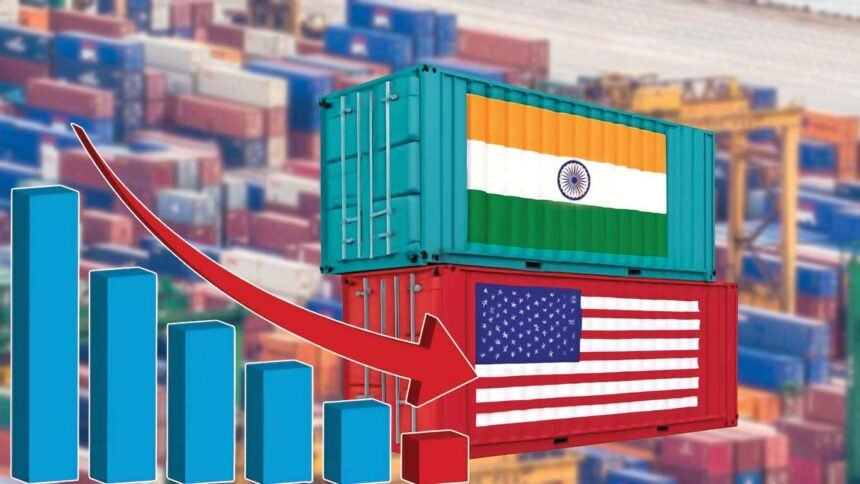
India export boom remained firmly in focus in November as outbound shipments rose 19.4 percent year on year, even as signs of slowing domestic demand began to surface across key consumption indicators. The divergence is shaping trade policy thinking, corporate strategy, and market expectations heading into early 2026.
The latest trade performance highlights a growing imbalance in India’s growth engine. External demand is carrying momentum, while internal consumption shows fatigue. This split creates both opportunity and risk for businesses, policymakers, and investors tracking near term economic direction.
November export data shows strong global traction
The India export boom in November was driven by a combination of strong services exports and resilient merchandise shipments in select categories. Engineering goods, electronics, chemicals, and petroleum products contributed meaningfully to growth, supported by stable demand from the United States, Europe, and parts of Asia.
Services exports, particularly IT and business services, continued to provide a structural cushion. Indian firms benefited from sustained global outsourcing demand, currency competitiveness, and long term digital transformation spending by overseas clients.
This export performance helped narrow the trade deficit despite steady import demand for energy and capital goods. From a macro perspective, exports are acting as a stabilizer at a time when domestic demand momentum is losing steam.
Domestic demand slowdown becomes more visible
While exports surged, domestic demand indicators told a different story. Consumption oriented sectors reported softer volume growth, especially in urban discretionary categories. High interest rates, cautious consumer sentiment, and uneven income growth are weighing on spending decisions.
Manufacturing surveys have shown moderation in new domestic orders, while services linked to retail and hospitality reported slower expansion. Companies have responded by prioritizing inventory control and cost efficiency over aggressive capacity expansion.
This divergence matters because domestic consumption has traditionally been a key pillar of India’s growth model. A prolonged slowdown could limit the spillover benefits of export growth into broader economic activity.
Sectoral split highlights uneven economic momentum
The contrast between export oriented sectors and domestic focused industries is becoming sharper. Export heavy segments such as IT services, pharmaceuticals, specialty chemicals, and electronics manufacturing are seeing healthier order books and margin stability.
In contrast, sectors dependent on local demand including consumer durables, real estate linked materials, and non essential retail face pressure on volumes. Auto sales growth has moderated, and fast moving consumer goods companies have flagged selective demand weakness in recent updates.
This unevenness complicates earnings forecasting and sector allocation decisions for investors. It also influences corporate capital expenditure planning, with companies favoring export aligned investments over purely domestic bets.
Policy implications for trade and growth strategy
The India export boom offers policymakers breathing room, but it also underscores structural challenges. Strong exports support foreign exchange stability and help offset domestic demand softness, but they cannot fully replace internal consumption as a growth driver.
Trade policy focus is likely to remain on market diversification, faster export clearances, and incentive frameworks for high value manufacturing. At the same time, fiscal and monetary levers may need recalibration to revive domestic demand without stoking inflation.
Infrastructure spending, targeted tax relief, and credit support for small businesses are tools that could help balance the growth equation in coming quarters.
Market impact and investor sentiment
Equity markets are responding selectively to the export demand divergence. Export oriented stocks have outperformed broader indices, while domestic consumption plays face valuation scrutiny. Currency stability supported by strong export inflows has helped limit volatility in financial markets.
Bond markets are watching the domestic slowdown closely, as weaker consumption could reinforce expectations of a prolonged pause in interest rates. However, global factors and fiscal dynamics continue to dominate yield movements.
For foreign investors, the export surge reinforces India’s role as a reliable global supplier, even as domestic growth normalizes from recent highs.
Risks to the export led momentum
Despite strong November numbers, the export outlook is not without risk. Global growth uncertainties, geopolitical tensions, and potential protectionist measures could disrupt demand in key markets. Any sharp slowdown in the US or Europe would directly impact India’s export trajectory.
Additionally, sustained export growth without domestic demand recovery could widen income disparities and limit job creation in consumption driven sectors. Policymakers will need to ensure that export success translates into broader economic benefits.
Monitoring December and January trade data will be critical to determine whether November’s performance reflects a trend or a temporary spike.
The balancing act ahead
India’s economic outlook now hinges on managing the tightrope between a robust export engine and a cooling domestic market. Export growth provides resilience, but reviving internal demand remains essential for sustainable expansion.
Businesses that align product strategies with global demand while maintaining cost discipline at home are better positioned for the next phase. For the economy, the challenge lies in converting external strength into internal momentum.
Takeaways
- India export boom continues to offset domestic demand weakness
- Export oriented sectors show stronger earnings visibility
- Domestic consumption slowdown raises medium term growth questions
- Policy focus will need to balance trade strength with internal revival
FAQs
What drove the India export boom in November?
Strong performance in engineering goods, electronics, chemicals, and services exports supported the sharp year on year increase.
Is domestic demand contracting in India?
No contraction is visible, but growth has slowed, particularly in discretionary consumption and urban spending.
Can exports sustain India’s growth if domestic demand remains weak?
Exports can provide support but cannot fully replace domestic consumption as a long term growth engine.
Which sectors benefit most from the current trend?
IT services, pharmaceuticals, chemicals, and export oriented manufacturing segments are the key beneficiaries.