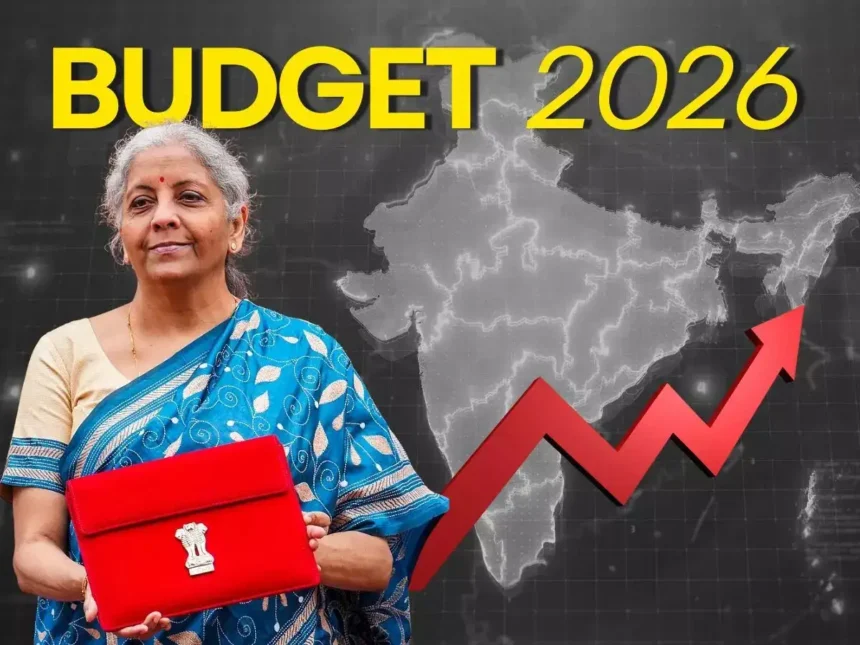
As Budget 2026 approaches, India Inc has intensified its pre budget push, calling for higher capital expenditure, stronger private investment incentives, and policy continuity. Industry leaders are positioning growth, jobs, and competitiveness at the centre of their expectations from the upcoming Union Budget.
With Budget 2026 weeks away, India Inc pre budget push has gathered momentum across sectors. Corporate leaders, industry bodies, and large employers are aligning on a common agenda focused on accelerating capex, crowding in private investment, and sustaining economic growth amid global uncertainty. The messaging is clear. India’s growth story needs policy reinforcement at a time when external risks remain elevated.
Capex emerges as the central demand
Capital expenditure has become the cornerstone of industry expectations ahead of Budget 2026. Businesses want the government to maintain and expand its public capex momentum, particularly in infrastructure, manufacturing, energy, and logistics.
Over the past few years, public capex has played a stabilising role in supporting growth when private investment hesitated. India Inc believes continued government spending on roads, railways, ports, power transmission, and urban infrastructure will keep demand engines running while creating multiplier effects across the economy.
Industry leaders argue that predictable and front loaded capex allocation helps companies plan long term investments, expand capacity, and hire with confidence. A slowdown or dilution in public capex could risk weakening investment sentiment at a sensitive stage of the economic cycle.
Private investment incentives take priority
Beyond government spending, the private investment plea is growing louder. India Inc is asking for targeted measures that reduce the cost of capital, improve ease of doing business, and unlock balance sheet capacity.
Key demands include rationalisation of capital gains tax, clarity on long term tax stability, faster project approvals, and incentives for greenfield manufacturing. Many corporates believe that despite healthier balance sheets, uncertainty around global demand and financing conditions has delayed investment decisions.
Industry bodies have also highlighted the need for deeper corporate bond markets and easier access to long term financing, especially for infrastructure heavy sectors. The goal is to shift from public led growth to a more balanced investment cycle driven by private capital.
Manufacturing and exports remain in focus
Manufacturing continues to be a major theme in the India Inc pre budget push. Industry leaders want Budget 2026 to strengthen domestic manufacturing competitiveness while supporting export growth.
Expectations include continued support for production linked incentive schemes, faster disbursement of incentives, and policy alignment across central and state governments. Companies also want improvements in logistics efficiency and customs processes to reduce turnaround times and costs.
Export oriented sectors are seeking measures to offset global demand weakness, including export credit support, working capital relief, and trade facilitation reforms. With geopolitical tensions and trade realignments reshaping supply chains, India Inc sees an opportunity to gain market share if policy execution remains sharp.
Jobs, skills, and consumption revival
Employment generation has become an integral part of industry messaging. India Inc is urging the government to link capex and manufacturing incentives more closely with job creation and skill development.
There is also a strong push for measures that revive consumption, particularly in rural and middle income segments. Industry leaders have suggested targeted tax relief, income support measures, and continued welfare spending to sustain demand without compromising fiscal discipline.
A stable consumption base, combined with investment led growth, is seen as critical for maintaining earnings momentum across sectors ranging from FMCG to automobiles and real estate.
Fiscal discipline and policy continuity matter
While pushing for growth oriented measures, India Inc has also acknowledged the importance of fiscal discipline. Most industry voices are not seeking aggressive populist spending but rather efficient allocation and execution of existing programmes.
Policy continuity is another key theme. Businesses want assurance that major reforms related to taxation, manufacturing, digital infrastructure, and climate transition will continue without abrupt changes. Stability in rules and regulations is viewed as essential for long term investment planning.
Many industry leaders believe Budget 2026 should reinforce confidence rather than surprise markets, especially at a time when global investors are sensitive to policy signals from emerging economies.
What markets and investors are watching
Equity markets and investors are closely tracking pre budget commentary from industry as it often signals potential policy direction. Sectors aligned with infrastructure, capital goods, manufacturing, and financial services could remain in focus as expectations build.
Foreign investors are also watching how India balances growth ambitions with fiscal prudence. A budget that sustains capex, encourages private investment, and maintains macro stability could strengthen India’s positioning as a long term investment destination.
As consultations continue, the industry growth agenda is expected to sharpen further in the run up to Budget day.
Takeaways
India Inc is pressing for sustained public capex in Budget 2026
Private investment incentives are central to industry demands
Manufacturing, exports, and job creation remain priority areas
Policy stability and fiscal discipline are key expectations
FAQs
What is India Inc asking for ahead of Budget 2026
Industry is calling for higher capex, private investment incentives, and policy continuity to support growth.
Why is capex so important for industry right now
Public capex supports demand, boosts infrastructure, and encourages private investment during uncertain global conditions.
Are companies seeking tax cuts in Budget 2026
Industry is more focused on tax stability and targeted relief rather than broad based cuts.
Which sectors could benefit most from Budget 2026 priorities
Infrastructure, manufacturing, capital goods, logistics, and financial services are likely to gain.