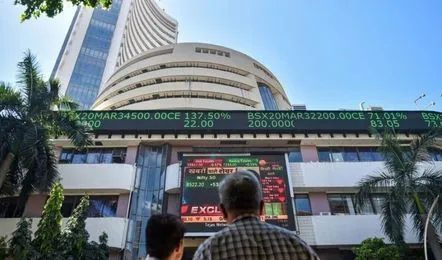
India markets to trade on Sunday has become the dominant conversation across Dalal Street as the Union Budget 2026 triggers a rare weekend trading session on February 1. The Sensex and Nifty opening on a Sunday reflects heightened policy sensitivity and elevated volatility in the run-up to the government’s most watched economic event.
Why Indian stock markets are trading on Sunday
India markets to trade on Sunday is not a routine decision. The move is directly linked to the Union Budget being presented on February 1, which falls on a Sunday in 2026. To ensure real-time price discovery, smooth settlement cycles, and immediate reaction to policy announcements, stock exchanges opted for a special live trading session.
Historically, Indian markets remain closed on weekends, with only a handful of exceptions during major national events. Budget Day trading ensures that institutional investors, foreign portfolio investors, and domestic traders can recalibrate positions without waiting for Monday. This reduces pent-up volatility and avoids sharp gap openings in the next regular session.
The decision also aligns India with global best practices, where markets increasingly adjust schedules for macro-critical events to preserve market efficiency.
Sensex and Nifty poised for policy-driven volatility
The Sensex and Nifty opening on February 1 is expected to be driven less by earnings and more by fiscal signals. Traders are closely tracking announcements around capital expenditure, fiscal deficit targets, taxation changes, and sector-specific incentives.
In the sessions leading up to Budget Day, benchmark indices have shown choppy movement, reflecting caution rather than conviction. Banking, infrastructure, defense manufacturing, railways, and capital goods stocks are expected to see the sharpest intraday swings once budget numbers hit the tape.
Derivatives positioning suggests hedging activity has intensified, with traders preferring protection over directional bets. A Sunday session allows immediate repricing of futures and options, limiting systemic risk.
What makes this Sunday session operationally different
While India markets to trade on Sunday, the session follows normal trading hours and rules. Equity, equity derivatives, currency derivatives, and commodity segments remain open as per the special trading circulars issued by exchanges.
Clearing and settlement systems operate normally, ensuring trades executed on Sunday are processed without delay. However, banks, brokers, and trading desks have had to adjust staffing and risk management protocols, making this a high-cost but high-importance session.
Retail participation is also expected to be higher than usual, driven by heightened media coverage and budget-linked speculation. Exchanges have cautioned investors to avoid impulsive trades and focus on policy clarity rather than headline reactions.
Budget expectations shaping market psychology
The reason India markets to trade on Sunday is deeply tied to expectations from Union Budget 2026. Markets are balancing growth support with fiscal discipline. Any deviation from projected deficit paths or surprise tax changes could trigger sharp index moves.
Capital markets are also watching for cues on disinvestment, infrastructure funding, green energy allocation, and incentives for manufacturing under production-linked schemes. Even subtle changes in language around reforms can influence market sentiment.
Foreign investors, who have been selective in recent months, will closely interpret budget signals for macro stability, currency outlook, and long-term growth visibility. A live Sunday session ensures global investors can react without timing disadvantages.
Historical context of weekend market sessions in India
Weekend trading in Indian markets is extremely rare. The last notable instance was during exceptional national or economic events where market continuity was deemed essential. Each such instance saw elevated volumes, rapid sector rotation, and strong intraday trends.
This historical context explains why traders view the February 1 session as strategically important rather than symbolic. Price action during the Sunday session often sets the tone for the following week, influencing fund flows and sector leadership.
For long-term investors, this session provides early signals on which sectors the market believes will benefit most from the new fiscal roadmap.
What investors should realistically expect
Despite the hype, Sunday trading does not guarantee a one-way move. Initial reactions can reverse as analysts parse details beyond headlines. Volatility is expected to be high, but direction may only stabilize after follow-up commentary and institutional interpretation.
Experienced investors typically avoid aggressive leverage during such sessions, focusing instead on observing sectoral strength, bond market cues, and currency movement alongside equity indices.
The key outcome of India markets to trade on Sunday is transparency and immediacy. It reduces uncertainty, not risk.
Takeaways
India markets opening on Sunday is driven solely by Union Budget 2026 timing
Sensex and Nifty will react instantly to fiscal signals and policy direction
Volatility is expected to be high, especially in budget-sensitive sectors
Sunday price action may set the tone for the following trading week
FAQs
Why are Indian stock markets open on Sunday February 1
Because the Union Budget 2026 is presented on a Sunday, exchanges opened markets to allow immediate reaction and avoid delayed price discovery.
Will normal investors be able to trade
Yes, retail, institutional, and foreign investors can trade normally during the special Sunday session.
Is Sunday trading riskier than regular sessions
It can be more volatile due to budget announcements, but operational rules and safeguards remain the same.
Does this happen every year
No, Sunday trading happens only when exceptional events like Budget Day fall on weekends.