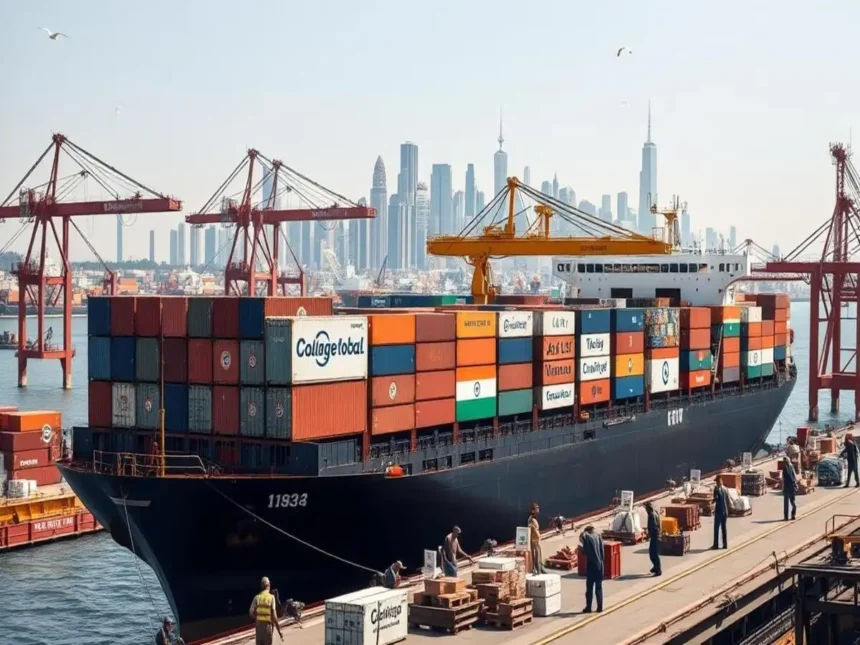
India and Oman have signed the Comprehensive Economic Partnership Agreement in Muscat today, formally sealing a trade pact aimed at expanding bilateral trade, easing market access, and strengthening supply chain cooperation. The India Oman CEPA is expected to reshape trade flows across manufacturing, energy, logistics, and services.
India Oman CEPA comes at a time when New Delhi is accelerating its trade diplomacy across the Gulf to secure export markets and strategic energy partnerships. The agreement is time sensitive and firmly news driven, with immediate implications for tariff structures, investment pipelines, and sector competitiveness on both sides.
What The India Oman CEPA Covers
The India Oman CEPA focuses on tariff reduction, services liberalisation, investment protection, and trade facilitation. A large share of Indian exports will gain preferential or zero-duty access to the Omani market over phased timelines. Oman, in turn, secures improved access for hydrocarbons, fertilisers, minerals, and logistics-linked services into India.
The agreement also includes commitments on customs cooperation, dispute resolution, and standards alignment, which are critical for reducing non-tariff barriers. For Indian exporters, especially small and mid-sized firms, simplified rules of origin and faster clearance processes are expected to lower transaction costs and improve predictability.
Trade Flows Set For Expansion
Bilateral trade between India and Oman has historically been dominated by energy imports, particularly crude oil and LNG, alongside Indian exports of food products, textiles, engineering goods, and chemicals. Under the CEPA framework, trade volumes are expected to diversify beyond energy into value-added manufacturing and services.
Indian engineering goods, electrical equipment, auto components, and construction materials are likely to see faster growth due to tariff concessions. Oman’s ports and free zones could also emerge as transshipment hubs for Indian goods targeting Africa and Europe, strengthening India’s export logistics footprint in the region.
Sectoral Winners In India
Manufacturing is among the biggest beneficiaries. Sectors such as pharmaceuticals, medical devices, textiles, gems and jewellery, and food processing gain improved market access in Oman with reduced duties. Indian pharma exporters, already present in the Gulf, stand to expand distribution due to regulatory cooperation clauses.
Services exports are another clear winner. The CEPA eases movement for Indian professionals in IT services, engineering consultancy, healthcare, and project management. Indian firms executing infrastructure and energy projects in Oman are expected to benefit from clearer rules on visas, taxation, and local partnerships.
Sectors Facing Competitive Pressure
While the agreement opens opportunities, some Indian sectors may face higher competitive pressure. Omani petrochemicals, aluminium products, and fertilisers could become more price competitive in the Indian market due to tariff reductions. Domestic producers in these segments may need to focus on efficiency, scale, and downstream value addition to protect margins.
In agriculture, safeguards remain in place, but selective imports could impact niche producers. The government has structured the CEPA with phased tariff cuts to allow domestic industries time to adjust, reducing the risk of sudden market disruption.
Oman’s Strategic Gains And Investment Outlook
For Oman, the CEPA strengthens its positioning as a stable trade and investment partner in South Asia. Improved access to the Indian market supports diversification away from oil dependence, a key priority under Oman Vision 2040. Indian investment into Omani ports, logistics parks, renewable energy, and downstream manufacturing is expected to rise.
The agreement also enhances Oman’s appeal as a base for Indian companies looking to serve the wider Gulf Cooperation Council region. Predictable trade rules and investment protections make long-term capital deployment more viable for Indian conglomerates and mid-sized exporters alike.
How This Fits India’s Gulf Strategy
The India Oman CEPA aligns with India’s broader push to deepen economic ties with the Gulf through targeted trade agreements. Unlike large multilateral pacts, these bilateral deals are designed to deliver faster, sector-specific gains while protecting sensitive domestic industries.
By securing preferential access and logistics integration with Oman, India strengthens supply chain resilience, particularly for energy, critical minerals, and maritime trade routes. The agreement also reinforces diplomatic ties in a region that is central to India’s trade, remittances, and energy security.
Takeaways
- India Oman CEPA signed today reshapes bilateral trade and investment flows
- Manufacturing and services exports from India emerge as key winners
- Selective Indian sectors may face competition from Omani imports
- Deal strengthens India’s long-term economic and strategic footprint in the Gulf
FAQs
Is the India Oman CEPA effective immediately?
Most provisions come into force after formal ratification, with tariff reductions implemented in phases.
Which Indian sectors benefit the most?
Pharmaceuticals, engineering goods, textiles, food products, and IT-enabled services see the strongest upside.
Does the agreement affect energy imports?
Energy trade remains central, but the CEPA encourages diversification into downstream and non-oil sectors.
Will Indian consumers see price changes?
Any impact on prices will be gradual and limited to specific imported goods covered under tariff concessions.