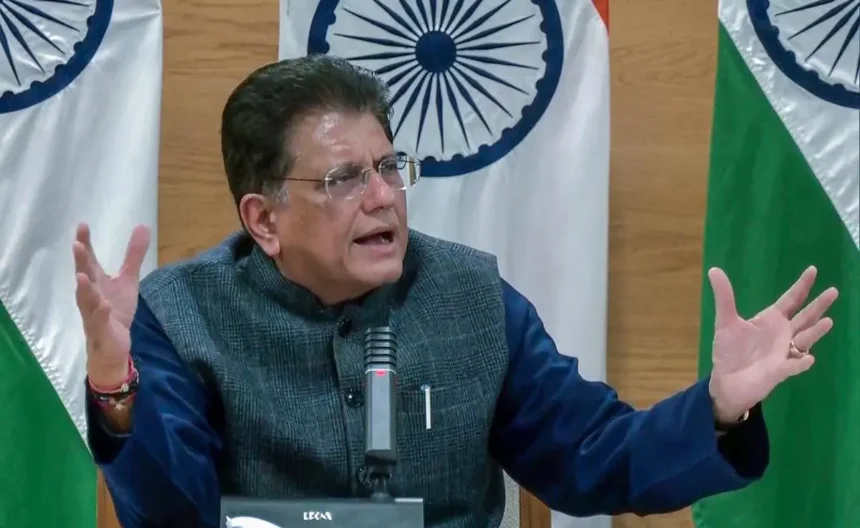
India secures preferential access to two thirds of global trade through an expanding network of free trade agreements, marking a significant shift in its external commerce strategy. The commerce ministry has described this as a major market access milestone with long term implications for exports and supply chains.
India secures preferential access to two thirds of global trade as its free trade agreements and comprehensive economic partnership agreements now cover a substantial share of world GDP and merchandise flows. This development reflects years of negotiations with key economies across Asia, Europe, and other regions. The announcement positions India as a more deeply integrated player in global trade architecture at a time when supply chains are being reconfigured.
The milestone is not symbolic. Preferential access directly affects tariff structures, rules of origin, and regulatory cooperation, which in turn influence export competitiveness and foreign investment decisions.
How Free Trade Agreements Expand Market Access
Free trade agreements reduce or eliminate tariffs on a wide range of goods traded between member countries. They also address non tariff barriers, intellectual property rules, services trade, and investment protections. For Indian exporters, preferential access means lower duties compared to non member competitors.
Over the past decade, India has signed or operationalised agreements with key partners in Asia Pacific and the Middle East, while also advancing negotiations with developed economies. These agreements cover sectors such as textiles, pharmaceuticals, engineering goods, chemicals, agriculture, and services including IT and financial services.
By securing access to markets that collectively represent around two thirds of global trade, India improves the probability that its goods can enter major consumption centers with reduced tariff disadvantages. This strengthens price competitiveness and may help boost export volumes over time.
Impact on Indian Export Sectors and Supply Chains
The preferential access milestone has sector specific implications. For example, textiles and apparel exporters benefit from lower tariffs in markets where competing nations also enjoy trade agreements. Engineering goods and auto components gain from smoother customs procedures and regulatory alignment.
Pharmaceutical companies stand to gain through easier regulatory cooperation and expanded distribution channels. Services exports, particularly IT and professional services, may benefit from commitments on mobility of professionals and digital trade frameworks embedded in certain agreements.
In addition, global manufacturers evaluating supply chain diversification view trade agreements as a key factor in location decisions. A country with wide FTA coverage becomes more attractive as a production base because goods manufactured there can access multiple markets under favorable tariff regimes.
Strategic Context in a Fragmented Trade Environment
The expansion of India’s FTA network comes amid a period of global trade fragmentation. Geopolitical tensions, supply chain disruptions, and rising protectionism have led many countries to reassess trade dependencies.
In this context, preferential access provides strategic leverage. It allows India to position itself as an alternative manufacturing hub while maintaining trade relationships with both developed and emerging markets. The policy shift also signals a move away from earlier caution toward deeper trade integration.
However, trade agreements also require domestic adjustments. Local industries may face increased competition from imports. Policymakers must balance export promotion with safeguards for sensitive sectors. Effective implementation, including awareness among small and medium enterprises, will determine how much of the theoretical market access translates into actual export growth.
Challenges in Translating Access into Outcomes
Securing preferential access is only the first step. Export performance depends on production capacity, logistics efficiency, quality standards, and compliance with rules of origin. If exporters fail to meet origin criteria, they cannot claim tariff benefits.
Infrastructure bottlenecks, high logistics costs, and regulatory delays can dilute the advantages of FTAs. Therefore, trade facilitation measures, digitised customs processes, and port modernisation become critical complements to market access agreements.
Another factor is utilisation rate. Historically, many countries have struggled to fully utilise FTA benefits because businesses are unaware of procedures or find compliance burdensome. Increasing utilisation will require targeted outreach, simplified documentation, and capacity building among exporters.
Long Term Economic Implications
The milestone of covering two thirds of global trade under preferential arrangements enhances India’s negotiating position in future trade talks. It also strengthens the country’s credibility as a reliable economic partner.
Over time, broader market access can support export led growth, improve foreign exchange earnings, and attract investment into manufacturing and services sectors. It can also encourage domestic firms to upgrade technology and quality to compete internationally.
The true impact will unfold over several years. If accompanied by structural reforms, infrastructure improvements, and productivity gains, preferential access could contribute meaningfully to India’s ambition of becoming a larger share of global trade.
Takeaways
• India now has preferential trade access covering around two thirds of global trade flows
• Free trade agreements reduce tariffs and improve competitiveness for Indian exporters
• Export gains depend on utilisation rates, infrastructure, and compliance with rules of origin
• The milestone strengthens India’s strategic position in a fragmented global trade landscape
FAQs
Q1: What does preferential access to global trade mean?
It means Indian goods and services can enter partner countries under reduced or zero tariffs compared to non member nations under free trade agreements.
Q2: Does this guarantee higher exports for India?
Not automatically. Export growth depends on production capacity, competitiveness, and effective utilisation of FTA provisions.
Q3: Which sectors benefit the most from FTAs?
Textiles, pharmaceuticals, engineering goods, auto components, agriculture, and IT services are among the key beneficiaries.
Q4: Are there risks associated with expanding FTAs?
Yes. Domestic industries may face import competition, and compliance requirements can pose challenges for smaller exporters.