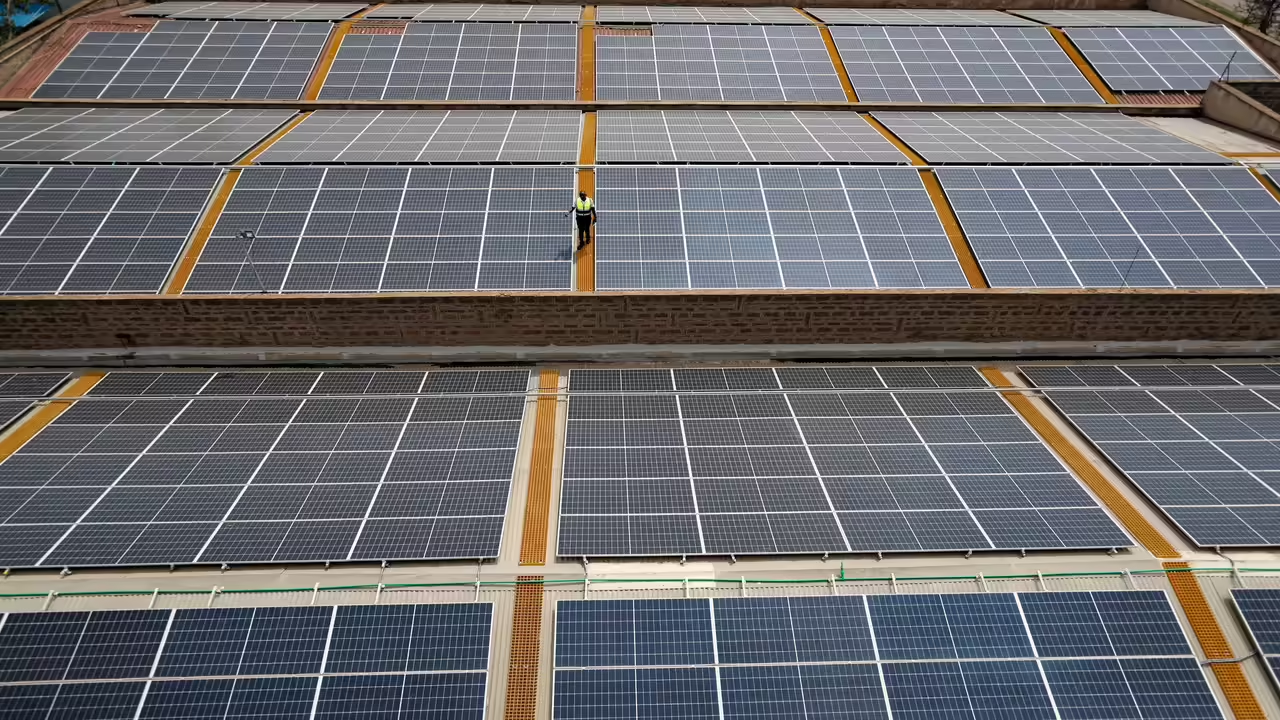
India is witnessing a sharp rise in solar imports as developers rush to secure equipment before new tariff rules take effect. The spike reflects strategic procurement decisions aimed at managing costs amid evolving policy changes.
India solar imports spike has become a key trend in the renewable energy sector, driven by developers accelerating purchases ahead of expected tariff adjustments. The surge highlights how policy timelines can directly influence supply chain decisions and project economics across the solar industry.
Developers Accelerate Imports Before Tariff Implementation
The recent India solar imports spike is largely linked to developers front-loading purchases of solar modules and cells before stricter tariff rules come into force. These tariffs are designed to promote domestic manufacturing but also increase short-term project costs.
Developers are importing modules in bulk to lock in current pricing and avoid higher duties in the near future. This behavior is common in industries where regulatory changes impact input costs, leading to temporary surges in imports.
Companies across utility-scale and rooftop solar segments are participating in this trend, aiming to maintain project viability and protect margins.
Policy Push for Domestic Manufacturing Gains Momentum
The government’s tariff strategy is part of a broader push to strengthen domestic solar manufacturing. Policies such as basic customs duties and production-linked incentives are intended to reduce dependence on imports, particularly from countries like China.
India has been heavily reliant on imported solar equipment, with a large share of modules sourced from global manufacturers. By increasing tariffs, policymakers aim to encourage local production and build a self-sufficient supply chain.
Domestic players are expected to benefit in the long term, but the transition phase is creating short-term disruptions in procurement strategies.
Impact on Solar Project Costs and Timelines
The India solar imports spike reflects concerns among developers about rising project costs once new tariffs are implemented. Solar modules account for a significant portion of total project expenses, making pricing changes highly impactful.
By importing early, developers can avoid cost escalations and ensure project feasibility. However, this also requires careful planning in terms of storage, logistics, and inventory management.
In some cases, developers may delay project execution to align with favorable procurement conditions. This could lead to temporary fluctuations in project timelines across the sector.
Supply Chain Dynamics and Global Market Influence
Global supply chain conditions are also playing a role in the current import surge. Availability of solar modules, shipping timelines, and international pricing trends are influencing procurement decisions.
The global solar market has experienced volatility due to factors such as raw material costs, manufacturing capacity, and geopolitical tensions. These dynamics are impacting how developers in India plan their sourcing strategies.
The import spike may also lead to temporary congestion at ports and warehouses, as large volumes of equipment enter the country within a short period.
Domestic Industry Response and Capacity Expansion
Indian solar manufacturers are ramping up capacity in response to policy support and anticipated demand growth. Companies are investing in integrated manufacturing facilities covering modules, cells, and wafers.
Firms like Adani Solar and Tata Power Solar are expanding their production capabilities to capture market share.
However, scaling domestic manufacturing to meet demand will take time. In the interim, imports will continue to play a significant role in supporting project development.
Long Term Implications for India Renewable Energy Goals
The India solar imports spike is a short-term response to policy changes, but it has broader implications for the country’s renewable energy ambitions. India aims to significantly expand its solar capacity as part of its clean energy targets.
Balancing cost competitiveness with domestic manufacturing growth is a key challenge. While tariffs support local industry, they can also increase project costs if not managed carefully.
Over time, a stronger domestic manufacturing base could reduce reliance on imports and stabilize pricing. This would support sustainable growth in the solar sector.
Outlook as Tariff Rules Take Effect
As new tariff rules are implemented, the pace of imports is expected to normalize. Developers will gradually shift toward sourcing from domestic manufacturers as capacity increases.
The transition period may see adjustments in pricing, project timelines, and procurement strategies. Market participants will need to adapt to the evolving policy environment.
India’s solar sector remains one of the fastest-growing globally, and policy-driven changes like these will continue to shape its trajectory.
Takeaways
• India solar imports have surged ahead of new tariff implementation
• Developers are front-loading purchases to manage rising costs
• Government policy aims to boost domestic manufacturing
• Short-term disruptions may lead to long-term industry growth
FAQs
Why are solar imports increasing in India?
Developers are importing equipment early to avoid higher costs from upcoming tariff rules.
What are the new tariff rules about?
They are designed to promote domestic manufacturing by increasing duties on imported solar components.
Will solar project costs increase?
Costs may rise in the short term due to tariffs, but domestic production could stabilize prices over time.
Who benefits from these policy changes?
Domestic manufacturers are expected to benefit as reliance on imports decreases.