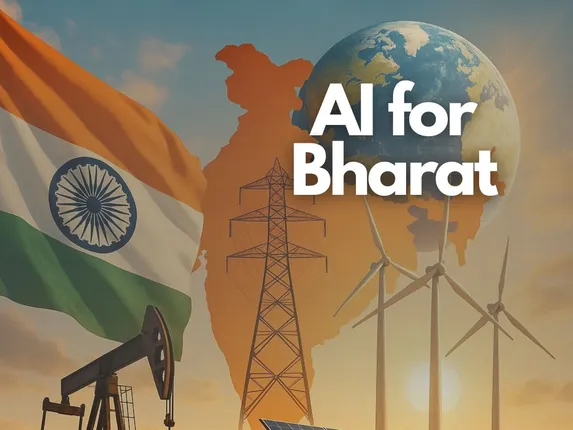
India will showcase artificial intelligence case studies to global leaders at an upcoming international summit, positioning its AI deployments as a strategic soft power asset. The move highlights India’s intent to influence global AI discourse by demonstrating real world impact rather than theoretical ambition.
India to showcase AI case studies is a time sensitive policy and positioning story, tied to an upcoming global summit and current geopolitical competition around technology leadership. The tone remains firmly news driven, focused on intent, context, and implications.
AI showcase signals strategic shift in global positioning
India’s decision to present AI case studies to global leaders marks a shift in how the country wants to be perceived in the technology hierarchy. Instead of framing itself only as a talent hub or services provider, India is pushing a narrative of applied AI at population scale. The emphasis is on solutions already deployed in governance, healthcare, finance, agriculture, and digital public infrastructure.
This approach aligns with India’s broader strategy of exporting digital governance models. By highlighting outcomes rather than prototypes, policymakers aim to position India as a practical AI implementer in contrast to countries still debating regulation versus innovation.
Focus on population scale and cost efficiency
A key theme of the AI case studies is expected to be scale. India’s advantage lies in deploying AI systems across millions of users at relatively low cost. Use cases such as fraud detection in public finance, predictive analytics in healthcare delivery, crop advisory platforms, and language translation tools for governance demonstrate how AI can function in complex, diverse environments.
Global leaders from emerging and developed economies alike are watching these models closely. Many countries face similar challenges around inclusion, affordability, and service delivery. India’s ability to operate AI systems under such constraints strengthens its claim as a reference point for responsible and scalable adoption.
Digital public infrastructure as AI backbone
India’s digital public infrastructure is central to the narrative. Platforms built for identity, payments, and data exchange have created an ecosystem where AI can be layered efficiently. The case studies are likely to show how AI tools integrate with these platforms to improve accuracy, speed, and reach without building systems from scratch.
This matters geopolitically. Digital public infrastructure is increasingly seen as an alternative to proprietary technology stacks dominated by a few global corporations. By presenting open, interoperable models enhanced with AI, India is offering a different path for countries wary of vendor lock in.
Soft power play in a fragmented AI world
The AI showcase is also a calculated soft power move. As global AI governance fragments across competing blocs, countries are seeking allies and influence beyond traditional diplomacy. Technology standards, data norms, and ethical frameworks are becoming tools of statecraft.
India’s messaging positions it as a bridge between advanced economies and the Global South. By sharing deployable AI solutions rather than abstract policy positions, India aims to build credibility and trust. This strengthens its voice in global discussions on AI ethics, access, and regulation.
Implications for startups and domestic ecosystem
The summit exposure has direct implications for India’s startup ecosystem. AI startups operating in areas such as health tech, agri tech, fintech, and govtech could gain international visibility and partnership opportunities. Government backed case studies often act as validation signals for investors and foreign governments exploring pilots.
At the same time, the spotlight raises expectations. Global scrutiny will increase around data protection, bias mitigation, and outcome measurement. Domestic players showcased at the summit will be expected to meet higher standards of transparency and performance.
Policy alignment and regulatory messaging
The case studies also serve a regulatory purpose. By highlighting successful deployments, India can argue that innovation and regulation need not be mutually exclusive. The narrative supports a calibrated regulatory approach that enables experimentation while managing risks.
This is particularly relevant as several countries tighten AI regulations. India’s experience offers an alternative model where guardrails evolve alongside deployment rather than preceding it. That argument is likely to resonate with nations balancing growth and control.
Global reception and competitive context
International response will depend on credibility and depth. Global leaders are increasingly sceptical of AI showcases that focus on pilots rather than sustained outcomes. India’s strength lies in pointing to systems that have operated over years, not months.
The competitive context is intense. Major powers are using AI leadership to project economic and military strength. India’s positioning is distinct in that it emphasises civilian governance and inclusion. If executed well, this differentiation could enhance India’s standing without provoking strategic pushback.
What this signals going forward
The upcoming summit is unlikely to be a one off event. It signals a longer term strategy where AI becomes a central pillar of India’s global engagement. Expect more structured efforts to export digital public infrastructure models, technical assistance programs, and AI collaboration frameworks.
For globalbizhour readers, the key takeaway is that AI is no longer just a domestic growth lever for India. It is now a diplomatic asset, economic signal, and influence tool rolled into one.
Takeaways
- India will showcase real world AI deployments to global leaders
- The focus is on scale, inclusion, and cost efficient implementation
- AI is being positioned as a soft power and diplomatic tool
- The move boosts visibility for India’s digital and startup ecosystem
FAQs
Why is India showcasing AI case studies now
Global competition around AI leadership has intensified, making this an opportune moment to shape perception.
What kind of AI use cases will be highlighted
Governance, healthcare, finance, agriculture, and digital public infrastructure driven deployments.
How does this help India geopolitically
It strengthens influence in global AI governance and builds trust with emerging economies.
Does this benefit Indian startups
Yes, global exposure and validation can open partnerships and funding opportunities.