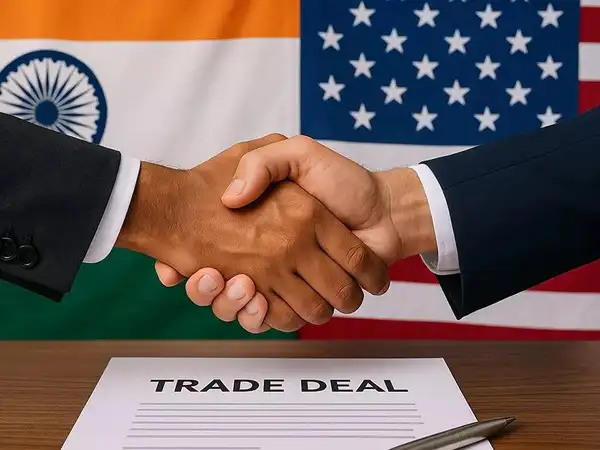
India’s optimism that a major trade deal with the United States is near has sparked a rally in Asian markets, with Indian equities gaining as global risk sentiment improves due to easing US government shutdown worries.
Asian stock markets moved into positive territory Wednesday as hopes rose that the US government shutdown may end soon and that a bilateral deal between India and the US is close. In India, the Nifty 50 rose 0.63% and the Sensex climbed 0.67% on the back of a broader market uptick.
Trade deal optimism drives Indian equities
The main keyword trade deal captures how market participants are responding to indications that the United States Trade Representative (USTR) and Indian officials have resolved most substantive issues and are close to finalising a bilateral trade agreement. India’s Commerce Minister said negotiations were largely complete and remained focused on a fair and balanced pact.
Simultaneously, the easing of the US shutdown risk reduced safe-haven pressure and improved appetite for risk assets, amplifying the trade-deal effect on Indian and regional stocks.
Broader Asian market context and risk mood
Across Asia, markets climbed on the combination of possible resolution of the US federal government shutdown and fresh optimism around global trade links. The reduction in safe-haven flows into assets like gold and the dollar mirrored a shift toward risk-taking.
For India specifically, the rupee strengthened modestly, as trade-deal hopes and possibly lower US interest-rate expectations improved its appeal to global investors.
What this means for Indian stocks and sectors
Investor sentiment in India appears to be shifting toward sectors that benefit from trade and tight global links. Export-oriented firms, technology companies and manufacturing names are likely to gain from a successful deal with the US. The broader market participation—with 15 of 16 major sectors advancing—suggests the stimulus to sentiment is not confined to a narrow group.
Furthermore, the potential lowering of US tariffs on Indian goods (as signalled by US leadership) could improve export competitiveness and provide a tailwind to India’s trade-linked sectors.
What needs watching: deal timing, tariff specifics and policy moves
While the market bounce is real, key unknowns remain. The exact structure of the India-US trade agreement—tariff levels, sector coverage, timelines and linkage to other strategic issues—is yet to be publicly confirmed. India must also ensure the deal aligns with its own industrial, energy and strategic priorities. On the US side, the timing and deliverables of the trade pact—and its interplay with tariffs on Russian oil and other sanctions—remain matters of negotiation.
From a market risk perspective, if the trade deal stalls, or if external factors such as global inflation, US rate surprises or renewed geopolitics intervene, the market mood could reverse quickly.
Takeaways
- Trade-deal optimism between India and the US has boosted Indian equities and Asian markets.
- Easing of US government shutdown risk is improving global risk-sentiment and supporting risky assets.
- Export-linked and globally oriented Indian sectors are likely to benefit most from a successful trade pact.
- The final deal’s details and timing are not yet locked in—investor caution is still warranted.
FAQs
Q1: Why are Indian markets rallying now?
A1: Because markets are factoring in a potential India–US trade agreement and a reduction in US government shutdown risk, both of which improve growth and risk sentiment.
Q2: What specific gains might India get from a trade deal?
A2: Possible reductions in US tariffs on Indian goods, improved market access for Indian exports, and enhanced investor confidence in India’s global economic links.
Q3: What are the main risks if the deal falls through?
A3: A breakdown in negotiations could reverse sentiment, delay export gains, and leave markets exposed to global headwinds like higher rates or geopolitical shocks.
Q4: Which sectors in India are likely to benefit most?
A4: Export-driven manufacturing, IT and tech firms with global exposure, and companies linked to trade supply-chains are poised to be winners in a favourable deal.