
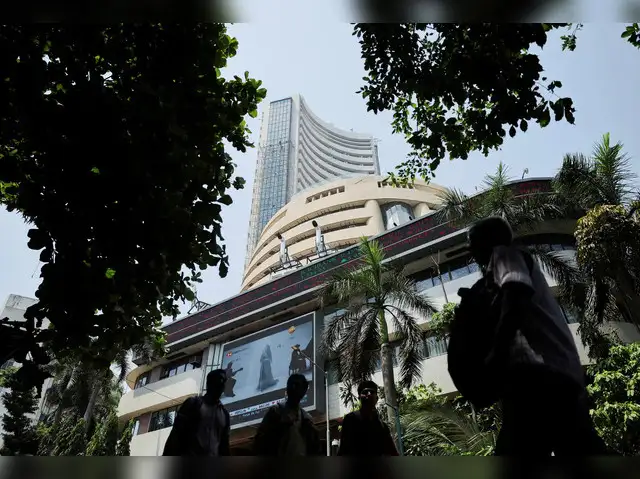
Indian equity markets opened the session on Friday with losses, as the main index Nifty50 slipped below 25,800 and the BSE Sensex declined approximately 300 points. The retreat comes amid weak global cues and domestic election-related caution, pointing to and underlining risk sentiment on Dalal Street.
India’s benchmark indices, the Nifty50 and Sensex, opened in the red on November 14, 2025, reflecting a cautious mood among investors. The Nifty traded near 25,790, down around 0.3-0.4 percent, while the Sensex was down about 280-300 points (roughly 0.34 percent). Key triggers included declines in global equity markets, a tech-heavy sell-off overseas, and lingering uncertainty over domestic politics as the Bihar election results counted.
Global weak cues weigh on domestic stocks
The weak global cues that pressured Indian markets stemmed from overseas equity declines and higher risk aversion. U.S. technology and growth stocks came under pressure overnight, Asian markets opened lower, and investors globally have grown cautious ahead of interest-rate decisions and economic data. Against this backdrop, Indian markets opened lower, dragged especially by sectors sensitive to global demand such as IT and metals.
Domestic politics adds to investor caution
In India, the state election outcome in Bihar has become a near-term focus for market participants. Political continuity or disruption can affect investor confidence, policy expectations and economic momentum. Market participants flagged that while political results alone are rarely the trigger for large directional moves, in conjunction with global headwinds they are amplifying caution and reducing risk appetite at the open.
Sector-wise drag and selective support
On sectoral front, the IT index was under notable pressure with losses of around 1 percent in early trade, followed by weakness in metals, auto and realty. On the flip side, some bank stocks and select large-cap names held up better, offering limited support. Market breadth was weak, indicating that the decline was more broad-based rather than concentrated in one or two stocks.
Key levels and what to watch
From a technical perspective, market watchers are tracking the 25,750-25,800 region for Nifty as a support zone; a breach below may prompt further weakness. On the upside, a move above 26,000 would improve the short-term outlook. Intra-day volatility is expected to be elevated given global uncertainty, domestic policy developments, and earnings announcements in the pipeline.
Implications for investors and near-term outlook
For investors, the weak start signals caution: risk appetite is subdued and positioning may stay light until clarity emerges from global central-bank direction, corporate earnings and domestic policy cues. In this environment, stock-specific trades may outperform broad bets. Near term, unless global cues improve or a domestic positive trigger emerges, markets may trade sideways to mildly lower with bouts of volatility.
Takeaways
- The Nifty50 opened below 25,800 and the BSE Sensex fell around 300 points amid muted investor sentiment.
- Global equity weakness and tech-sell-off put pressure on Indian markets, especially in tech and metal sectors.
- Domestic political developments (Bihar election) added to caution, limiting broad market upside.
- Key technical levels for support (25,750-25,800) and resistance (around 26,000) will guide short-term moves.
FAQs
Q: Why did Indian markets open lower today?
Because of weak global cues—including tech-sell-off and higher risk-aversion abroad—and domestic uncertainty tied to election results in Bihar, leading to subdued sentiment at the open.
Q: Which sectors are dragging the indices?
IT, metals, auto and real-estate are among the early laggards, as they carry higher sensitivity to global growth and sentiment.
Q: What should investors watch now?
Support and resistance for indices (25,750–25,800 support for Nifty; 26,000 resistance), global central-bank communication, major corporate earnings, and domestic policy developments.
Q: Does this mean the market trend has turned negative?
Not necessarily. The market’s weak start reflects temporary caution. Unless global and domestic conditions improve, though, upside may remain limited and volatility elevated.


