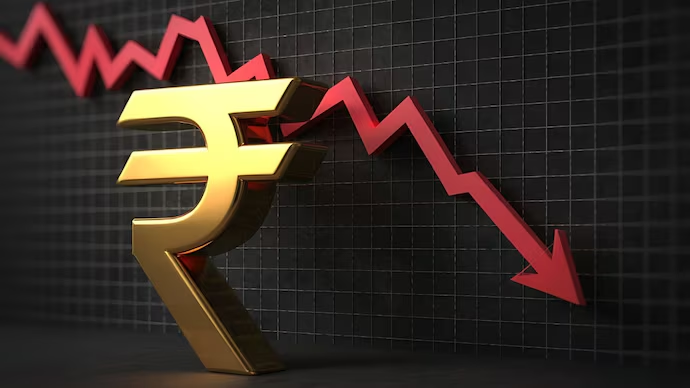
The Indian rupee is weakening toward record lows as rising global energy prices increase pressure on currency markets. Higher crude oil costs are expanding India’s import bill and raising concerns about inflation, trade balances and capital flows.
Indian Rupee Weakens as Energy Prices Rise
The Indian rupee weakens toward record lows as global energy prices climb and investors reassess risks in emerging market currencies. The rupee has come under pressure in recent trading sessions due to rising crude oil prices and growing geopolitical uncertainty.
India imports a significant portion of its crude oil requirements, making the country highly sensitive to changes in global energy prices. When oil prices increase sharply, the demand for foreign currency to pay for imports rises, which can weaken the domestic currency.
Currency markets closely track these developments because a widening trade deficit can put sustained pressure on exchange rates. The rupee’s recent movement reflects concerns that higher energy costs could increase India’s import bill in the coming months.
Investors are also monitoring global financial conditions, as capital flows into emerging markets often fluctuate when economic uncertainty increases.
Impact of Rising Crude Oil Prices on Currency Markets
Rising crude oil prices and currency pressure are closely connected in energy importing economies. For India, higher oil prices increase the cost of imports, which directly affects the balance of payments.
The balance of payments measures the difference between the country’s total exports and imports along with capital inflows. When imports rise faster than exports, the current account deficit widens.
A widening deficit typically increases demand for foreign currencies such as the US dollar. As a result, the domestic currency can weaken relative to major global currencies.
Currency traders therefore closely track oil price movements when assessing the outlook for the rupee. If crude oil prices remain elevated for an extended period, the pressure on the currency can persist.
This relationship between oil prices and exchange rates is especially important for economies that rely heavily on imported energy.
Inflation Concerns and Monetary Policy Implications
A weakening rupee and rising energy prices can also contribute to inflationary pressures in the domestic economy. Fuel prices influence transportation, manufacturing and logistics costs, which can raise the prices of goods and services.
When inflation rises, central banks often face complex policy decisions. Maintaining stable inflation levels while supporting economic growth becomes more challenging in such situations.
If inflation remains elevated, policymakers may choose to maintain higher interest rates to control price increases. Higher interest rates can attract foreign investment in financial markets, which may help stabilize the currency.
However, prolonged high borrowing costs can also slow economic growth by reducing investment and consumer spending.
For currency markets, these policy decisions play a significant role in determining long term exchange rate trends.
Role of Global Capital Flows in Rupee Movement
Global capital flows and investor sentiment also influence the performance of the Indian rupee. Foreign institutional investors allocate funds across different markets depending on economic outlook, interest rate expectations and geopolitical developments.
When global uncertainty rises, investors often move capital toward safer assets such as US Treasury bonds or gold. This shift can lead to capital outflows from emerging markets, including India.
If foreign investors reduce their exposure to Indian equities or debt markets, demand for the rupee decreases. This can contribute to currency depreciation in the short term.
Conversely, strong inflows into equity markets or government bonds can strengthen the rupee by increasing demand for the domestic currency.
Currency movements are therefore influenced by a combination of trade balances, global interest rates and investor confidence.
Government and Central Bank Monitoring Currency Stability
Authorities closely monitor currency movements to ensure financial stability and prevent excessive volatility. While exchange rates are primarily determined by market forces, central banks sometimes intervene in foreign exchange markets to smooth sharp fluctuations.
Interventions typically involve selling or buying foreign currency reserves to manage extreme movements in the exchange rate. Such actions are usually intended to stabilize markets rather than control long term currency levels.
India maintains significant foreign exchange reserves, which provide a buffer against sudden capital outflows or currency shocks.
In addition to interventions, policymakers often focus on strengthening economic fundamentals to support currency stability. Measures that improve export competitiveness, encourage foreign investment and reduce trade deficits can strengthen the long term outlook for the rupee.
Outlook for the Indian Rupee
The outlook for the Indian rupee will depend on several key factors in the coming months. Global crude oil prices remain the most immediate variable influencing currency markets.
If oil prices remain elevated due to geopolitical tensions or supply disruptions, pressure on the rupee could continue. However, stable energy prices combined with strong capital inflows could help stabilize the currency.
India’s economic growth prospects remain relatively strong compared with many global economies. Continued expansion in sectors such as technology services, manufacturing and digital commerce may support export growth and investor confidence.
Currency markets will therefore continue balancing multiple forces including oil prices, inflation trends, global interest rates and capital flows.
Takeaways
• The Indian rupee is weakening as rising energy prices increase pressure on currency markets
• Higher crude oil costs expand India’s import bill and affect trade balances
• Inflation concerns and monetary policy decisions influence currency movements
• Global capital flows and investor sentiment play a key role in exchange rate trends
FAQs
Why is the Indian rupee weakening?
The rupee is under pressure mainly because rising crude oil prices increase India’s import costs and widen the trade deficit.
How do oil prices affect the rupee?
India imports most of its oil. When prices rise, the demand for foreign currency increases to pay for imports, which can weaken the rupee.
Can a weak rupee increase inflation?
Yes. A weaker currency makes imports more expensive, which can raise prices of fuel, goods and services across the economy.
How can currency volatility be managed?
Central banks may intervene in foreign exchange markets or adjust monetary policy to stabilize excessive currency fluctuations.