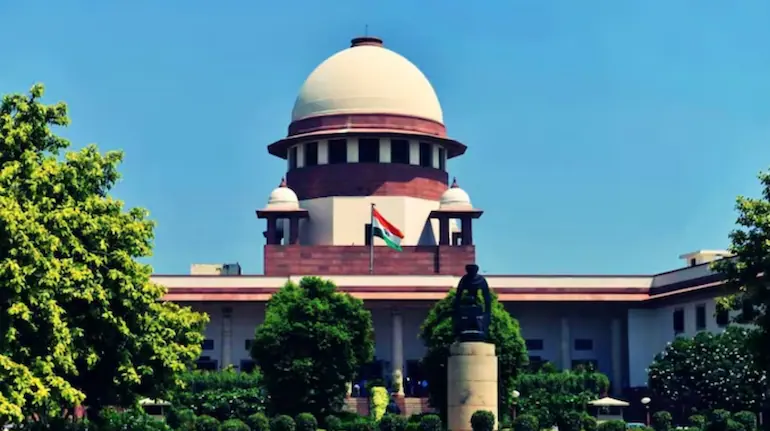
Indian startups are demanding urgent tax certainty after a recent Supreme Court ruling unsettled venture capital flows and revived fears of retrospective scrutiny. The tax uncertainty issue has become central to founder and investor conversations as leading startups warn that policy ambiguity could slow funding, hiring, and expansion plans.
The Supreme Court ruling, which clarified aspects of indirect tax interpretation, has had ripple effects far beyond the immediate case. While the judgment was not directly aimed at startups, venture capital firms have grown cautious about how tax authorities may interpret similar transactions involving share premiums, ESOPs, and cross-border structures. This has triggered a coordinated response from the startup ecosystem seeking clarity from the government.
Supreme Court ruling revives startup tax anxiety
The core concern for founders is not the ruling itself but its downstream interpretation. Startups operate on complex funding structures that often involve share issuances at premiums, convertible instruments, and overseas holding entities. Past experience with issues such as angel tax and retrospective demands has made the ecosystem highly sensitive to any judicial or regulatory signal.
Following the ruling, several venture capital firms paused deal closures or initiated fresh legal reviews. Term sheets were delayed, and some early-stage rounds were reportedly restructured to reduce perceived tax exposure. This reaction reflects how quickly capital sentiment can shift when tax treatment becomes uncertain.
For startups already navigating slower funding cycles, this additional friction risks compounding pressure on cash flows and growth plans.
Meesho, Acko, Swiggy ecosystem flags funding impact
Executives and founders across consumer internet, fintech, and logistics sectors have raised concerns through industry bodies and informal representations. Companies such as Meesho, Acko, and players across the Swiggy ecosystem argue that the lack of clear tax guardrails directly affects investor confidence.
These firms rely heavily on institutional capital, both domestic and foreign. Any perception that legitimate startup structures could face adverse tax interpretation increases risk premiums for investors. In practical terms, that means lower valuations, tighter deal terms, or investors shifting capital to more predictable markets.
Founders warn that the impact will be most severe on growth-stage startups that require large capital infusions to scale operations and achieve profitability milestones.
Venture capital flows show early signs of hesitation
While there has been no formal pullback announcement, market participants say deal velocity has slowed. VC funds are prioritizing follow-on investments in existing portfolio companies over new bets. Legal and tax diligence timelines have extended, particularly for startups with overseas parent entities or complex cap tables.
India remains an attractive startup market, but global capital is increasingly selective. With competing destinations offering clearer tax frameworks, even temporary uncertainty can divert funds elsewhere. For global investors managing risk across regions, tax clarity often matters as much as market size.
The concern is not about higher taxes, but about unpredictability. Investors can price known costs. They struggle with open-ended exposure.
What the startup ecosystem wants from the government
The startup community is pushing for explicit guidance from the finance ministry and tax authorities. The key demand is a clear assurance that genuine startup funding structures will not face retrospective tax challenges based on reinterpretations of existing law.
Industry groups are also seeking alignment between judicial rulings and administrative practice. Without this, even favorable judgments can create uncertainty if tax officers apply them broadly. Startups want safe harbor provisions, clearer definitions around share premiums, and consistent treatment of ESOPs and convertible instruments.
Many founders see the upcoming budget and policy statements as an opportunity for the government to reset confidence without legislative overhaul.
Broader implications for India’s startup narrative
India’s startup ecosystem has matured significantly, producing global-scale companies and attracting long-term institutional capital. However, policy stability remains a critical pillar of this growth story. Episodes of tax uncertainty risk undermining years of progress in positioning India as a predictable innovation hub.
If left unaddressed, prolonged ambiguity could push startups to restructure offshore, delay IPO plans, or limit domestic expansion. On the other hand, swift clarification would reinforce India’s reputation as a founder-friendly jurisdiction.
The coming weeks will be closely watched. How the government responds could influence startup funding momentum for the rest of the year.
Takeaways
- Startups are seeking clarity, not concessions, on tax treatment after the Supreme Court ruling
- VC deal closures and valuations are already showing signs of caution
- Large startup ecosystems fear uncertainty more than higher compliance costs
- Clear government communication could quickly restore investor confidence
FAQs
What triggered the current tax concerns among startups?
A recent Supreme Court ruling raised questions about how tax authorities may interpret certain transactions, creating uncertainty for investors and founders.
Is the ruling directly targeted at startups?
No. The concern lies in how broadly the ruling could be applied to startup funding structures.
How are VC investors reacting?
Many are slowing deal closures, increasing diligence, or delaying new investments until clarity improves.
What are startups asking the government to do?
They want clear assurances, consistent tax interpretation, and protection from retrospective scrutiny.