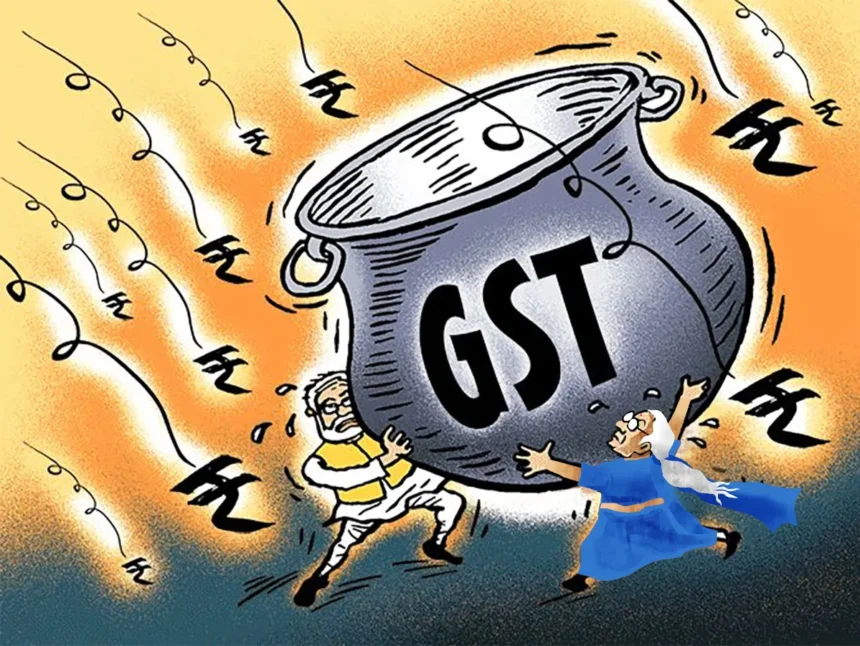
India’s GST collections recorded a strong surge in March 2026, reinforcing signs of sustained economic momentum. The sharp rise reflects improved compliance, higher consumption, and stable business activity across sectors, positioning the economy on a solid growth trajectory heading into the new financial year.
India’s GST collections have emerged as a key indicator of economic health, and the latest March surge confirms a broad-based recovery in consumption and formal sector activity. Monthly GST revenues have consistently remained above the Rs 1.6 lakh crore mark in recent months, with March showing a notable spike driven by year-end transactions and improved tax compliance.
GST Growth Reflects Strong Domestic Consumption Trends
The latest GST collection data highlights a clear uptick in domestic consumption, especially in sectors like automobiles, FMCG, and consumer durables. March is typically a high-activity month due to financial year-end adjustments, but the scale of this increase suggests more than seasonal momentum.
Higher GST revenues indicate that businesses are seeing stronger sales volumes, particularly in urban and semi-urban markets. The rise in e-invoicing and stricter compliance mechanisms has also reduced tax leakages, contributing to higher overall collections.
This trend aligns with broader economic signals such as rising retail demand, increased digital transactions, and stable credit growth. Together, these factors point toward resilient consumer confidence despite global uncertainties.
Improved Compliance and Digitization Boost Tax Efficiency
One of the major drivers behind the GST surge is improved tax compliance. Over the past few years, the government has tightened reporting systems through e-invoicing mandates and real-time data tracking.
These measures have significantly reduced tax evasion while expanding the formal tax base. Small and medium enterprises are increasingly integrating digital billing systems, making transactions more transparent and traceable.
Additionally, data analytics tools used by tax authorities are helping identify discrepancies faster, ensuring better enforcement. This shift toward a more digitized tax ecosystem is not only boosting collections but also enhancing long-term revenue stability.
Export Activity and Industrial Output Support GST Momentum
Another contributing factor to the March GST surge is steady export performance and industrial output. Manufacturing sectors such as chemicals, engineering goods, and electronics have maintained consistent production levels.
Export-linked GST components, including Integrated GST, have shown stable growth, reflecting sustained global demand for Indian goods. While global trade conditions remain mixed, India’s diversified export base has helped cushion volatility.
Domestic industrial output has also benefited from infrastructure spending and government-led capital expenditure. This has created a multiplier effect, boosting supply chains and increasing taxable transactions across industries.
Policy Stability and Economic Outlook Remain Positive
The consistent rise in GST collections provides policymakers with greater fiscal flexibility. Higher tax revenues allow the government to maintain spending on infrastructure, social programs, and economic reforms without widening the fiscal deficit significantly.
For the Reserve Bank of India, strong GST data serves as an indicator of underlying economic strength, which could influence future monetary policy decisions. Stable growth in tax collections suggests that the economy can withstand moderate policy tightening if needed.
Looking ahead, the sustainability of this growth will depend on global economic conditions, inflation trends, and domestic demand. However, the current trajectory indicates that India’s economic fundamentals remain strong as it enters the next financial year.
Takeaways
– March GST collections signal strong economic activity and consumption recovery
– Improved compliance and digitization are boosting tax revenues significantly
– Industrial output and exports are supporting sustained GST growth
– Strong collections give policymakers more fiscal and policy flexibility
FAQs
Q1: Why do GST collections rise in March?
March is the financial year-end in India, leading to higher business transactions, tax settlements, and compliance filings, which typically increase GST collections.
Q2: What does higher GST collection indicate about the economy?
It reflects stronger consumption, better business activity, and improved tax compliance, all of which are signs of a healthy economy.
Q3: How does GST impact government finances?
GST is a major revenue source for the government, funding infrastructure, welfare schemes, and public services.
Q4: Is the GST growth trend expected to continue?
If consumption demand and compliance levels remain strong, GST collections are likely to stay robust, though global factors may influence growth.