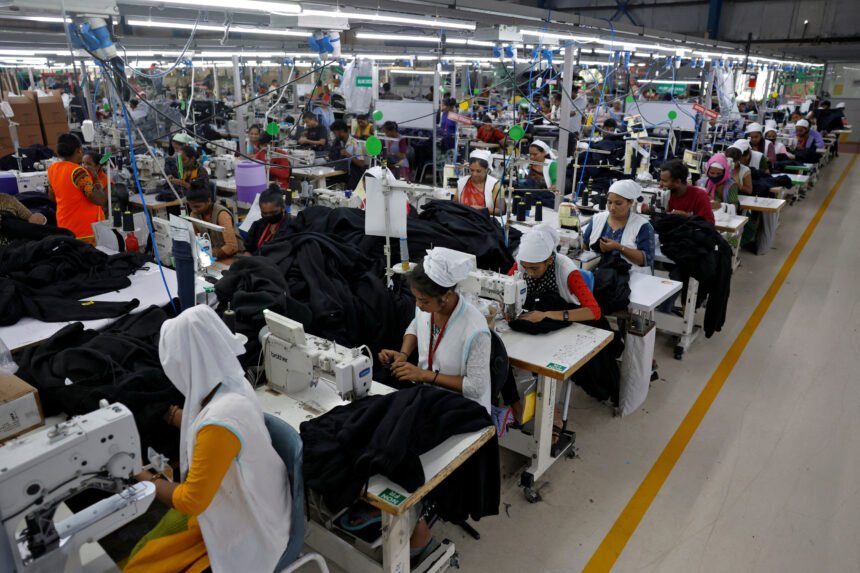
Domestic manufacturing growth has slowed to a six month low even as services activity remains steady, creating mixed signals for India’s growth trajectory at a time when policymakers and markets are tracking economic momentum closely. The latest data highlights a divergence between industrial output and the services engine that continues to support overall expansion.
The shift reflects evolving demand patterns, uneven global conditions and sector specific pressures. While India’s services economy remains resilient due to strong domestic consumption and digital driven activities, manufacturing faces headwinds from export softness, inventory adjustments and global uncertainty.
Why manufacturing momentum is weakening now
Manufacturing output has decelerated due to a combination of slower new orders, cautious inventory management and modest export demand. Companies across consumer goods, industrial equipment and engineering segments are reporting more conservative production planning as they track both domestic and external uncertainties.
Global conditions are another contributing factor. Several export markets continue to see patchy demand recovery, impacting India’s shipments in sectors such as textiles, chemicals and electronics. The strength of the US dollar and uneven reopening trends in key economies have added to short term challenges.
Manufacturers have also adjusted capacity utilisation to align with shifting cost structures. Input price fluctuations and freight costs have influenced production cycles. Despite easing commodity prices, companies remain focused on margin protection, which can slow output expansion when demand is not consistently strong.
The broader sentiment indicates that while long term investment cycles remain intact, near term manufacturing activity is moderating.
Services sector remains the economy’s strongest anchor
In contrast, services activity continues to expand steadily. Areas such as financial services, technology, hospitality, transportation and retail remain robust due to strong domestic consumption.
Financial services are benefitting from rising credit demand and digital adoption. Technology and IT enabled services remain stable, supported by steady global spending on cloud, analytics and cybersecurity.
The travel and hospitality ecosystem has maintained momentum, influenced by domestic tourism and higher discretionary spending. Retail trade continues to expand as urban consumers show resilience despite moderate inflation trends.
This stability in services helps cushion the broader economy from manufacturing volatility. India’s economic structure increasingly relies on services to offset cyclical pressures in goods producing sectors.
Mixed signals for policymakers tracking growth patterns
The divergence between manufacturing and services poses a challenge for policymakers evaluating the strength of India’s growth cycle. A steady services sector supports headline growth and employment, but sustained weakness in manufacturing could influence investment decisions, exports and industrial employment.
The Reserve Bank of India will assess whether the slowdown in manufacturing is cyclical or structural. If demand conditions remain soft, it could strengthen the case for supportive monetary policy, especially if inflation stays within acceptable bands.
Fiscal policymakers will also track whether industrial incentives, logistics improvements and capital expenditure projects can lift manufacturing momentum over the next few quarters. The progress of infrastructure projects, supply chain integration and state level reforms will shape outcomes.
Mixed indicators can also influence investor perception. Equity markets look for consistent signals, and sector specific performance will guide portfolio strategies until trends stabilise.
How businesses may respond to shifting demand trends
Companies are expected to recalibrate strategies based on current demand visibility. Manufacturing firms may continue to manage inventories tightly, optimise production schedules and focus on cost efficiency.
Export led industries may diversify markets and adjust pricing strategies to navigate global fluctuations. Domestic consumer oriented manufacturers might intensify marketing and distribution efforts to sustain demand.
In services, firms will likely maintain hiring and technology investment as demand conditions remain stable. Sectors like banking, insurance, digital services and logistics are positioned to capitalise on steady consumer and enterprise spending.
The overall corporate response will influence the pace of recovery in manufacturing and the durability of the services led growth cycle.
Takeaways
Manufacturing growth has slowed to a six month low, signalling near term challenges.
Services activity remains steady and continues to anchor economic expansion.
The divergence creates mixed signals for policymakers assessing India’s growth trajectory.
Corporate strategies will adjust as firms balance cost control with demand opportunities.
FAQs
Why is manufacturing slowing while services remain strong?
Manufacturing is affected by weaker export demand, cost adjustments and cautious inventory planning. Services are supported by domestic consumption and stable digital and financial activity.
Does the slowdown indicate a broader economic risk?
Not immediately. Services strength offsets manufacturing softness, but prolonged industrial weakness could impact investment and employment.
Will policy changes help manufacturing recover?
Supportive monetary conditions, infrastructure improvements and targeted sectoral incentives can help revive momentum if global demand strengthens.
Which sectors are performing well within services?
Financial services, technology, hospitality, transportation and retail continue to show strong and steady growth.