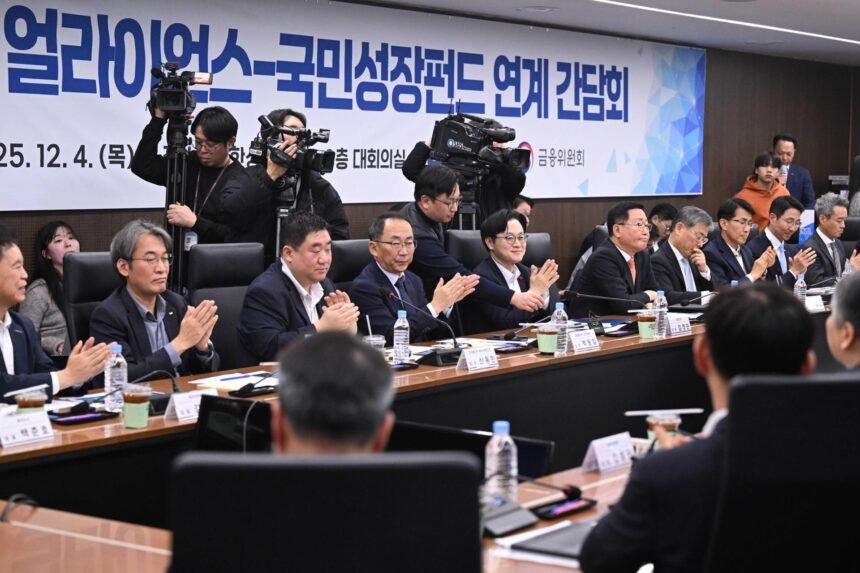
Korea unveils a $8.9 billion startup fund as part of a coordinated push to accelerate artificial intelligence adoption, expand exports and strengthen small and medium enterprise growth. The move signals an aggressive policy shift toward scale, technology leadership and global market integration.
The Korea $8.9 billion startup fund is a time sensitive policy development reflecting current economic priorities. It positions startups and SMEs at the center of national growth strategy, with capital deployment aligned to AI, manufacturing competitiveness and export expansion over the next few years.
Why Korea is doubling down on startups now
Korea’s decision to launch a fund of this scale is rooted in economic urgency. Slowing domestic demand, rising global competition and demographic pressures are forcing a rethink of traditional growth engines. Large conglomerates remain important, but future productivity gains are increasingly expected to come from startups and SMEs.
The government’s assessment is clear. Innovation must move faster, and private capital alone is not filling the gap at the required scale. By anchoring a large public backed fund, Korea aims to crowd in institutional investors, accelerate commercialization and shorten the path from research to revenue.
This approach also reflects lessons from earlier startup cycles where funding was fragmented and short term. The new structure emphasizes continuity, scale and alignment with national priorities.
How the $8.9 billion fund will be deployed
The startup fund is designed as a multi year vehicle rather than a one off stimulus. Capital allocation will prioritize AI driven companies, export oriented startups and SMEs upgrading manufacturing capabilities through technology.
AI is a core focus. Funding will target applications across semiconductors, industrial automation, healthcare, logistics and enterprise software. The objective is not just innovation but deployment at scale, enabling Korean firms to compete globally.
Export linked startups form the second pillar. Companies building products and platforms for overseas markets will receive targeted support, including growth capital and market entry assistance. This reflects Korea’s dependence on exports and the need to diversify beyond established sectors.
SMEs upgrading productivity through digital tools, smart factories and data driven processes also stand to benefit. This broadens the impact beyond venture backed startups to the wider industrial base.
What this means for Korea’s AI ambitions
Korea has strong fundamentals in hardware, manufacturing and engineering. The challenge has been translating this into leadership in applied AI and platform driven business models. The new fund directly addresses this gap.
By channeling capital into AI startups with clear commercialization paths, policymakers aim to build ecosystems rather than isolated successes. Integration with existing industrial clusters is expected to accelerate adoption.
The fund also supports talent retention. Competitive funding environments reduce brain drain and encourage founders and researchers to build domestically rather than relocate to the United States or other tech hubs.
Over time, this could position Korea as a serious player in enterprise AI and industrial applications rather than consumer facing platforms alone.
Export growth and global competitiveness focus
Exports remain central to Korea’s economic model. The startup fund reinforces this by backing companies that can plug into global value chains.
Startups in advanced manufacturing, clean energy components, mobility and digital services are expected to benefit. These sectors align with global demand trends and Korea’s existing strengths.
Access to patient capital allows startups to invest in certifications, overseas distribution and compliance, which are often barriers for smaller firms. This increases the probability of sustainable export growth rather than opportunistic sales.
For the government, supporting export capable startups also reduces concentration risk by expanding the exporter base beyond large conglomerates.
Impact on SMEs and domestic industry
One of the most significant aspects of the fund is its SME orientation. Many Korean SMEs struggle with aging workforces, rising costs and limited productivity gains. Technology adoption is essential but often underfunded.
By providing capital linked to modernization outcomes, the fund aims to lift SME competitiveness without relying solely on subsidies. Smart manufacturing, automation and digital integration are expected to be priority areas.
This approach also supports employment stability. SMEs account for a large share of jobs, and productivity improvements help sustain wages and competitiveness without offshoring.
The broader goal is to create a more resilient domestic supply chain that complements export growth.
Investor implications and ecosystem effects
For private investors, the fund changes risk dynamics. Public backing reduces early stage risk and improves exit visibility, encouraging greater participation from venture capital and institutional funds.
It also sets benchmarks for valuation discipline and governance. Startups backed by the fund are expected to meet stricter performance and reporting standards, improving ecosystem maturity.
International investors may view the initiative as a signal of long term policy commitment to innovation. This could increase cross border partnerships and capital inflows into Korean startups.
Risks and execution challenges
Scale alone does not guarantee success. Execution will determine outcomes. Capital misallocation, slow decision making or political interference could dilute impact.
There is also the risk of crowding out private initiative if funding becomes too prescriptive. Balancing strategic direction with entrepreneurial freedom will be critical.
Global competition in AI and exports is intense. Korean startups will need speed and adaptability, not just funding, to succeed.
Why this move matters beyond Korea
Korea’s $8.9 billion startup fund sets a benchmark for state led innovation financing. It reflects a broader global trend where governments play a more active role in shaping startup ecosystems tied to national priorities.
For other economies, the message is clear. Startup policy is no longer just about entrepreneurship. It is about competitiveness, resilience and long term growth.
Takeaways
- Korea has launched a $8.9 billion startup fund focused on AI, exports and SMEs
- The fund aims to crowd in private capital and accelerate commercialization
- AI deployment and export readiness are central priorities
- Execution quality will determine long term impact
FAQs
Why did Korea launch such a large startup fund
To address slowing growth, boost innovation and strengthen global competitiveness through startups and SMEs.
Which sectors will benefit the most
AI driven businesses, export oriented startups and SMEs adopting advanced manufacturing technologies.
How does this help SMEs specifically
It provides capital for productivity upgrades, technology adoption and integration into global supply chains.
What are the main risks
Poor capital allocation, slow execution and intense global competition could limit effectiveness.