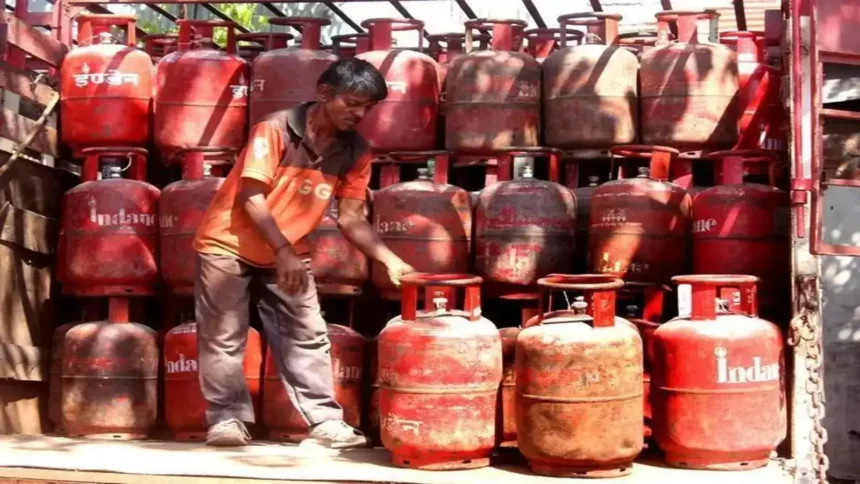
The latest LPG price revision in India has increased cost burdens for households and small businesses, impacting monthly budgets and operating expenses. The move reflects ongoing volatility in global energy prices and continues to influence inflation dynamics across sectors.
The LPG price revision has once again brought cost pressures into focus for Indian households and SMEs, as cooking gas prices remain a critical component of daily and business expenses. The latest adjustment is closely tied to global fuel trends and domestic subsidy policies.
LPG price revision impacts household budgets nationwide
The LPG price hike directly affects household spending, especially in urban and semi-urban areas where dependence on cooking gas is high. For middle-income families, LPG cylinders form a significant part of monthly expenses, and even marginal increases can disrupt budget planning.
For lower-income households, the impact is more severe. Although government subsidy schemes exist, the effective price paid often fluctuates due to changing subsidy levels and international fuel costs.
The revision also influences consumption behavior. Some households may reduce usage or shift partially to alternative fuels, which can affect overall demand patterns in the energy market.
Small businesses face rising operational costs
The impact of LPG price changes on SMEs is immediate and measurable. Businesses in sectors such as food services, catering, street vending, and small manufacturing rely heavily on LPG for daily operations.
Higher LPG costs directly translate into increased operating expenses. For many small enterprises operating on thin margins, this creates a difficult choice between absorbing costs or passing them on to customers.
In sectors like restaurants and cloud kitchens, even slight cost increases can impact pricing strategies and customer demand. This is particularly relevant in price-sensitive markets where competition is high.
Inflation concerns rise with fuel price adjustments
Fuel price changes, including LPG, play a key role in shaping inflation trends in India. LPG is part of the broader energy basket, and its price movement contributes to overall consumer price index calculations.
An increase in LPG prices can indirectly push up costs in related sectors such as food and logistics. This creates a cascading effect where businesses adjust prices to maintain margins, contributing to broader inflationary pressure.
Policymakers closely monitor such developments, as sustained increases in fuel prices can complicate efforts to keep inflation within target ranges.
Government policy and subsidy dynamics under scrutiny
The LPG pricing mechanism in India is influenced by a combination of global crude oil prices, exchange rates, and government subsidy policies. While subsidies are provided to certain categories, the extent and consistency of these benefits vary.
In recent years, there has been a gradual shift toward market-linked pricing, reducing the fiscal burden on the government but increasing exposure for consumers.
The current price revision has reignited discussions around subsidy targeting and the need for balancing fiscal discipline with consumer protection.
Broader economic implications of LPG price changes
Beyond immediate cost pressures, LPG price movements reflect broader economic trends. They indicate the level of global energy price volatility and its transmission into domestic markets.
For businesses, especially SMEs, consistent cost increases can affect expansion plans, hiring decisions, and overall profitability. For households, reduced disposable income can impact consumption patterns, which in turn affects demand across sectors.
The cumulative effect of such price revisions can influence economic momentum, particularly in consumption-driven segments of the economy.
Takeaways
LPG price revision has increased monthly expenses for households and SMEs
Small businesses face margin pressure due to rising fuel costs
Fuel price hikes contribute to broader inflation concerns in India
Subsidy policies and global energy trends remain key influencing factors
FAQs
Why have LPG prices increased in India?
The increase is primarily due to global fuel price movements, exchange rate fluctuations, and adjustments in subsidy policies.
How does LPG price hike affect small businesses?
It raises operational costs, forcing businesses to either absorb losses or increase prices for customers.
Are subsidies still available on LPG cylinders?
Yes, but they are targeted and vary depending on government policies and eligibility criteria.
Will LPG prices continue to rise?
Future price movements will depend on global crude oil trends, currency fluctuations, and domestic policy decisions.