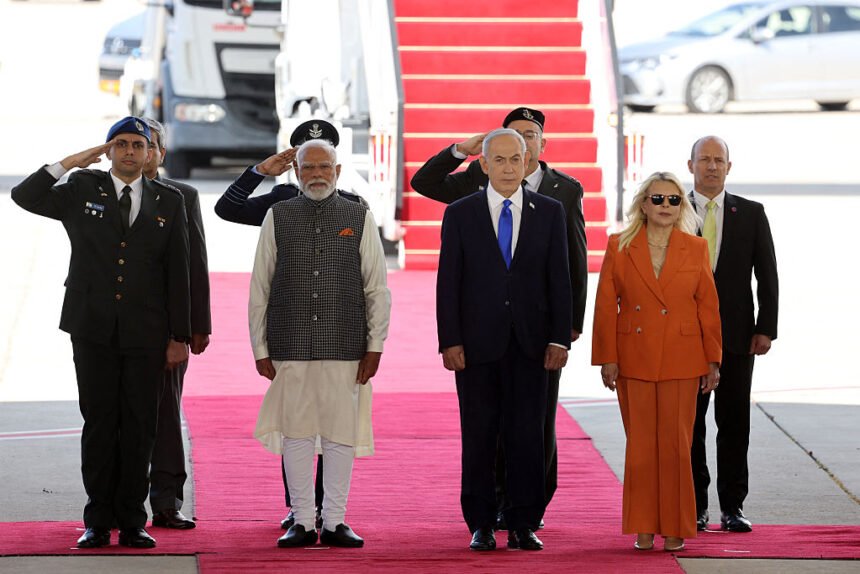
Modi’s Israel visit has renewed focus on Indo Middle East trade and technology cooperation, with both countries signaling deeper collaboration in innovation, defense, agriculture, and digital infrastructure. The visit reinforces strategic and economic engagement amid shifting global alliances.
Modi’s Israel visit carries significant implications for Indo Middle East trade and technology cooperation at a time when regional partnerships are evolving rapidly. India and Israel share a longstanding relationship built on defense collaboration, agricultural innovation, water management solutions, and high technology exchange. The latest engagement strengthens both economic and strategic dimensions of this partnership.
The visit comes amid growing efforts by India to expand its footprint in West Asia through diversified trade corridors, energy partnerships, and technology alliances. Israel, known for its advanced startup ecosystem and innovation led economy, remains a critical partner in this approach.
Strengthening Bilateral Trade and Investment Flows
Indo Israel trade has grown steadily over the years, covering sectors such as diamonds, chemicals, electronics, pharmaceuticals, and defense equipment. Modi’s Israel visit places fresh emphasis on expanding non defense trade components, particularly in high value technology driven industries.
Both sides are exploring enhanced cooperation in semiconductors, artificial intelligence, cybersecurity, and renewable energy. India’s expanding digital economy and manufacturing push align well with Israel’s strengths in research and development. Increased joint ventures and technology transfer agreements are expected to play a central role in future trade expansion.
Investment flows are another key focus area. Israeli companies have shown interest in India’s infrastructure, clean energy, and agritech sectors. Conversely, Indian firms are looking at Israel’s innovation ecosystem for partnerships and market access in advanced technology segments.
Technology Cooperation and Innovation Ecosystem
Technology cooperation forms the core of Indo Middle East trade engagement during Modi’s Israel visit. Israel’s reputation as a startup hub offers opportunities for Indian entrepreneurs and technology firms to collaborate on next generation solutions. Areas such as artificial intelligence, precision agriculture, health tech, and water conservation remain priority domains.
India’s push for digital public infrastructure, fintech expansion, and smart manufacturing creates demand for specialized technological expertise. Israel’s strengths in cybersecurity and defense technology complement India’s focus on securing critical digital and physical infrastructure.
Joint research programs and innovation funds have historically supported bilateral cooperation. The visit signals potential expansion of these mechanisms, encouraging co development rather than simple import export transactions. Such collaborations enhance long term value creation and reduce dependency on single market supply chains.
Strategic Context in the Middle East
Modi’s Israel visit also has broader geopolitical implications for Indo Middle East trade dynamics. India has actively strengthened relations with multiple West Asian nations, balancing energy security, diaspora interests, and strategic cooperation. Engagement with Israel forms a vital component of this regional strategy.
The Middle East remains a key trade and energy partner for India. Diversifying cooperation beyond hydrocarbons into technology and advanced manufacturing aligns with India’s long term economic objectives. Israel’s position as an innovation leader in the region enhances its relevance in this transformation.
Additionally, trilateral and multilateral initiatives involving India, Israel, and other regional partners have gained traction in recent years. These frameworks aim to integrate supply chains, logistics networks, and digital platforms, reinforcing trade resilience.
Defense and Security Collaboration
While the visit emphasizes trade and technology, defense cooperation continues to underpin the India Israel relationship. Israel is among India’s important defense technology suppliers, contributing to modernization efforts across multiple domains.
The intersection of defense and technology is particularly relevant. Advanced surveillance systems, drone technologies, and cybersecurity capabilities represent areas where collaboration can expand further. Strengthened ties in these sectors also influence broader economic engagement, as dual use technologies often drive innovation spillovers.
Defense cooperation enhances trust and provides a stable foundation for expanding civilian trade links. It also reflects a pragmatic approach to securing critical infrastructure and maintaining strategic autonomy.
Economic Outlook and Future Opportunities
The economic impact of Modi’s Israel visit is likely to unfold over time through concrete agreements and project level implementation. Both countries are aiming to increase bilateral trade volumes and diversify sectoral composition. Technology driven exports, research partnerships, and startup ecosystem integration are expected to gain prominence.
Indian startups may benefit from access to Israeli venture capital networks and mentorship ecosystems. Meanwhile, Israeli firms can leverage India’s large consumer base and manufacturing capacity for scaling operations.
The visit underscores a shift from transactional trade toward strategic economic alignment. As global supply chains realign and technological competition intensifies, partnerships based on innovation and trust become increasingly valuable.
Takeaways
• Modi’s Israel visit reinforces Indo Middle East trade and technology cooperation.
• Key focus areas include artificial intelligence, cybersecurity, renewable energy, and semiconductors.
• Strategic engagement extends beyond defense into innovation driven economic collaboration.
• Long term impact will depend on execution of joint projects and investment commitments.
FAQs
Why is Modi’s Israel visit significant for trade?
The visit strengthens economic ties, particularly in high technology sectors and innovation partnerships beyond traditional defense trade.
Which sectors benefit most from Indo Israel cooperation?
Technology, cybersecurity, agriculture innovation, renewable energy, and defense related industries are primary beneficiaries.
How does this visit impact Middle East trade dynamics?
It reinforces India’s broader regional strategy of diversifying partnerships and integrating advanced technology into trade relationships.
Will bilateral trade volumes increase immediately?
Trade growth is expected over time as agreements are implemented and joint projects materialize.