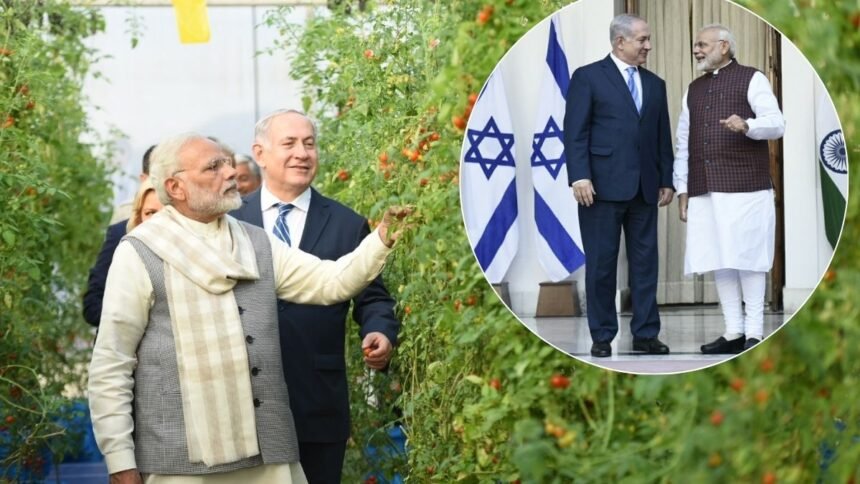
Modi’s Israel trip is set to focus on technology partnerships and defence supply chains, underscoring deepening India Middle East economic ties. The visit carries strategic implications for trade, innovation collaboration, and long term supply chain resilience across critical sectors.
Modi’s Israel trip comes at a time when India is recalibrating its external economic strategy around technology leadership and secure defence supply chains. The visit is expected to strengthen cooperation in advanced manufacturing, cybersecurity, semiconductors, drones, and defence systems. Beyond diplomacy, the economic undertone is clear. India is positioning itself as a trusted partner in a volatile geopolitical environment while expanding high value trade links with Israel and the broader Middle East region.
This engagement builds on an already robust relationship. India and Israel have steadily expanded cooperation since formal diplomatic ties were upgraded in the 1990s, with defence and agriculture historically leading collaboration.
Technology Collaboration Moves to the Center
Technology cooperation is a central theme of Modi’s Israel trip. Israel is globally recognized for its innovation ecosystem, particularly in cybersecurity, artificial intelligence, agritech, water technology, and deep tech startups. India, with its scale and digital infrastructure, offers a complementary market and talent base.
Bilateral technology partnerships could accelerate joint research and development, co creation of products, and startup linkages. Indian firms may benefit from Israeli innovation in areas such as precision agriculture and advanced sensors, while Israeli companies gain access to India’s large consumer and enterprise market.
Semiconductors and electronics manufacturing are also emerging as priority sectors. As global chip supply chains face realignment pressures, collaboration with technology focused nations becomes strategically valuable. Joint ventures or investment commitments in high tech manufacturing could reduce external dependencies.
Defence Supply Chains and Strategic Manufacturing
Defence supply chains represent another core pillar of the visit. India has been one of the largest importers of defence equipment, and Israel has consistently been among its key suppliers. The current focus is shifting from pure procurement to co development and local manufacturing.
Under India’s push for domestic defence production, partnerships that include technology transfer and joint manufacturing are gaining importance. Collaboration in areas such as unmanned aerial systems, missile systems, surveillance technology, and electronic warfare could deepen.
Strengthening defence supply chains also reduces vulnerability to disruptions caused by geopolitical tensions. Diversifying sources and increasing domestic capacity align with India’s long term national security and economic resilience goals. For Israel, collaboration with India provides scale and a stable long term defence partner.
Economic Impact on India Middle East Trade
The broader economic implications extend beyond bilateral ties. India’s engagement with Israel fits into a larger Middle East outreach strategy that includes trade corridors, energy security, and investment flows.
Enhanced technology and defence cooperation can stimulate high value trade. Services exports, including IT integration, engineering design, and maintenance support, may see growth. Investment flows in both directions could expand, particularly in startups and innovation driven enterprises.
Additionally, improved connectivity initiatives linking India with Middle Eastern partners can facilitate smoother trade logistics. As regional alliances evolve, stronger India Israel ties can reinforce India’s position in emerging economic corridors.
Balancing Geopolitics and Economic Interests
Modi’s Israel trip carries geopolitical weight alongside economic objectives. India has historically balanced its relationships across the Middle East, maintaining ties with both Israel and Arab nations. Strengthening strategic ties with Israel requires diplomatic calibration to ensure broader regional relationships remain stable.
From an economic standpoint, diversification is key. By engaging multiple partners across the Middle East, India reduces over reliance on any single geography. This multi vector strategy supports energy security, trade expansion, and investment inflows.
Technology and defence cooperation are less susceptible to short term commodity price swings, making them attractive pillars of long term engagement. However, global geopolitical shifts can influence export controls, defence regulations, and technology sharing frameworks.
Long Term Strategic Implications
The long term impact of Modi’s Israel trip will depend on the depth of agreements signed and their execution. Memorandums of understanding alone do not transform supply chains. Implementation timelines, funding commitments, and private sector participation are critical.
If structured effectively, technology collaboration can enhance India’s innovation capacity and create skilled employment. Defence co production can stimulate manufacturing clusters and reduce import dependence over time.
For Israel, expanded cooperation with India strengthens access to one of the world’s fastest growing large economies. For India, the partnership reinforces its aspiration to move up the global value chain in both technology and defence manufacturing.
The visit therefore represents more than diplomatic symbolism. It reflects a strategic economic alignment centered on innovation, resilience, and long term competitiveness.
Takeaways
• Modi’s Israel trip prioritizes technology collaboration and defence supply chain integration
• Joint manufacturing and technology transfer could support India’s domestic production goals
• Expanded cooperation may boost high value trade and startup linkages
• Long term impact depends on implementation and sustained geopolitical balance
FAQs
Q1: Why is technology a key focus of Modi’s Israel visit?
Israel has a strong innovation ecosystem in cybersecurity, AI, and deep tech, which complements India’s scale and digital infrastructure ambitions.
Q2: How does defence cooperation affect India’s economy?
Defence co production and technology transfer can stimulate domestic manufacturing, reduce import dependence, and create high skilled jobs.
Q3: Will this visit change India Middle East trade dynamics?
It could strengthen India’s position in regional trade corridors and innovation partnerships, but broader trade outcomes depend on sustained engagement.
Q4: Are there geopolitical risks involved?
India must balance relations across the Middle East, ensuring that stronger ties with Israel do not disrupt its broader regional partnerships.