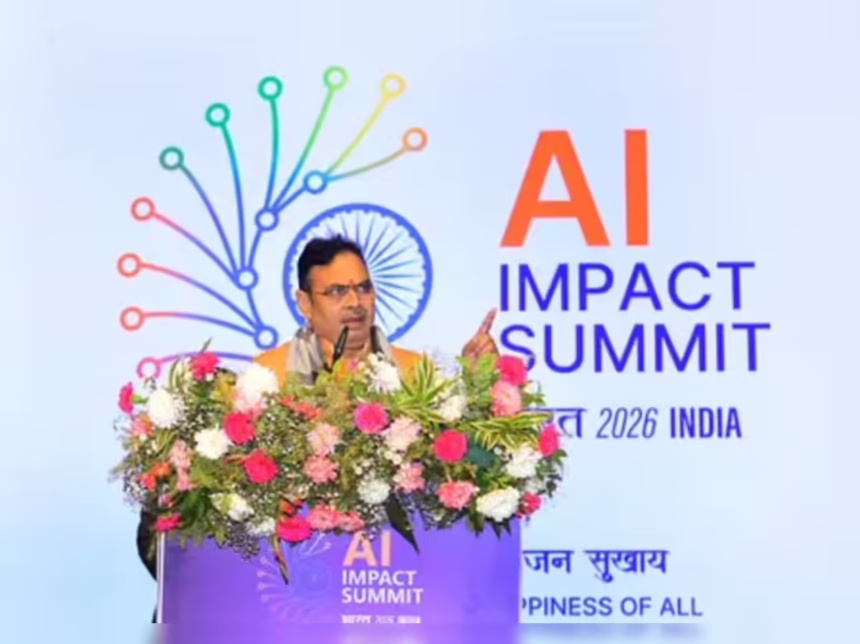
Rajasthan drone and AI data hub policy has been unveiled to accelerate digital transformation across agriculture and public services, positioning the state as a technology driven innovation center focused on precision farming, data analytics, and smart governance.
The policy signals Rajasthan’s intent to integrate emerging technologies into core economic sectors. By building a structured ecosystem for drone operations and artificial intelligence data processing, the state aims to enhance farm productivity, improve service delivery, and attract private investment into high growth technology segments.
Policy Framework Targets Agriculture and Services Modernization
The Rajasthan drone and AI data hub policy focuses on enabling infrastructure, regulatory support, and skill development for drone applications and AI based analytics. Agriculture is a primary target, given its central role in the state economy.
Drone technology in agriculture can support crop monitoring, soil analysis, irrigation planning, and precision pesticide spraying. AI driven analytics can process farm level data to improve yield forecasting and resource optimization. By combining these tools, the state aims to increase productivity while reducing input costs.
Beyond agriculture, the policy also covers public services such as land record management, disaster monitoring, urban planning, and traffic management. Integrating geospatial data with AI systems can improve real time decision making across departments.
Infrastructure and Data Hub Development
A key component of the initiative is the establishment of AI data hubs to store and process large volumes of agricultural and administrative data. These hubs are expected to support startups, research institutions, and government departments.
Reliable digital infrastructure, including high speed connectivity and secure cloud systems, is critical for AI deployment. Rajasthan’s approach includes encouraging private sector participation in building data processing centers and drone testing zones.
Designated drone corridors and simplified operational clearances can attract drone manufacturers and service providers. Compliance with national aviation regulations remains essential, but streamlined state level approvals may reduce operational friction.
By creating a centralized ecosystem, Rajasthan aims to lower entry barriers for startups working in agri tech, geospatial analytics, and data science.
Investment and Startup Ecosystem Implications
The drone and AI policy is likely to encourage startup formation in sectors such as precision agriculture, mapping services, and predictive analytics. Financial incentives, pilot projects, and public procurement opportunities can stimulate innovation.
India’s drone industry has gained policy support at the national level through liberalized drone rules and production linked incentives for manufacturers. Rajasthan’s state level push aligns with broader national objectives to build domestic capability in unmanned aerial systems and artificial intelligence.
Investors evaluating agri tech and AI startups often look for policy backed demand pipelines. Government adoption of drone based surveys and AI analytics can create stable revenue streams for technology providers.
Skill Development and Employment Opportunities
Successful implementation depends on trained personnel. The policy emphasizes skill development programs in drone operations, AI model training, and data management.
Partnerships with universities and technical institutes can build a workforce capable of handling emerging technologies. Certification programs for drone pilots and data analysts may create new employment avenues for youth.
Rural employment could benefit if local entrepreneurs adopt drone services for crop assessment and farm advisory. Service based drone models reduce capital burden on individual farmers while expanding income opportunities.
Regulatory and Implementation Challenges
While the policy vision is clear, execution will determine impact. Drone deployment requires adherence to aviation safety norms and data protection standards. AI applications in agriculture must ensure data accuracy and responsible usage.
Data privacy is another key consideration. Agricultural and land records data must be handled securely to avoid misuse. Transparent governance frameworks and clear data ownership rules will strengthen credibility.
Coordination across departments is critical. Agriculture, revenue, urban development, and disaster management agencies must integrate technology adoption into daily operations rather than limiting it to pilot projects.
Long Term Economic Impact
If implemented effectively, the Rajasthan drone and AI data hub policy could drive structural modernization. Precision agriculture can improve water efficiency and reduce chemical overuse in a state that faces climate variability.
AI enabled analytics in public services can enhance transparency and speed up administrative processes. Improved land mapping and digitized records reduce disputes and support better planning.
The broader economic impact includes attracting technology firms, increasing skilled employment, and integrating rural economies into digital networks. Over time, this can position Rajasthan as a regional leader in applied drone and AI innovation.
Takeaways
• Rajasthan has launched a drone and AI data hub policy targeting agriculture and services
• Precision farming and AI analytics are central to productivity improvements
• Infrastructure development and startup incentives are key policy pillars
• Skill training and regulatory clarity will determine long term success
FAQs
What is the Rajasthan drone and AI data hub policy?
It is a state initiative aimed at promoting drone applications and AI driven data processing to modernize agriculture and public services.
How will drones help farmers?
Drones can assist in crop monitoring, soil assessment, precision spraying, and yield forecasting, improving efficiency and reducing costs.
What role do AI data hubs play?
AI data hubs process large datasets to generate actionable insights for government departments and private sector users.
Are there regulatory challenges?
Yes. Drone operations must comply with aviation rules and data protection norms to ensure safety and privacy.